


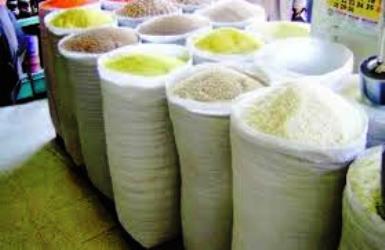
Some residents of the Federal Capital Territory (FCT) have expressed concern over the rising cost of food items across community markets, describing the situation as increasingly difficult for low- and middle-income households.
Residents, speaking in separate interviews on Friday in Abuja, said the persistent increase in food prices had worsened living conditions for many families.
A reporters’ survey of several FCT markets, including Dutse, Nyanya, and Gwagwalada, revealed significant increases in both perishable and staple food items.
A paint bucket of tomatoes, previously sold between N2,000 and N2,500 in February, now costs N3,000 to N3,500, while a large basket has risen from N25,000 to N40,000 and above. Similarly, a kilogram of meat has increased from N7,000 to N8,000.
A small paint bucket of garri now sells for N2,100 to N2,500, while a mudu, previously N500, now goes for N700 to N800 depending on the variety.
Miss Larai Agaba, a resident of Dutse-Alhaji, attributed the surge to increased demand during Ramadan and Sallah, fuel price hikes, and the approaching Easter celebration. She said residents are left with little choice but to pay higher prices or reduce both the quantity and variety of meals.
Mr. Chris Haggai, a civil servant in Nyanya, described the situation as unbearable, saying, “What we used to buy for N10,000 can no longer last a week. We now cut down on quantity and sometimes skip meals, but it is still not enough.”
Mrs. Aisha Nagogo, a mother of four in Gwagwalada, said she now buys food in smaller quantities. “We now buy in cups instead of mudu. Even tomatoes and peppers are too expensive. Feeding a large family has become a daily struggle,” she said.
Traders attributed the price surge to high transportation costs, insecurity in farming communities, and fluctuations in supply. Abubakar Nasidi, a tomato seller in Gwagwalada, explained that transporting goods from rural areas to Abuja has doubled in cost.
Sadiq Ahmed, a yam seller, said prices have risen from N5,000–N6,000 to N7,500–N10,000 depending on size, noting that consumers are opting for smaller quantities or cheaper alternatives.
Both traders and residents urged the government to improve transportation, address fuel costs, strengthen food production, and stabilise supply chains to ease economic hardship.
