


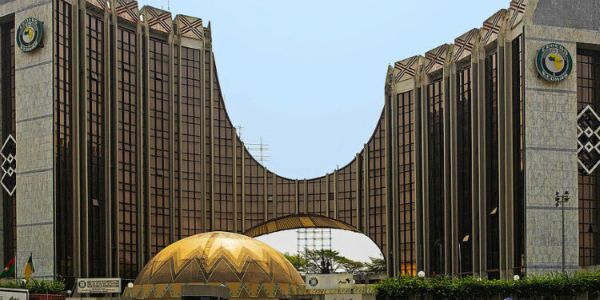
The ECOWAS Bank for Investment and Development (EBID) has approved $266.7 million to finance strategic projects across West Africa, with Nigeria receiving the largest share.
The approvals were announced in a statement published on the Bank’s website on April 2, 2026, following its 95th Board of Directors meeting held on March 30.
Of the total funding, over $241 million is earmarked for three projects in Nigeria. This includes $100 million for the Lagos–Calabar Coastal Highway, $91.63 million for transport infrastructure development in Bauchi State, and $50 million for the construction of waste management facilities in Lagos.
EBID said the Lagos waste management project is designed to boost recycling capacity, create jobs, and reduce environmental and public health risks.
On the Bauchi transport project, the Bank noted that it aligns with Nigeria’s National Development Plan and will modernise road infrastructure, reduce logistics costs, improve access to essential services, open up agricultural zones, and incorporate climate-resilient construction techniques.
Speaking at the opening of the meeting, EBID President and Chairman of the Board, George Agyekum Donkor, said the approvals are in line with the Bank’s long-term development strategy.
“These interventions reflect our ambition to support Member States in structuring value-creating projects that are fully aligned with the Sustainable Development Goals,” he said.
He added that investments in infrastructure, agro-industry, environmental management, and industrial transformation would strengthen regional resilience and drive inclusive growth.
Beyond Nigeria, Senegal secured XOF20 billion as a credit line to support SMEs and industrial growth, while Côte d’Ivoire received XOF10 billion through Afriland First Bank Côte d’Ivoire to boost financing for small businesses.
In Ghana, EBID approved $15 million for a tissue paper manufacturing plant to reduce import dependence and support industrialisation. The Gambia received $10.04 million to expand poultry and dairy operations under G Farms Ltd., aimed at strengthening food security and reducing reliance on imports.
The latest approvals come one year after EBID sanctioned a combined financing package of €230 million and $10 million to support socio-economic development across the region.
As part of that package, the Bank approved a $50 million credit line to Sterling Bank Limited to support SMEs in sectors including health, education, agriculture, renewable energy, and transport.
In July 2025, EBID also approved $100 million for a 47.7-kilometre section of the Lagos–Calabar Coastal Highway, underscoring its continued support for the project.
The Lagos–Calabar Coastal Highway is a 700-kilometre superhighway expected to connect nine coastal states, with an estimated cost of N15 trillion. The project is aimed at boosting trade, connectivity, and economic integration along Nigeria’s southern corridor.
