


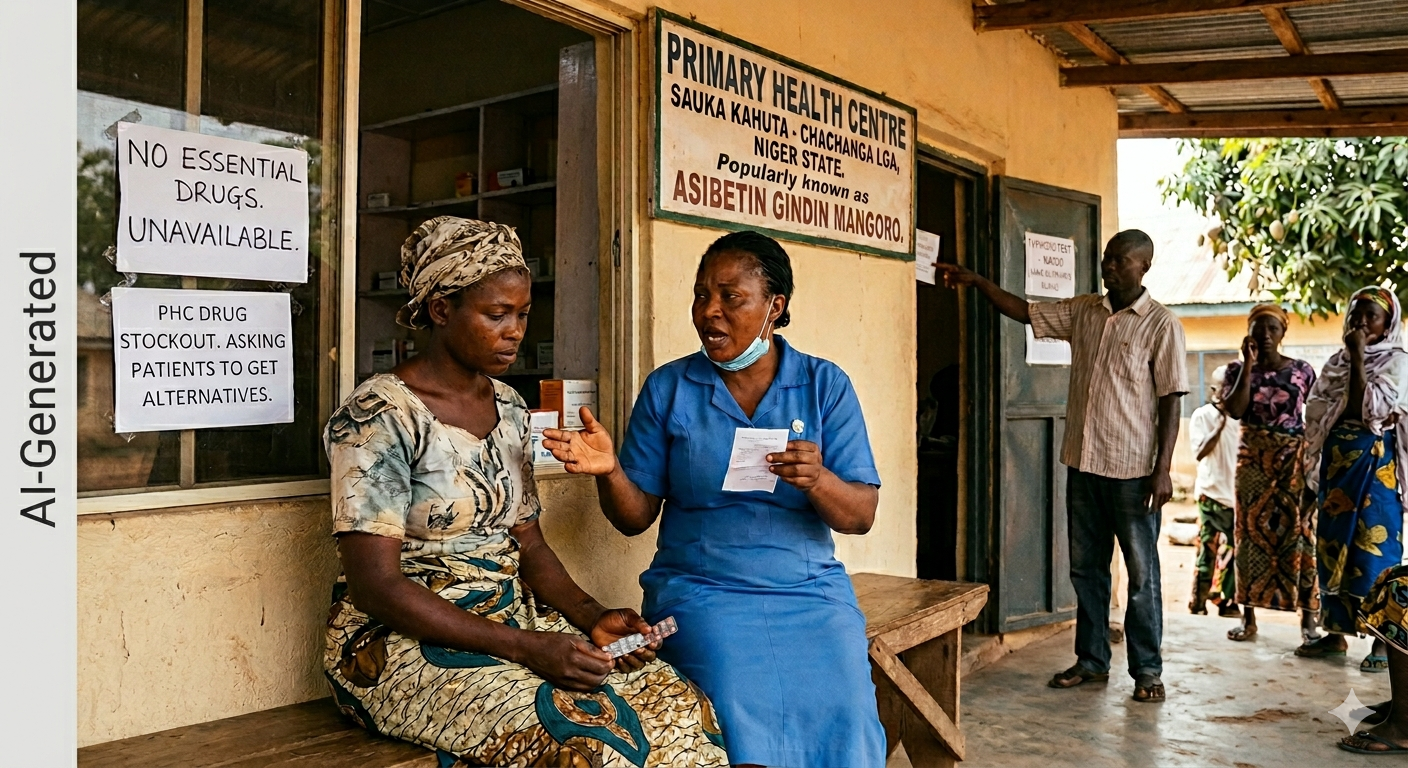
Patients in Sauka Kahuta community in Chachanga local government area of Niger state have raised concerns over the unavailability of essential drugs and the rising cost of treatment at the community’s primary health centre.
The PHC which is popularly called Asibitin gindin Mangoro is no longer seen as friendly to the pockets of the residents.
Recent findings by ASHENEWS indicates that while the centre has a number of health workers on duty, access to medications remain a major challenge, forcing patients to seek alternatives or pay more to receive treatment.
A nurse at the facility, who spoke on condition of anonymity, disclosed that due to the persistent shortage of drugs, some staff members resort to purchasing medications with personal funds and selling them during their shifts.
According to the source, the practice is often seen as a way to ensure patients still receive treatment despite the lack of officially supplied drugs.
Patients who spoke to ASHENEWS, Aladi Vincent Anthony and Mary Micheal both expressed dissatisfaction with the situation, alleging that the cost of drugs and treatment at the centre is on the high side.
One patient recounted her experience while receiving treatment for malaria, stating that she was scheduled to receive injections over three days but encountered difficulties completing the treatment.
“I was asked to come for three days for malaria treatment. On the third day, I returned late at night, but I was told that the nurse who had been treating me had left with the drugs. I was asked to come back the next day, which meant I had to miss that dose,” she said.
She further quoted the medical practitioner on duty that night as saying, “There is nothing that can be done now. You will have to return in the morning during the other nurse’s shift to get your injection.”
Another patient added that even typhoid test is charged at the same rate with private clinics.
Other residents noted that such experiences have affected their confidence in the facility, as patients are sometimes unsure whether they will receive complete and timely treatment.
One of the management staff, who spoke on condition of anonymity, revealed that there are times when patients come and there are no drugs available due to a lack or inadequate supply of basic medications.
This, the staff member said, often forces health workers to purchase drugs themselves in order to treat patients.
Public health observers say that regular supply of essential drugs is critical to the effective functioning of primary healthcare centres, warning that shortages could discourage community members from seeking timely medical attention.
Residents have called on relevant authorities to address the gap in drug supply and ensure that primary healthcare facilities are adequately equipped to serve the needs of rural communities.
