


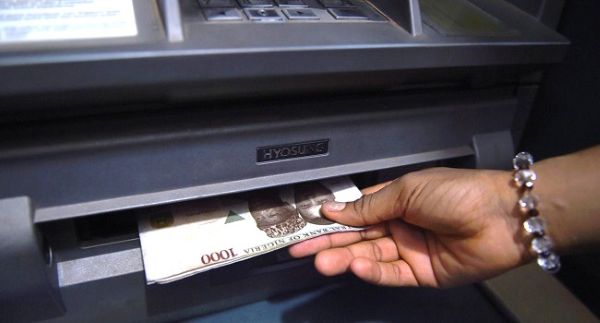
The Central Bank of Nigeria (CBN) has directed banks and other card issuers to significantly expand the deployment of Automated Teller Machines (ATMs) nationwide, setting a minimum ratio of one ATM for every 7,500 payment cards issued by 2028.
The directive is contained in the Guidelines on the Operations of Automated Teller Machines (ATMs) in Nigeria, issued by the apex bank.
According to the document, “All card issuers shall deploy ATMs, of at least 1 ATM per every 7,500 payment cards issued.”
The circular, dated March 13, 2026, was signed by the Director of the Payments System Policy Department, Musa I. Jimoh, and addressed to banks, other financial institutions and payment service providers.
The CBN said implementation of the requirement would be phased over three years, with financial institutions expected to achieve 30 per cent compliance in 2026, 60 per cent in 2027, and full compliance by 2028.
The apex bank explained that the revised framework is aimed at strengthening ATM deployment standards, improving access to cash services and aligning Nigeria’s payment infrastructure with global regulatory practices.
It noted that the review became necessary due to rapid developments in the payment ecosystem, including rising cyber threats, the expansion of digital finance and growing demand for financial inclusion.
The new document also replaces earlier provisions governing ATM operations contained in the 2020 Guidelines on the Operations of Electronic Payment Channels in Nigeria.
New rules for ATM deployment and processing
Beyond the new deployment ratio, the CBN introduced stricter rules governing ATM processing arrangements and interoperability across the financial system.
Under the framework, all ATM transactions carried out in Nigeria must be processed by a company operating within the country as an acquirer-processor.
The guidelines also prohibit any card scheme from compelling Nigerian banks or acquirers to route domestic ATM transactions outside the country for processing or authorisation.
“No card or payment scheme shall compel any issuer or acquirer to send any transaction outside the country for processing, authorization or switching,” the document stated.
In addition, all ATM transactions involving Nigerian card issuers must be settled through a domestic settlement arrangement operated by a Nigerian company, with collateral denominated in naira and held within the country.
The CBN further barred the deployment of stand-alone or closed ATM networks, insisting that all ATM systems must be interoperable.
According to the regulator, ATMs must accept all cards issued in Nigeria by authorised issuers and should be located in places that provide safe and convenient access for customers.
Financial institutions seeking to operate as independent ATM deployers must also obtain prior written approval from the CBN before commencing deployment. Applicants are required to submit corporate information, demonstrate operational capacity and provide evidence of partnership with banks responsible for cash provisioning.
Operational standards and security
The guidelines also introduce new operational standards aimed at improving ATM reliability, security and consumer protection.
The CBN directed that ATM downtime caused by technical faults must not exceed 72 consecutive hours, except where customers are duly notified.
Operators are also required to maintain adequate vault cash levels to prevent machines from running out of cash, while ATMs must not be stocked with unfit banknotes.
ATM terminals must also display helpdesk contact information and clearly disclose applicable transaction charges to customers.
Receipts must be issued when requested, showing details such as the transaction amount, terminal identity, date and time.
To strengthen fraud prevention, deployers are required to install anti-skimming devices, surveillance cameras and secure transaction networks capable of protecting customer data.
However, the regulator specified that surveillance cameras must not record customers’ keystrokes during transactions.
The guidelines further require ATM encryption keys to be changed at least once every year, while suspicious transactions detected through ATM systems must be reported to the CBN.
Faster refunds and dispute resolution
The regulator also introduced strict timelines for resolving failed ATM transactions.
Under the new rules, failed on-us ATM transactions must be reversed instantly, while manual reversals resulting from technical issues must be completed within 24 hours.
For not-on-us transactions involving another bank’s ATM, refunds must be processed within 48 hours.
Operators are also required to adopt automated mechanisms that trigger refunds immediately without waiting for complaints from customers or issuing banks.
Customers must be able to report dispense errors through digital channels such as web or mobile applications without visiting bank branches.
The CBN added that it will conduct periodic audits and on-site inspections to monitor compliance with the guidelines.
Institutions operating ATMs are also required to submit monthly returns detailing new ATM deployments and their locations to the Director of the Payments System Supervision Department not later than the fifth day of the following month.
The apex bank warned that institutions that fail to comply with the provisions of the guidelines or other related regulations will face appropriate penalties.
