


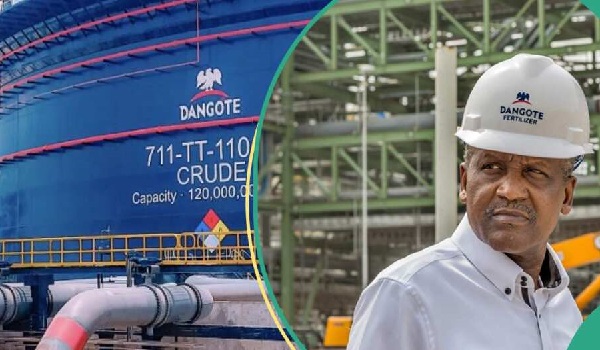
On September 26, 2025, the Petroleum and Natural Gas Senior Staff Association of Nigeria (PENGASSAN) issued a directive instructing its members to halt crude and gas supplies to the Dangote Petroleum Refinery. This action followed the recent dismissal of Nigerian workers, allegedly replaced by foreign nationals, predominantly from India, under the guise of a reorganization aimed at boosting safety and efficiency. In a letter dated September 26, PENGASSAN instructed all branches in major oil firms to shut off supply valves and halt vessel loading operations for the refinery. This dispute is not merely an industrial relations issue; it poses significant risks to Nigeria’s economic stability, energy security, governance credibility, and the well-being of millions of Nigerians.
Governance under pressure
This crisis is a litmus test of Nigeria’s governance capacity. It examines whether legitimate worker rights and corporate governance can be reconciled with the public interest in essential services. Fiscal authority and social policy must be deployed quickly, transparently, and effectively to protect the most vulnerable. At the same time, public institutions must uphold the rule of law while preventing a narrow industrial dispute from escalating into a national emergency. How Nigeria responds will signal its ability to govern strategic sectors responsibly, protect citizens, and maintain credibility in domestic and international markets.
Globally, countries with large-scale refining infrastructure, such as India and the U.S., treat disruptions in national refineries as strategic emergencies, often mobilizing contingency imports, stock releases, and immediate negotiations with unions. Nigeria’s handling of the Dangote crisis will thus be watched not only domestically but by investors and development partners assessing institutional reliability.
Lessons from history
Understanding the current crisis requires historical perspective. Nigeria has walked this road before. The 2012 subsidy removal protests, poorly sequenced and inadequately mitigated, sparked widespread unrest. More recently, the 2023 subsidy reform and exchange rate adjustments inflicted disproportionate suffering on the poor, destabilising reform momentum. The collapse of Nigeria’s four state-owned refineries serves as another cautionary tale: symbols of national pride decayed into monuments of corruption, neglect, and lost opportunity.
Shocks must be anticipated, sequenced, and accompanied by transparent protections to safeguard economic stability and political legitimacy. Comparative experience shows that countries investing in labor-management dialogue and social protection mechanisms during energy transitions experience fewer economic and social shocks. By situating today’s refinery crisis within historical patterns, it becomes evident why immediate, strategic action is imperative.
The strategic importance of the Dangote Refinery
The stakes are enormous. The Dangote Refinery, with a capacity of 650,000 barrels per day, is the world’s largest single-train refinery. It is designed to meet Nigeria’s entire refined petroleum product needs and generate surpluses for export, reducing import dependence and conserving scarce foreign exchange. Nigeria’s daily fuel consumption was approximately 48.03 million litres in June 2025, while the refinery’s output, when fully operational, could satisfy national demand and leave substantial export potential.
However, the refinery’s gasoline unit has been offline since late August 2025 for repairs, with a projected downtime of 2 to 3 months. Any additional disruption due to the PENGASSAN directive could severely compromise operations, risk costly import dependence, and destabilize supply chains. Restart costs would escalate, and domestic energy security would be affected.
If the refinery’s output is interrupted, Nigeria could face an additional import requirement of approximately 20 million litres per day, with potential costs exceeding $1.5 billion per month, assuming average global gasoline prices of $75 per barrel. For perspective, this is roughly equivalent to 0.6% of Nigeria’s 2025 GDP, immediately straining foreign reserves and risking further naira depreciation. The Dangote Refinery is not just an industrial asset but a strategic lever for energy independence, macroeconomic stability, and global trade positioning.
Economic shockwaves and inflation risks
The economic fallout of a supply disruption would be immediate. Importers would be forced to source refined products abroad, paying in scarce foreign exchange, heightening dollar demand, weakening the naira, and exacerbating exchange rate volatility. Temporary suspensions of petrol sales in naira have already highlighted Nigeria’s vulnerability to crude supply shocks.
Inflationary pressures are already pronounced: headline inflation at 20.12%, food inflation at 21.87%, and core inflation at 20.33% in August 2025. A disruption in fuel supply would propagate through transport, production, and household consumption, further straining affordability. Electricity outages and transport disruptions hit informal workers hardest, deepening poverty traps.
Household fuel burden is highly regressive. In Lagos, the average urban household spends 12% of monthly income on transport and energy, while rural households in the North-Central region spend 18 to 20%, amplifying poverty pressures. A 10% increase in domestic fuel prices could erode real incomes by up to ₦25,000 per month for low-income families, undermining consumption and nutrition. Even short-term disruptions can have profound consequences for daily life. In comparison, historical fuel crises in Kenya and Ghana saw poverty headcounts increase by 3–5% within months, illustrating regional vulnerability to energy shocks.
Fiscal fragility and public finance risks
Rising imports and inflation threaten to derail an already stretched budget. Emergency imports, subsidies, or social transfers may be required, and without disciplined public financial management (PFM), spending risks opaque reallocations that erode accountability and undermine development priorities.
As of March 2025, Nigeria’s total public debt stood at ₦149.39 trillion, up from ₦121.67 trillion a year earlier — a 22.8% increase. Domestic debt makes up 53%, external debt 47%, with a projected debt-to-GDP ratio of 52.6% by end-2025. Despite moderate levels, Nigeria’s weak revenue base and high debt servicing constrain investment in infrastructure and social sectors.
A deeper governance challenge compounds fiscal strain: three concurrent budgets, confusing execution and undermining discipline. Implementation of the 2025 approved capital budget has yet to commence. Historically, federal capital budget execution averaged less than 65% between 2018 and 2022, with 15 states performing below 30%. This weak budget credibility reinforces the perception of fiscal dysfunction, regardless of headline revenue or debt figures. Fiscal fragility means even short-term industrial disputes can escalate into structural financial crises without proper planning.
Labour, trust, and political economy
Political economy considerations are central. President Tinubu’s administration has staked credibility on subsidy removal, exchange rate unification, and fuel self-sufficiency. A mishandled Dangote crisis could undermine public trust, provide ammunition to critics, and strain labour relations, risking broader strikes or unrest.
While Dangote states over 3,000 Nigerian workers remain employed, PENGASSAN claims over 800 Nigerians were dismissed and replaced by foreign nationals, illustrating union influence in Nigeria’s oil sector. Unions often act as “last defenders” of ordinary citizens when institutional trust is low, highlighting the social stakes of industrial disputes. Resolving this dispute is as much about governance credibility and social trust as it is about labour-management relations.
Regional and global considerations
Nigeria’s domestic refining capabilities have cross-border implications. The gasoline unit’s downtime contributed to tighter Atlantic Basin gasoline markets, raising profit margins for U.S. refiners. Disruptions also jeopardize Nigeria’s commitments under the African Continental Free Trade Area (AfCFTA) and aspirations to become a regional energy hub.
Investors and lenders are closely watching. The Dangote Refinery, one of Africa’s largest private-sector projects, is a test case for governance and industrial management. Mismanagement risks undermining foreign direct investment, especially under initiatives like the Global Gateway. Global and regional credibility is at stake, reinforcing the need for professional, transparent, and timely crisis management.
Policy recommendations and urgent steps
Immediate action is required. Industrial disputes cannot escalate into a national emergency. A neutral tripartite framework, including the Ministry of Labour, NNPC, Dangote management, PENGASSAN, and an independent arbiter, should swiftly negotiate a suspension of supply disruptions while contested dismissals are reviewed.
Contingency supply measures must avert scarcity, including transparent releases of strategic stocks and emergency imports. Fiscal responses must be accountable. Emergency appropriations must be ring-fenced, overseen by the legislature, and linked to targeted social transfers shielding the poorest households, using Nigeria’s social registry and mobile payment infrastructure. A targeted emergency cash transfer could reach up to 2.5 million households in the most affected corridors, mitigating immediate welfare losses.
Medium-term reforms must strengthen the regulatory framework for critical energy infrastructure. Domestic refining cannot remain vulnerable to sudden stoppages without legal remedies and enforcement mechanisms. The refinery must balance export ambitions with domestic obligations. International experience—from South Korea to Brazil—demonstrates that combining labour agreements with legal guarantees of operational continuity is effective in minimizing disruptions.
Measurable benchmarks
A credible resolution requires time-bound, actionable steps. Supply disruptions must cease within 72 hours, mediation convened, and public communication issued to prevent panic. Within 14 days, an independent verification panel should issue interim findings on alleged unlawful dismissals and workforce composition. Within 30 days, a PFM-backed social protection package should target the poorest 10 to 20% of households. Within 90 days, a reformed contractual framework for crude allocations with transparent rules for naira allocations versus exports and enforcement mechanisms must be tabled before the National Assembly. Such benchmarks ensure accountability and prevent temporary fixes from becoming long-term failures.
Beyond a labour dispute
At its core, this crisis is about governance and stewardship. It tests whether Nigeria can resolve disputes between labour and capital without holding the nation hostage, whether fiscal policy can be disciplined, transparent, and pro-poor, and whether institutions can be strengthened to ensure strategic assets serve the people.
The refinery symbolizes national self-reliance and a hedge against decades of costly imports and fiscal leakages. Allowing it to become the epicentre of a new crisis would be a tragic reversal. The choices made by the union, the company, and above all the government will determine whether this refinery delivers on its promise or becomes another white elephant in a country littered with industrial graveyards. The clock is ticking, and every passing day magnifies the costs.
Prof. Chiwuike Uba is a Development Economist, Governance, and Public Financial Management (PFM) Expert, and Chairman of the Board of the ACUF Initiative for Policy and Governance. He provides evidence-based insights on economic development, governance, and policy reforms across the world. He can be reached at chiwuike@gmail.com
