


A free and fair election is defined by political scientists as an election in which coercion is comparatively uncommon. It involves political freedoms and fair processes leading up to the vote, a fair count of eligible voters who cast ballots, and acceptance of election results by all parties. An election may partially meet international standards for free and fair elections, or may meet some standards but not others.
The most fundamental principle defining credible elections is that they must reflect the free expression of the will of the people. To achieve this, elections should be transparent, inclusive, and accountable, and there must be equitable opportunities to compete in the elections.
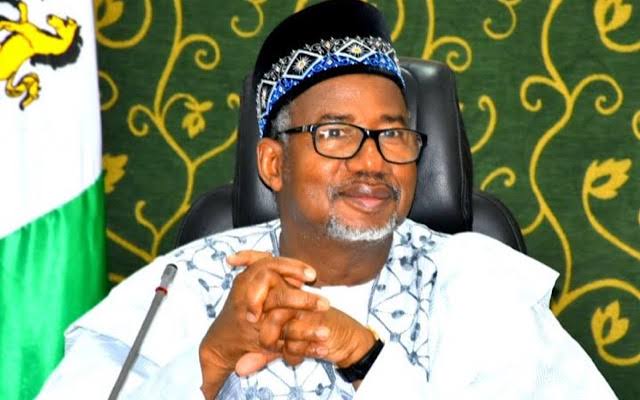
This was precisely the environment in which the Saturday, 18th March, 2023 governorship election was conducted in Bauchi State at the end of which incumbent governor Bala Mohammed, Kauran Bauchi of the Peoples Democratic Party (PDP) roundly, soundly and squarely defeated his main challenger, a retired Air Vice Marshall.
It was such a remarkebly free and secure condition that allowed Bauchi voters to troop out enmasse to offer a verdict on their future by returning Bala Mohammed for another four year tenure.
With Bala Mohammed’s growing populist tendencies, it was not unexpected that he polled 525,280 to trounce his closest rival and APC candidate, Air Marshal Sadique Abubakar who polled 432,272.
Governor Bala Mohammed was thus returned for another four-year term being duly declared winner by the Independent National Electoral Commission (INEC).
In returning Bala Abdulkadir, the INEC Returning Officer for Bauchi State, Prof Abdulkareem Mohammed certified that Kauran Bauchi had sufficiently satisfied the requirement of the law.
Interestingly, Bala Mohammed falls among eight of the 11 serving governors who sought reelection in the March 18 polls held across Nigeria to have been declared winners by INEC to return to office for another four-year term each.
They are Governor Babajide Sanwo-Olu of Lagos State, Governor Dapo Abiodun of Ogun State, Governor Seyi Makinde of Oyo State, Governor AbdulRahman AbdulRazaq of Kwara State, Governor Inuwa Yahaya of Gombe State, Governor Abdullahi Sule of Nasarawa State, Governor Bala Mohammed of Bauchi State and Governor Mai Mala Buni of Yobe State.
Almost exactly four years ago, Bauchi voters trusted Bala Mohammed to lead them through and out of its limitations, into a future in which they will live secure lives and pursue livelihoods in a united state whose resources will be protected by leaders.
They trusted him to lead a Bauchi state that was critically endangered by leaders who failed to lead with justice and sensitivity to its plural nature and the limitations of the political process.
Four years afterwards, the people proudly realize they did not make a mistake in putting up a solid, united front to entrust Bala with leadership in spite of their ethno-religions differences.
In the just concluded elections, Bauchi voters sent a clear message to those who sought to drive a wedge between the people, that they will no longer walk away from each other, into the damaging arms of political and religious merchants who make capital out of their weaknesses.
This second victory of Bala Mohammed is therefore a resounding message that Bauchi is no longer vulnerable to politicians who rode to power on the back of the most gratitious insults to justice and fairness wrapped in the crude cover of crass political opportunism and breathtaking ineptitude.
It is no exaggeration to say that the year 2014 represented the high point in activities that laid the foundations of the collapse of that citadel of poor governance, indifference, insensitivity and unprecedented plunder that was the previous administrations before Bala.
From every corner of the state, the poor, the young and women rejected the tradition of lining up to receive handouts to abandon their future, and chose instead to install a leadership under Bala Mohammed that will make them more secure and provide their children with a productive future.
The elections of March 18 were pre-eminently a victory for the people of Bauchi State whose votes overwhelmingly went to one candidate and one party to comprehensively reject the attempt to return to power of a bankrupt section of the elite that had run its course.
The jubilations that greeted Bala’s victory were not just over the victory of popular will over desperate attempts to subvert it. They were about the possibility that the people of Bauchi could look to a future without corrupt leaders; that the young will get good education, acquire skills and get jobs; that idleness and crime will be arrested, contained and eliminated.
Bauchi is today celebrating the foundation for a permanent end to poor governance; to leadership that run away from threats, and to leaders who remember the people only when they need votes.
Àt this point, we must salute the intellectuals, the politicians, the professionals, the elders, the youth and women who resisted the unrelenting onslaught of the of the opposition to intimidate them into abandoning their defences of the collective interest of Bauchi state.
History will say of these patriotic citizens of Bauchi who rediscovered their unity at that March 18 polls, that they lived up to the tradition set by the founding fathers leaders in all discussions and negotiations leading leading to carving a glorious path for the development of the people of Bauchi.
We remain confident that Bala Mohammed’s willingness to sustain the search for a Bauchi State that operates unencumbered by challenges it should not live under will be sustained even in the face of severe challenges.
Moving from where we are to where we need to be will require patience and fortitude. Until we get there, it will be Governor Bala’s lot to assemble the quality of people to advise him and take forward his vision. He will need people who will convey his concerns and compassion; who will reach and bring comfort to millions who suffer in an economy under recession; and people who will combine his personal integrity with competence and commitment.
