


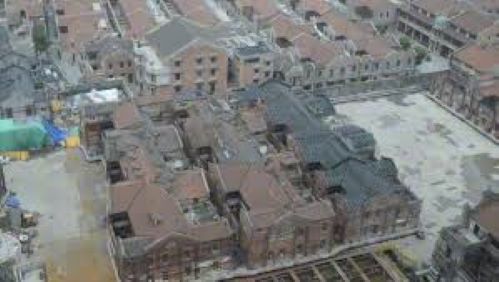
In a display of precision engineering and technological prowess, a team of 432 mobile robots has successfully relocated an 8,200-ton building complex in Shanghai, marking one of the largest and most intricate building moves ever completed using autonomous robotics.
The building, a historic shikumen-style structure dating back to the 1920s and 1930s, was lifted and shifted for approximately three weeks to facilitate critical underground renovations. After being moved nearly 32 feet (10 meters) per day, the entire structure was safely returned to its original site on June 7, 2025.
The operation, carried out in Shanghai’s bustling Jing’an District, is part of a major urban renewal project designed to upgrade underground infrastructure while preserving cultural landmarks. The two-story building, a remnant of Shanghai’s iconic architectural past blending Western and Chinese influences, is part of a larger redevelopment that includes new residential and commercial space.
At the heart of the operation was a cutting-edge robotic platform system known as the “walking machine”, developed by the Chinese engineering firm Shanghai Evolution Shift. Each of the 432 robotic “legs” was equipped with sensors and hydraulic actuators that mimicked human movement, allowing the building to be lifted, shifted, and lowered with unparalleled balance and control.
ALSO READ Monash varsity scientists develop world’s first cortical bionic eye
The robots worked in synchronized harmony, operating under real-time central command. Rather than rolling or sliding the building, the robotic legs gently “walked” the entire structure forward. Engineers monitored every inch of the move with millimetre-level accuracy using GPS and laser-guided systems to prevent structural stress or damage.
“It’s like watching a giant centipede slowly tiptoeing across a platform,” one local engineer was quoted as saying.
City officials said the move not only preserved a beloved historic site but demonstrated the city’s commitment to balancing modern development with heritage conservation.
“This operation embodies the fusion of tradition and innovation,” said Liu Qiang, head of Shanghai’s Urban Heritage Protection Bureau. “We are proud that the past is not being erased, but carefully carried forward—quite literally.”
Once renovations of the underground pipelines and subway infrastructure are complete, the building will be retrofitted as a community cultural center, according to city planners.
Shanghai has gained a reputation for groundbreaking architectural moves. In 2020, the city made headlines when it used similar robotic technology to relocate a 5-story primary school building. However, this latest relocation, involving a complex that weighs more than 8,200 US tons, is believed to be the heaviest building ever moved using autonomous robots.
Urban planners, engineers, and preservationists from around the world have hailed the achievement as a milestone in smart urban development. The successful project offers a replicable model for cities facing the challenge of preserving historical buildings while making space for critical infrastructure upgrades.
With a rapidly urbanizing population and growing environmental pressures, China’s use of robotics and smart technology in city planning is seen as a path toward more resilient, efficient, and culturally respectful urban landscapes.
