


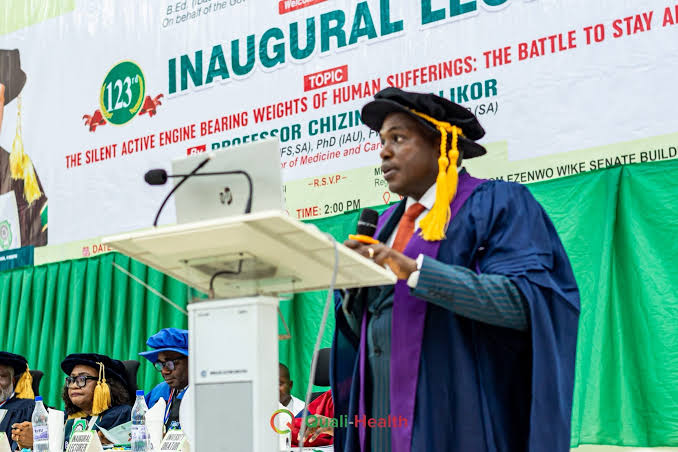
A medical expert, Dr. Ukoma ChiKadibia, has attributed the rising incidence of hypertension among young Nigerians to unhealthy lifestyles, poor dietary habits, physical inactivity, and inadequate sleep.
ChiKadibia, Vice-President of the Nigerian Cancer Society, made this statement in an interview with reporters on the sidelines of a meeting organized by the Legislative Advocacy Initiative for Sustainable Development Goals (LISDEL) in Abuja.
He described hypertension as a persistent elevation of blood pressure, noting that readings above 130/80 mmHg are considered high and require attention.
According to him, while genetic and hereditary factors contribute, unhealthy lifestyle choices among young people are increasingly driving the growing burden of hypertension.
“Young people today no longer eat the traditional foods our parents grew up with. They prefer fast foods, shawarma, and other processed meals that are heavily loaded with sodium, which stresses the heart and raises blood pressure,” he said.
ChiKadibia also highlighted that obesity resulting from unhealthy diets, sedentary lifestyles, and excessive screen time has worsened the situation among many young Nigerians.
“Many youths spend hours sitting with their phones, browsing and chatting without any physical activity. We hardly move anymore. Our parents walked long distances, went to farms and streams, but today many prefer taking a ride even for very short distances. These lifestyle changes are fueling the rise in hypertension among young people,” he explained.
He identified sleep deprivation as a major but often overlooked risk factor, blaming prolonged nighttime internet use for disrupting healthy sleep patterns.
“I recently attended to a patient whose mother complained that her son stayed awake from midnight until about 5 a.m. browsing the internet. Night browsing has become common, and inadequate sleep puts the body under continuous stress, increasing the risk of hypertension,” he said.
ChiKadibia described hypertension as a “silent killer” because many people remain symptom-free even when their blood pressure reaches dangerously high levels.
“You can have a blood pressure reading of 180/100 mmHg and still be walking around without knowing anything is wrong. That is why regular blood pressure checks are important,” he emphasized.
He expressed concern over poor health-seeking behavior among Nigerians, noting that many only visit health facilities after complications develop.
The expert urged Nigerians to adopt healthier lifestyles by eating balanced diets, reducing sodium intake, engaging in regular physical activity, and getting adequate sleep.
He cited international cardiovascular guidelines recommending at least 150 minutes of moderate physical activity weekly to reduce the risk of hypertension and other cardiovascular diseases.
ChiKadibia also advised parents to monitor their children’s sleep habits and regulate late-night phone use to ensure they get seven to eight hours of sleep daily.
Meanwhile, a hypertensive patient, Mr. Muhammed Usman-Vulegbo, shared that he never imagined developing hypertension in his mid-30s.
Usman-Vulegbo said he was diagnosed after experiencing numbness in his hands and legs, which later became severe enough to require emergency medical attention.
He described the financial burden of managing the condition as enormous, noting that treatment involves both medication and maintaining a healthy diet.
“It wasn’t just about buying drugs. The doctors also told me what to eat and what to avoid. In this economy, maintaining the recommended diet is another challenge altogether,” he said.
The civil servant called on the government and non-governmental organizations to support people living with hypertension and to intensify public awareness campaigns.
“My father warned me because he had high blood pressure, but I thought it was something that would come in my 50s or 60s. Instead, it came suddenly while I was still young. We need more awareness because hypertension can affect people even in their late 20s,” he stated.
Usman-Vulegbo said he has adopted healthier habits, including prioritizing quality sleep, reducing stress, and limiting nighttime use of electronic devices.
He urged young Nigerians to take regular blood pressure checks seriously and seek medical attention promptly if they notice any unusual symptoms.
