


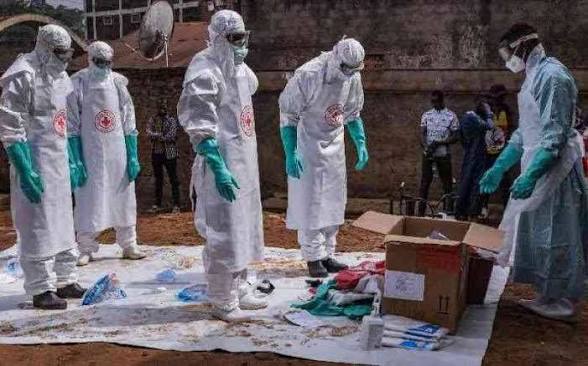
The World Health Organization (WHO) has issued its first comprehensive clinical guidelines for filovirus diseases as the Democratic Republic of the Congo faces an Ebola outbreak caused by the Bundibugyo virus.
WHO announced this in a statement on Wednesday, stating that the new guidelines cover all Ebola and Marburg virus diseases in a single document and provide 16 evidence-based recommendations to improve patient outcomes.
The guidelines focus on early supportive care and standardized treatment approaches, which are vital in outbreaks with case fatality rates ranging from 25% to 90%.
The ongoing Bundibugyo Ebola outbreak highlights the urgency of establishing consistent and effective clinical management protocols.
“Guidelines aim to help health workers manage patients consistently, while providing facility managers and policymakers with a framework to plan supplies, equipment, lab support, and staffing for filovirus outbreaks,” the statement said.
“These guidelines, developed through global expert consultations using the latest scientific evidence and lessons from recent outbreaks, transform field experience into practical bedside protocols,” it added.
WHO emphasized that early supportive care remains the foundation of treatment, including rapid rehydration, managing dehydration and shock, and closely monitoring and treating complications during infection.
The recommendations prioritize prompt dehydration treatment with oral and intravenous fluids, along with early use of vasoactive drugs for shock based on clinical indicators.
“Use targeted lab tests to identify and treat reversible issues like hypoglycemia and metabolic disturbances before they worsen.
If bacterial infections or sepsis are present, WHO advises starting appropriate antibiotics immediately alongside filovirus management,” the organization said.
Frontline workers are urged to identify signs of deterioration early and increase monitoring to prevent organ failure.
The guidelines also include structured follow-up for survivors to support long-term recovery and prevent complications related to viral persistence.
Since 1967, Africa has experienced 72 Ebola and Marburg outbreaks, causing significant social, economic, and psychological impacts.
While previous guidance focused solely on Ebola, the new document provides the first unified clinical framework for all Ebola virus species and Marburg disease.
WHO Director-General Tedros Ghebreyesus highlighted that the guidelines demonstrate how scientific evidence can be translated into practical measures to improve outbreak response and patient care.
“These guidelines exemplify how WHO leverages science to better protect and care for people during outbreaks,” Ghebreyesus said.
He described the Ebola outbreak in the Democratic Republic of the Congo as “a stark reminder” of the importance of delivering holistic, person-centered care during health emergencies.
WHO called on governments and health authorities to incorporate the 16 recommendations into preparedness and response plans to ensure high-quality care and uphold the dignity of all filovirus patients.
