


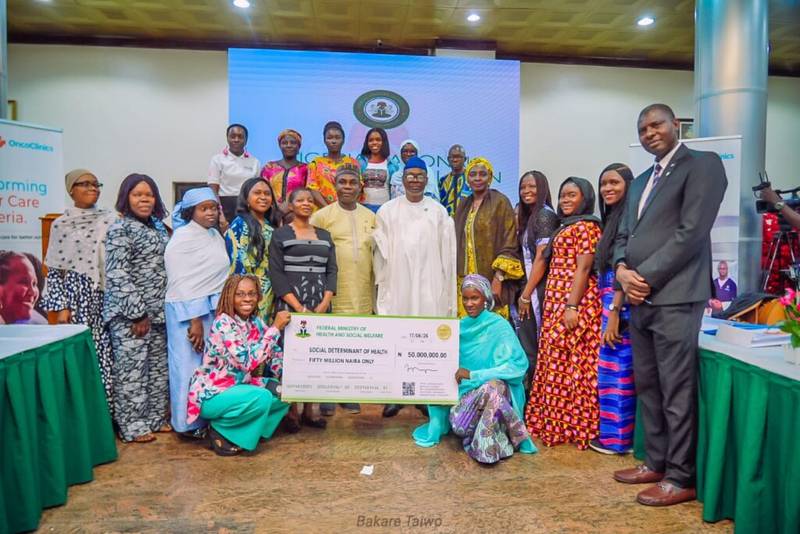
The Federal Government on Wednesday launched the Social Determinants of Health (SDOH) Fund for cancer patients and approved N50 million to support beneficiaries nationwide.
The initiative aims to provide equitable, accountable, and timely assistance for treatment access.
Minister of State for Health and Social Welfare, Dr. Iziaq Salako, announced the approval in Abuja, stating the fund will address non-medical barriers preventing patients from accessing and completing cancer treatment across Nigeria.
Salako explained that many cancer patients face challenges with transportation, feeding, and accommodation costs, often leading to delayed treatment and poor health outcomes.
He emphasized that the intervention would help bridge critical support gaps.
“SDOH are non-medical factors that significantly influence healthcare access and outcomes.
Many people struggle to start and complete treatment due to inability to afford costs,” he said.
The minister noted that the initiative was approved following recommendations by the National Cancer Control Plan (NCCP) Technical Working Group (TWG).
It will complement existing cancer interventions and strengthen patient support mechanisms.
Salako added that the fund was launched during Cancer Survivors Month to demonstrate the government’s commitment to supporting patients beyond clinical care.
He reaffirmed Nigeria’s goal to reduce the cancer burden by 2030.
“In recognition of the TWG members’ contributions, I have approved N50 million as our contribution toward implementing the SDOH initiative.
I have directed the TWG to ensure verified applicants receive at least N100,000 to address barriers to cancer care,” he stated.
Over 400 cancer patients have applied for support, with more than 200 verified.
Beneficiaries will receive payments across their geopolitical zones nationwide.
Permanent Secretary, Ms. Daju Kachollom, described the initiative as a practical step to address challenges faced by cancer patients.
She highlighted that health outcomes depend not only on treatment but also on accessibility.
“Barriers like transportation, accommodation, income loss, nutrition, and social support significantly affect treatment completion,” she said.
She added that the initiative aligns with NCCP 2026–2030 and reflects the government’s commitment to patient-centered cancer care beyond hospital services.
NCCP TWG Chair, Prof. Folakemi Odedina, called the program a milestone in translating Nigeria’s cancer strategy into action.
“Today marks an important step in ensuring no Nigerian is denied cancer care due to non-medical barriers,” she said, noting that structures like advisory councils and communication platforms have been established nationwide.
Odedina emphasized that the initiative places patients at the center of cancer control through transportation, accommodation, and treatment navigation support to improve outcomes.
Nigerian Cancer Society President, Prof. Abidemi Omonisi, said the fund would address longstanding social barriers, despite investments in modern oncology facilities nationwide.
“Many travel long distances and sleep on hospital premises because they cannot afford accommodation,” he said, urging support from philanthropists and partners.
Cancer survivor Mercy Agu welcomed the intervention, calling it a major relief for patients struggling with costs.
“Cancer treatment is very expensive. Without this support, it’s hard to keep hope alive,” she said.
Another survivor and NEPICIN President, Gloria Nwadiogu, praised the fund for recognizing patients as individuals beyond their medical conditions.
“This is about humanizing care,” she said.
It was reported that the SDOH Fund is part of NCCP 2026–2030, aimed at helping patients overcome non-medical barriers to cancer care.
