


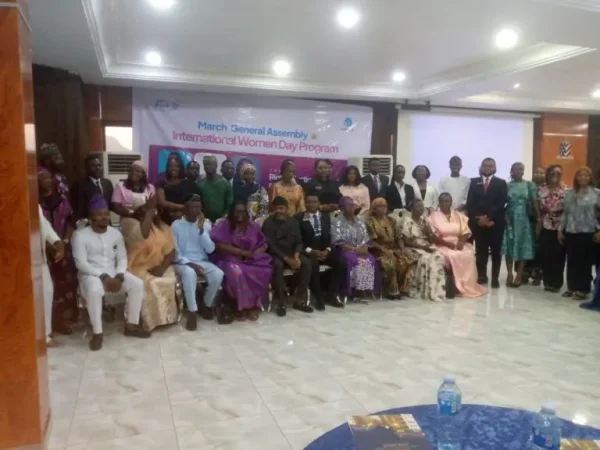
The Junior Chamber International (JCI) Abuja Prestige has called on the Federal Government to strengthen institutional and legal frameworks to protect the rights of women and girls across the country.
The chapter’s President, Mr. Joel Uwabor, made the call on Sunday during the organisation’s 2026 March General Assembly, held alongside activities marking International Women’s Day.
The event, themed “Rights, Justice, Action for All Women and Girls,” brought together stakeholders, advocates and members to deliberate on gender equity, justice and inclusive development.
Uwabor said that while some progress had been made in advancing women’s rights in Nigeria, significant gaps remained and required urgent government attention and deliberate policy action.
According to him, protecting the rights of women and girls should not be optional but a national priority that directly impacts social and economic development.
He stressed that women are the bedrock of society, noting that no nation can achieve sustainable growth if half of its population continues to face systemic barriers and discrimination.
“The essence of this gathering is to amplify the message that when you empower women, you build stronger families, communities and ultimately a stronger nation,” he said.
Uwabor added that the General Assembly was significant as it coincided with the global celebration of International Women’s Day, providing a platform to reflect on progress and chart pathways for greater inclusion.
He emphasised the need for improved access to justice for women, especially those in vulnerable situations, noting that many still face challenges in seeking redress due to weak enforcement of existing laws.
“We must go beyond rhetoric and ensure that policies translate into real protection. Laws must not only exist on paper but must be effectively implemented to safeguard women and girls,” he said.
Uwabor also urged state governments yet to enact or strengthen gender-protective laws to take urgent action.
He noted that societal structures often disadvantage women, creating unequal opportunities and limiting their potential across sectors.
“There is a need to provide equity and a level playing field so that women can thrive without encountering invisible barriers or systemic limitations,” he added.
The JCI president further urged authorities to ensure that perpetrators of gender-based violations are held accountable, stressing that justice must be seen to be served to deter future abuses.
He encouraged women to remain resilient and proactive, urging them to seize opportunities, build their capacities and assert their rightful place in society.
“There is no limit to what women can achieve. They must continue to explore, innovate and dominate spaces where they have been historically underrepresented,” he said.
Also speaking, Mrs. Joyce Lawrence, a member of the Senate Caucus of JCI, said the organisation shares in the concerns and challenges facing women in Nigeria.
Lawrence described International Women’s Day as a critical moment for reflection, advocacy and renewed commitment to gender equality.
She said the 2026 celebration was designed not only to highlight challenges but also to identify practical solutions.
“Every year, we have these conversations, but much more still needs to be done. The gaps remain significant, and we must intensify our efforts,” she said.
She stressed the importance of investing in women’s empowerment through education, skills acquisition and economic opportunities, noting that such investments have multiplier effects on families and communities.
According to her, empowering women economically also improves healthcare access and living standards.
Also speaking, Mrs. Irene Ikyegh, President of the League of Women Voters of Nigeria, urged JCI to sustain its advocacy and play a more active role in promoting women’s political participation.
Ikyegh, the guest speaker, said youth-led organisations like JCI have a strategic role in shaping public discourse and influencing policy direction.
She noted that increasing women’s representation in governance remains key to achieving inclusive and balanced decision-making.
“JCI has the energy, structure and influence to champion the cause of women by supporting calls for greater inclusion and representation in leadership positions,” she said.
She urged stakeholders to move from advocacy to action, ensuring that commitments to gender equality translate into measurable outcomes.
The event also featured the induction of five new members into the chamber and the presentation of awards of excellence to deserving members.
JCI is a global network of young active citizens aged 18 to 40, committed to driving positive change through leadership development, community engagement and impactful initiatives.
