


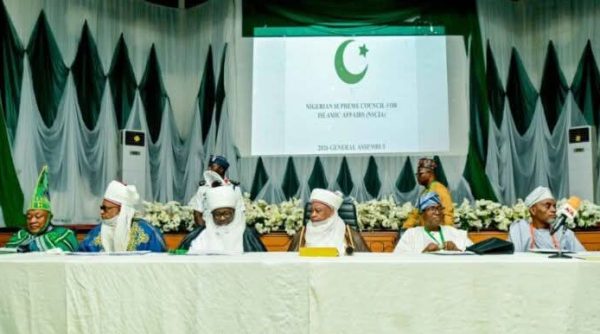
The Nigerian Supreme Council for Islamic Affairs (NSCIA) has approved an expanded leadership structure, appointing four additional Deputy Secretaries-General to oversee key areas of the Council’s affairs.
ASHENEWS reports that the decision was taken at the NSCIA General Assembly held in Abuja on Thursday, October 1, 2026, bringing together Muslim leaders, representatives of Islamic organisations and delegates from across the country.
Under the new structure, the existing Deputy Secretary-General, Professor Salisu Shehu, has been assigned responsibility for International Affairs.
Professor Mahfouz A. Adedimeji was appointed Deputy Secretary-General in charge of National Affairs, while Abeny Mohammed, SAN, will oversee Corporate Matters.
ALSO READ What next after a national prayer? By Dr Umar Jibrin Gwandu
The Council appointed Dr Bala Muhammad as Deputy Secretary-General in charge of Administration.
The Council also named Dr Umar Jibrin Gwandu, a journalist and Head, Department of Mass Communications at the Usmanu Danfodiyo University Sokoto (UDUS), as Public Relations Officer (PRO), while Sekinat Lawal was appointed Deputy Public Relations Officer (DPRO).
The expanded structure retains Sultan Muhammad Sa’ad Abubakar as President-General of the NSCIA.
The Council’s leadership also includes the Shehu of Borno, Abubakar Umar Ibn Garbai El-Kanemi, as Deputy President-General (North), and Rasaki Oladejo as Deputy President-General (South), while Professor Is-haq Olanrewaju Oloyede remains the organisation’s Secretary-General.
The appointments are aimed at assigning specific portfolios to the Deputy Secretaries-General and strengthening the coordination and administration of the Council’s affairs.
The General Assembly, which is the highest decision-making organ of the NSCIA, also deliberated on issues affecting the Muslim community and the wider Nigerian society.
The assembly followed a Special National Prayer for Nigeria held on September 30 at the Abuja National Mosque Complex, where prayers were offered for peace, unity, security, good governance and sustainable development in the country.
