


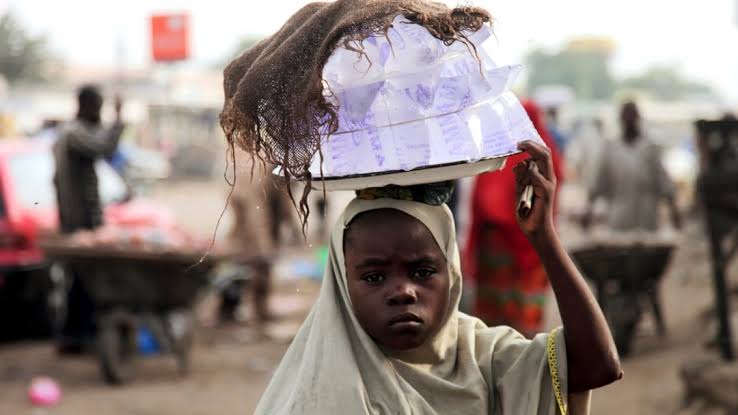
The Ministry for Women Affairs and Social Development in Niger marked this year’s World Day Against Child Labour on Friday, urging concerted efforts to eliminate the menace.
The ministry celebrated the day in collaboration with the Network Against Child Trafficking, Abuse, and Labour (NACTAL) and the Child Protection Network (CPN).
The event’s theme was “Red Card to Child Labour: Fair Play for Children, Decent Work for Adults.”
In a lecture, Uma Mohammed, Director-General of the Niger Child Rights Agency, described child labour as “any form of work that harms a child’s development, dignity, health, or education.”
She highlighted that child labour remains a major challenge in Niger, with children engaged in street hawking, domestic work, farming, mining, trafficking, and forced labour.
Mohammed explained that poverty, limited access to education, family hardship, weak enforcement of laws, and socio-cultural practices perpetuate the issue.
She noted that child labour is prevalent in farming, street trading, domestic work, informal businesses, and artisanal mining, exposing children to health risks, abuse, and emotional trauma.
Mohammed emphasized that education is the most effective tool for preventing child labour, as it equips children with skills, reduces poverty, and empowers vulnerable groups to reach their full potential.
She called for stronger child protection systems, improved school enrollment and retention, support for vulnerable families, strict enforcement of child rights laws, and sustained public awareness.
The Director-General urged government agencies, parents, community leaders, civil society organizations, and development partners to collaborate in protecting children and eliminating hazardous child labour.
“Every child deserves a childhood. A child belongs in school, not at work,” she said.
Kalejaiye Olasunkanmi, Niger Coordinator of NACTAL, discussed migration governance in Nigeria, noting that Nigeria has several legal frameworks to protect children.
He explained that migration efforts are closely linked to combating child trafficking and labour, emphasizing the need for coordinated action at all levels.
Olasunkanmi disclosed that since 2017, over 32,000 Nigerian migrants have voluntarily or forcibly returned from countries including Libya, Niger, Mali, Italy, Sweden, the Netherlands, and the UK.
Speaking to reporters, Mrs. Hadiza Kuta, Commissioner for Women Affairs and Social Development, said the event was an opportunity for stakeholders to renew commitments to ending child labour.
She highlighted that the 2026 theme underscores the importance of eliminating child labour and keeping children in school for their full development.
Kuta added that child labour is a societal challenge requiring collective responsibility from government, parents, community leaders, religious bodies, and individuals.
She announced that the ministry would intensify awareness campaigns across communities, schools, and rural areas to highlight the dangers of child labour.
“We are scaling up grassroots sensitization to ensure parents and guardians receive accurate information, especially where child labour is most prevalent,” she stated.
Mrs. Maryamu Shuaibu, Deputy Director of the Child Development Department, stressed that parents must protect children from exploitation.
She said children should only perform light, age-appropriate tasks that do not interfere with their education.
“Education remains a top priority. Parents must ensure children are in school rather than engaged in income-generating or excessive domestic work,” Shuaibu emphasized.
She urged beneficiaries of government empowerment programs to use support wisely to improve their livelihoods and reduce child labour.
Shuaibu called for ongoing sensitization, noting that poverty, ignorance, and socio-economic factors drive child labour, which can only be addressed through sustained collaboration.
