


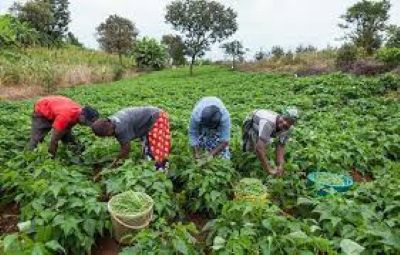
The Bauchi State Commissioner for Agriculture, Dr Ilyasu Gital, has lamented the worsening conditions faced by farmers in the state due to rising costs of farm inputs and falling market prices for agricultural produce.
Speaking in Bauchi on Wednesday, Gital described the situation as “uncommon, unusual and very pathetic.”
He attributed the challenges confronting farmers to the soaring prices of farm inputs and the drastic decline in the market value of agricultural produce, noting that the combination has made farming largely unprofitable.
According to the commissioner, many farmers can no longer afford essential inputs such as fertiliser, pesticides and improved farming technologies required to achieve optimal yields.
“The high cost of inputs has forced farmers to drastically reduce their usage. A farmer who ideally should apply up to ten bags of fertiliser now manages with just four or five, leading to a significant reduction in output,” he said.
Gital warned that low yields, combined with poor market prices, have pushed many farmers into operating at a loss.
“If you don’t apply the right quantity of inputs, your yields will be abysmally low. When that is combined with low prices at the market, the farmer doesn’t even break even. It is a serious minus,” he added.
He recalled that although farm inputs had been expensive in previous years, farmers were compensated by favourable prices for their produce, noting that the balance no longer exists.
The commissioner revealed that a bag of produce that once sold for about ₦100,000 now goes for roughly ₦30,000, representing nearly a 60 per cent loss.
Gital blamed the price crash partly on the continued importation of commodities such as maize, rice and soybean despite strong local demand.
He argued that excessive imports undermine local farmers and discourage domestic production, adding that the Bauchi State Government is engaging the Federal Government to address the situation.
He further noted that low food prices do not necessarily improve farmers’ living conditions, as the cost of essential non-food items remains high.
The commissioner urged farmers to explore dry-season farming, which he described as more capital-intensive but significantly more profitable, with yields potentially four times higher than those of the rainy season.
