


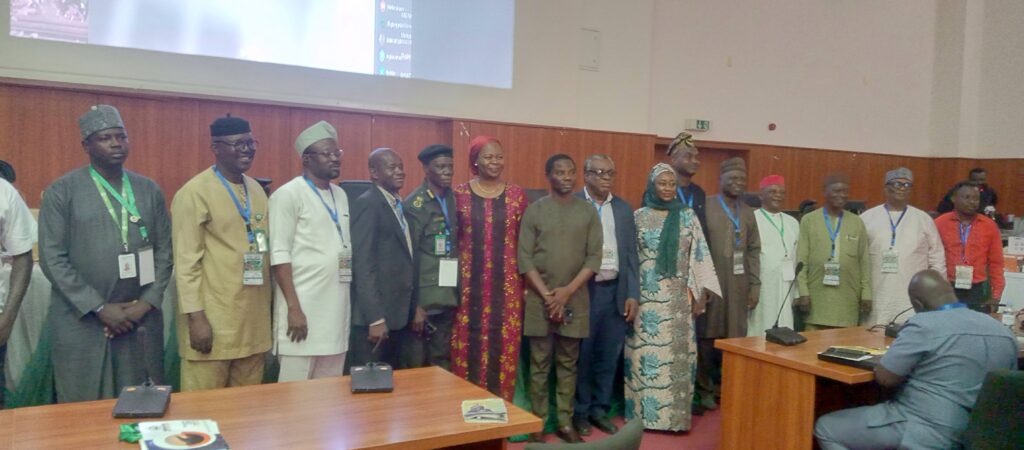
The Organic and Agroecology Initiative of Nigeria (ORAIN) has called for a shift from chemical-dependent farming to safer, more nutritious and environmentally sustainable food production.
ORAIN National President Peter Bakare made the call on Tuesday in Abuja at the 2026 National Organic and Agroecology Business Summit (NOABS) and National Conference and Policy-to-Action Dialogue.
The summit’s theme was: “From Evidence to Action: Advancing Farmers’ Rights, Responsibilities and Agroecological Food Systems Transformation in Nigeria.”
Bakare said Nigeria was at a critical crossroads, as rising food demand continued to put pressure on soil, ecosystems and public health.
He attributed the challenges to the indiscriminate use of synthetic chemicals, pesticides and soil-degrading inputs, while consumers continued to demand safe and nutritious food.
He said the summit was designed to turn policy discussions into practical action and business opportunities that would advance sustainable agriculture.
“The summit was designed to move beyond policy discussions into actionable commerce, with a focus on protecting soil and health by rebuilding degraded soils and ensuring access to wholesome and poison-free food.
“It is also geared towards unlocking market opportunities by strengthening common market platforms, improving quality assurance and scaling value chains, and fostering strategic partnerships among smallholder farmers, private-sector investors and regulators.
“The regulators are NAFDAC, the Standards Organisation of Nigeria (SON) and the Federal Ministry of Agriculture and Food Security,” he said.
Bakare said ORAIN was a coalition of farmers, researchers, processors, regulators and advocates committed to transforming Nigeria’s food production, processing and consumption systems.
He urged participants—including farmers, investors and policymakers—to forge business links, share practical innovations and build a resilient agroecological economy.
The Conservator-General of the National Park Service, Dr Ibrahim Goni, urged farmers, policymakers and other stakeholders to adopt agroecological and organic farming practices.
He said these practices could protect the environment while improving agricultural productivity, livelihoods and national food security.
According to him, they also offered opportunities to improve soil health, conserve water, protect pollinators and strengthen agricultural communities’ resilience to climate change.
Goni called for stronger collaboration among conservation agencies, farmers, policymakers, researchers and local communities to promote sustainable farming.
He also urged farmers to adopt responsible land-use practices to prevent encroachment into protected areas, minimise habitat destruction and promote peaceful coexistence between people and wildlife.
“I call on participants to translate the evidence, ideas and recommendations from the conference into practical actions that will advance biodiversity conservation, sustainable agriculture and national food security,” he said.
Goni said the summit’s theme was timely amid growing concerns over food security, climate change, biodiversity loss and environmental degradation.
He said the National Park Service recognised the close relationship between environmental conservation and sustainable agriculture.
“National parks and other protected areas play vital roles in preserving biodiversity, protecting wildlife, maintaining ecological balance and safeguarding natural resources that support human livelihoods.
“We remain committed to partnerships that promote environmental sustainability and responsible management of Nigeria’s natural heritage,” he said.
