


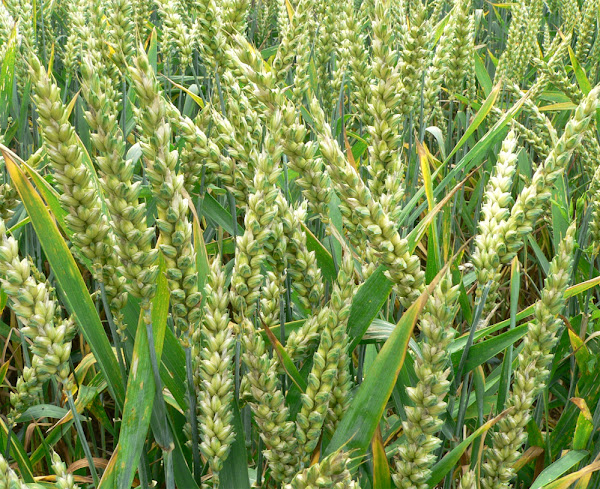
The Federal Government says Nigeria’s annual wheat production has risen from 120,000 metric tonnes to 420,000 metric tonnes through the National Agricultural Growth Scheme and Agro-Pocket (NAGS-AP).
The scheme forms part of President Bola Tinubu’s Renewed Hope Agenda.
Prof. Ademola Adenle, Senior Special Adviser on Agriculture and Innovation to the Minister of Agriculture and Food Security, disclosed this in an interview with reporters in Abuja on Saturday while reviewing achievements in the sector.
NAGS-AP is a flagship federal government project aimed at bridging food supply gaps and achieving national food sovereignty by providing subsidised high-quality agricultural inputs directly to smallholder farmers.
Adenle said the initiative was designed to help farmers access the inputs needed to boost productivity. He identified fertilisers, improved seeds and essential extension services as key components for transforming the agricultural sector.
“We have implemented NAGS-AP under the Renewed Hope Agenda.
The whole idea is to provide inputs to farmers, such as fertilisers, chemicals and essential services, through agro-dealers,” he said.
He added that the initiative had delivered a 300 per cent increase in production across various crops, especially wheat.
“We have recorded about a 300 per cent increase in wheat production.
Before, we were producing around 120,000 metric tonnes annually, which was the baseline.
But with the introduction of inputs provided under the Renewed Hope Agenda, wheat farmers have enjoyed a 300 per cent increase in production.
So, that is massive — from 120,000 tonnes to 420,000 tonnes annually. That is huge,” he said.
Adenle added that the ministry would soon begin reforms covering various aspects of the agricultural sector to strengthen the system.
He decried the country’s low agricultural productivity and blamed it partly on the obsolete Land Use Act.
“We are going to address the issue of the Land Use Act, which is one of the structural problems of the agricultural sector in Nigeria.
The Land Use Act is quite old. We are currently using the 1978 Land Use Act which, obviously, vests power in the hands of state governments and has an inefficient traditional system of accessing land.
That has affected smallholders, because smallholder farmers only cultivate an average of 0.5 to two hectares of land.
So, how do we increase that to enhance production is what we are going to be working on,” he said.
He emphasised that the reform would touch every segment of the agricultural sector and help address challenges across the value chain — from production and processing to distribution and marketing.
“With that reform in place, it will help enhance productivity and increase the level of income among farmers, among other benefits,” he added.
