


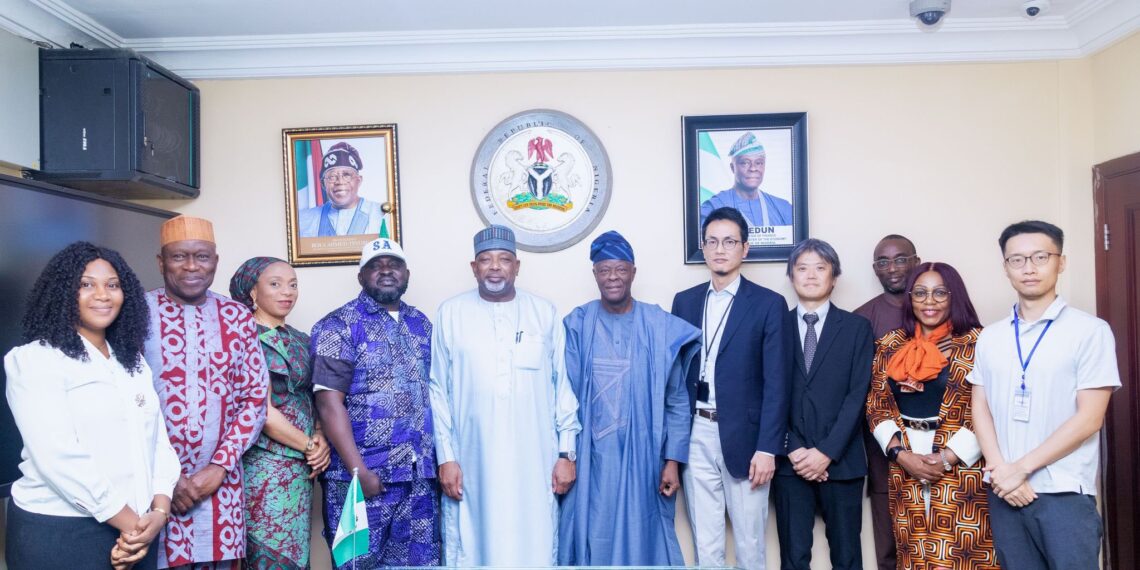
The Federal government of Nigeria is advancing talks with the Japan International Cooperation Agency (JICA) for a ¥15 billion (approximately $110 million) emergency loan to strengthen Nigeria’s food security efforts.
This was disclosed in a statement on Wednesday by the Federal Ministry of Finance and the Coordinating Ministry of the Economy, following a strategic meeting involving the Minister of Finance, Wale Edun; the Minister of Agriculture and Food Security, Senator Abubakar Kyari; and senior JICA officials.
According to the statement, the meeting focused on accelerating the implementation of the Food Security Emergency Loan Support Programme, which aims to enhance agricultural productivity and build resilience amid global supply chain disruptions and inflationary pressures.
“The JPY 15 billion facility (approximately $110 million) aims to support Nigeria’s food production systems and enhance resilience amid ongoing global supply challenges,” the ministry said.
With the 2025 rainy season underway, both ministers emphasized the urgency of rolling out critical components of the programme to ensure timely support for farmers and rural communities. “Swift, coordinated action is essential to maximise impact,” the statement noted.
While reaffirming its commitment to the partnership, JICA requested formal clarification on proposed changes to the programme’s implementation framework. It was agreed that immediate production activities would continue under the current agreement, while components such as aggregation and financing would be reviewed to ensure alignment with the original terms.
“JICA welcomed the government’s commitment to delivery and requested formal clarification on proposed implementation adjustments,” the ministry stated. “It was jointly agreed that core production activities would proceed immediately, while other components would be reviewed accordingly.”
This loan is part of Nigeria’s wider strategy to tackle food insecurity, improve agricultural productivity, and stabilize the economy through international partnerships.
President Bola Tinubu has also written to the National Assembly seeking approval for a broader external borrowing plan of approximately $21.5 billion under the 2025–2026 borrowing programme. Included in this request are the ¥15 billion JICA loan and a €51 million grant to support key development priorities.
According to the president’s letter to the Senate, the new funding will be directed towards employment generation, skills development, entrepreneurship promotion, poverty reduction, and food security enhancement.
Nigeria’s current debt to Japan
As of December 2024, Nigeria owes JICA approximately $53.31 million, representing 0.88% of the country’s bilateral debt and 0.12% of its total external debt, according to the Debt Management Office (DMO). If approved, the new loan would increase Nigeria’s debt to JICA to about $163.31 million.
