


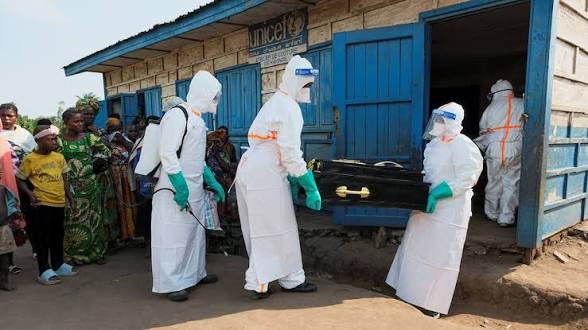
The Academy of Medical Sciences of Nigeria (AMedS) has urged the Nigeria Centre for Disease Control and Prevention (NCDC) to intensify surveillance of 53 contacts of the country’s index case of Ebola disease.
The academy made the call in a statement to reporters in Abuja on Monday. It was signed by the academy’s president, Prof. Osato Giwa-Osagie, and other officials.
The academy said the patient’s evacuation did not mark the end of Nigeria’s outbreak response, stressing the need to complete the mandatory 21-day follow-up of all contacts, including exposed health workers and domestic staff.
It said the evacuation of the 42-year-old Ugandan-born woman to Switzerland on Oct. 26, accompanied by her asymptomatic spouse, was permissible under the International Health Regulations (IHR) and consistent with medical guidelines.
The academy commended Nigerian clinicians, nurses, laboratory scientists and public health officers for stabilising the patient before her evacuation.
However, it stressed that clinical improvement did not necessarily mean the patient was no longer infectious. Her samples remained positive as of Oct. 25, while her husband tested negative, it said.
The academy called on the Federal Ministry of Health and Social Welfare and the NCDC to publish details of the evacuation.
“The details should include coordination with the World Health Organization (WHO), Switzerland, transport safety measures, aircraft decontamination and arrangements for sharing clinical and laboratory data.”
The academy expressed concern about delays in recognising the infection, noting that about 13 days elapsed between the onset of symptoms and testing, and that the patient reportedly visited more than one private health facility.
It said the case exposed gaps in the early detection of viral haemorrhagic fevers and underscored the need for health facilities to routinely obtain travel histories from patients presenting with fever.
“The Federal Ministry and NCDC should issue a national alert to public and private health facilities, directing them to promptly isolate and test suspected cases linked to affected areas,” the statement said.
The academy also recommended occupational health follow-up and psychosocial support for exposed health workers, as well as adequate welfare support for quarantined contacts to encourage compliance.
To strengthen healthcare capacity, it called for at least one high-level isolation and treatment unit in each geopolitical zone, supported by trained personnel and access to investigational therapies through WHO-coordinated trials.
It further urged Nigerian authorities to secure access to relevant specimens, genetic sequence data and clinical records, enabling Nigerian scientists to participate in investigations into the source of infection, including its reported genetic link to cases in Kenya.
The academy stressed the need for humane quarantine arrangements, timely official briefings and measures to prevent stigma against contacts and health workers.
It advised the public to remain calm, rely on official information from the NCDC and the ministry, and seek prompt medical attention for fever after travelling to affected areas or coming into contact with a sick person.
The academy said Nigeria’s successful containment of Ebola in 2014 demonstrated the importance of rapid response, discipline and health workers’ commitment, adding that the same approach was needed to manage the current situation.
It pledged to make its experts in clinical care, infection prevention, laboratory science and public health available to support the national response.
