


The fact that hunger is destroying the Country is infuriating and frustrating. The cost of a 50 kg bag of rice has skyrocketed, ranging from 60 to 77k, out of reach for the average Nigerian. The salary of graduates of tertiary institutions can hardly purchase a bag of rice. I am exasperated each time I see the price of rice hitting 77k and above. My annoyance originates from my humble knowledge of the solutions to the issues. Still, we are unwilling to act in the right direction, stop the inflation, and bring down the prices of food items to the affordability of many Nigerians. With a high level of seriousness, we can drive down the cost of rice to 40k and below in eight months. Likewise, the prices of other food items can come down and chase hunger out of Nigeria. The country should have no business with hunger. How can we do that?
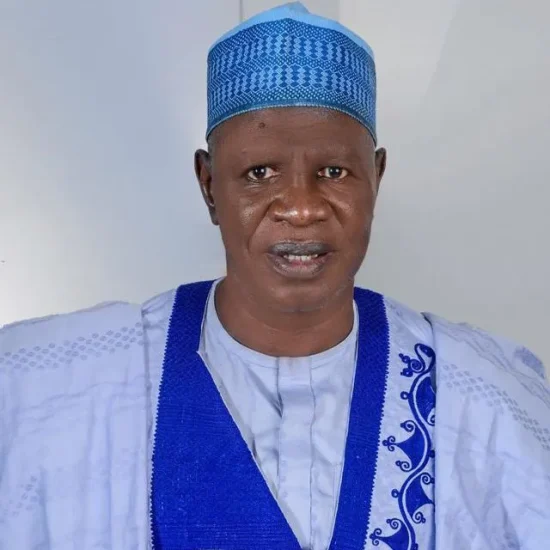
By Prof. M.K. Othman
Before discussing “how,” we must remind ourselves of the enormous agricultural resources naturally endowed in our country. Do you know Nigeria still receives an annual average of 1,160 mm and that at least 15% of its 91 million hectares of arable land is riparian? Again, about 90 percent of the total land area is arable, and only about 40 percent is cultivated. In addition, Nigeria has 171 medium- and large-scale dams with a total storage capacity of 36.7 billion m3 located across the states. These dams can command more than 1.8 million ha under irrigation, in addition to the extensive river system that can support the cultivation of 2.6 million ha of floodplain area under irrigation. In addition to vast water resources, the Country is blessed with fertile soil, a hospitable topography, and a favorable climate, enhancing its capability of producing over 100 agricultural commodities.
Labor is another critical factor facilitating agricultural development. Nigeria is massively blessed with labor. Nigeria’s population is mainly in the productive age range, which ensures that both skilled and unskilled farm labor will be available. These Nigerians will have business to do. Nigeria has a young population, with 42.54% of inhabitants between 0 and 14, and more than 50% are under 55. Nigeria has no business with hunger. Let’s design a strategy and move to conquer hunger.
A simple application of SWOT analysis can be employed to develop short-, medium–, and long-term strategies for the business of eradicating hunger and achieve food security.
ALSO READ Pervasive hunger: The Storms are Gathering, By Abdul-Azeez Suleiman
SWOT, an acronym for strength, weakness, opportunity, and threats, is a management tool for developing a strategic plan. It can help assess Nigerian agriculture’s strengths, weaknesses, opportunities, and threats for advancing the national goal of food security attainment.
On strength, the Country has a vast land, 17 agricultural research institutes, over 70 faculties of agriculture, a virile and active population of youths, uncountable agricultural innovations and research results on the shelf, multiple experts in all farming and related sectors, crop diversity, etc. These can all be mobilized to form a formidable force for the business of winning our fight against hunger. On weaknesses, we have low productivity of both crops and livestock, poor-resourced, over-aged, and uneducated farmers, and low public and private investment in agriculture (less than 3 percent of the annual budget is allocated to agriculture). Others are inadequate and dysfunctional infrastructure, insufficient and ineffective extension services, poor access to finance, etc. In terms of opportunities, Nigeria’s Population is expanding quickly, which could be galvanized and used to boost productivity and create new markets, among other things. The war against hunger is an enormous task.
On threats: the biggest and most deadly threats are banditry and insurgency. Primary agricultural activities are carried out in rural areas, where these threats nurture and blossom. Additional risks include weak institutions, inconsistent policies, high production and transportation costs, large-scale agricultural product imports, pests and diseases, market competition, and poor regulatory frameworks. All these threats challenge Nigeria’s growth and development. Fortunately, all these issues are well-known and documented by various stakeholders at conferences and symposiums. We must dust such documents to fight hunger, as Nigerians have no business going to bed on an empty stomach.
ALSO READ Buhari insists Tinubu is doing well, despite hunger, insecurity
Our short-term strategy for bringing down the prices of agricultural commodities must first address our weaknesses and threats to enable an astronomic increase in agricultural productivity. The potential yield of 8–12 tons/ha for cereal crops is far higher than the national average yield of 1.2 tons/ha, as stated multiple times on this page. For example, the national average yields of maize and rice are 1.64 tons/ha and 2.0 tons/ha, respectively, against the potential yields of 10 tons/ha and 12 tons/ha. Even cassava, the crop for which Nigeria has a reputation for being the leading Country in the world in terms of production, has an average yield of 13 tons/ha against the potential yield of 60 tons/ha. Inadequate or inaccessible improved production technologies, improved seeds, practices, suitable equipment, inadequate infrastructures, and skill are the causes of this low productivity.
So, the short-term must involve massive deployment of enhanced production, technologies, good agronomic practices, capacity building of farmers and extension workers, access to improved inputs, mechanization, and credit facilities. Another critical component of the short-term strategy is addressing banditry and insurgency. Here, synergy among the security agencies and community watch guards is paramount. Using kinetic and non-kinetic tools, intelligence gathering and utilization, and proactive operation can give quick and desired results. The federal government cannot do it alone, and it has to take a multifaceted approach involving relevant agencies, states, and local governments. Effective agricultural extension services must include traditional and electronic extension approaches. Fortunately, the N-power (Agro) beneficiaries are available, and some of them are unemployed and redundant; they can be engaged to resume with the commencement of this year’s wet season.
The medium-term strategy will involve adequate handling of the expected increase in yield of the 2024 wet season crops and preparation for the 2024 dry season. Senator Abubakar Kyari, Minister of Agriculture and Food Security, revealed the Federal Government’s plans for attaining food security last year, in 2023, at a press briefing on food security initiatives. He mentioned the deployment of a digital, mobile-based agro-industry system and e-extension platforms to support farmers in six geo-political regions across the nation and support livestock productivity with an annual growth rate of 10% to produce meat, dairy, eggs, fish, and other animal proteins, among others. Similarly, the strategy will cover the development of an intergovernmental partnership framework for implementing mutually beneficial agricultural projects between federal, state, and local governments. What is the Federal Government’s progress in achieving food security?
In addition, we need to upgrade and repair irrigation infrastructure as part of the medium-term plan to lessen our reliance on rain-fed agriculture. Wet-season farming has limited crop production to one season per year instead of two to three seasons when massive irrigation is adopted. Crop farming depends on rainfall because less than 10% of the nation’s potential irrigable land is currently under cultivation. How can we triple or quadruple the current irrigable land? To be continued next week.
