


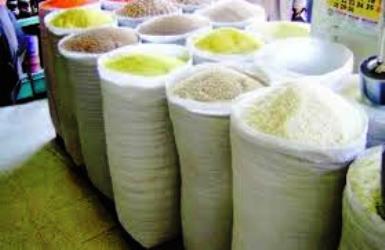
As bumper harvests are being recorded across parts of Nigeria, the anticipated effects on farm produce prices have been varied in Kano, Kaduna, and Katsina States.
In parts of Kano State and areas like Zaria and Kafanchan in Kaduna State, food prices have decreased. However, prices have remained high in certain areas of Kaduna city and across Katsina State.
Investigations revealed several factors influencing the varying prices of foodstuffs, impacting the purchasing power of ordinary citizens in these states.
In Kano State, the arrival of new harvests has led to a reduction in the prices of some food items. A survey conducted by NAN revealed that the prices of grains have decreased. However, local rice, which remains in high demand, is still costly, with a bag selling for between N150,000 and N170,000. A bag of maize is now N95,000, down from N105,000, while a bag of millet has dropped from N90,000 to N80,000. Beans, previously sold for between N170,000 and N180,000, are now N130,000, depending on quality. Groundnuts are selling for between N150,000 and N170,000, down from N200,000 in July.
The price of tomatoes has also dropped significantly in Kano, while onions have seen a price increase. A bowl and a measure of tomatoes, which previously sold for N3,200 and N3,500, respectively, are now N2,400 and N2,000. A bag of onions, however, is selling for N70,000.
Malam Tanko Idris, a produce dealer, attributed the availability of products to bumper harvests. Abubakar Labaran, another trader, explained that the recent rains severely affected onion production, leading to a shortage in supply and a subsequent price increase. On the other hand, the successful tomato harvest resulted in surplus supply and decreased prices.
ALSO READ Prices of perishable food items crash in Yobe, Borno, Adamawa – Reports
Customer Musa Shanono expressed optimism that food prices would drop further before November. “When people don’t produce but consume more, there is bound to be a food shortage, and the economy will become weak,” he said. Another customer, Ibrahim Ali, urged traders to refrain from hoarding food in an attempt to increase profits. Aisha Ali suggested the use of adequate storage systems to preserve perishable items like tomatoes during the harvest season to prepare for future scarcity.
According to her, the newly harvested crops have triggered a 30 percent drop in foodstuff prices in markets. In Kafanchan, farmers attributed the reduction in food prices to bumper harvests from their farms.
Farmers in Kafanchan echoed these sentiments in separate interviews. Amos Barnabas, a large-scale farmer, noted that food prices were gradually coming down as farmers began harvesting their crops. Ladi Gimba, a tomato seller, mentioned that tomatoes were now cheaper than at the beginning of the year. A basket of tomatoes, which once sold for N35,000, is now N22,000. She added that a basket of tomatoes sold for N17,000 during the same harvest period in 2023.
Another farmer, Kambai Modecai, expects food prices to fall further in the coming months following the Federal Government’s suspension of import duties on food items. Modecai welcomed the import waiver but believes that Nigeria is capable of feeding itself without opening its borders.
In Zaria, Kaduna State, the prices of agricultural commodities stabilized in August at major markets within the zone, particularly at the Anchau weekly market in Kubau LGA. On August 6, hybrid maize (white, red, and yellow) was selling for N85,000 for a 100kg bag. Local maize (white and yellow) was going for ₦75,000 per 100kg bag. Soybeans were selling for between ₦90,000 and ₦95,000 per 100kg bag, while Sorghum (short kaura and white) was ₦82,000 per 100kg bag. Cowpeas (white and brown) were priced between N160,000 and N190,000 per 100kg bag. Millet (Dauro) was going for ₦86,000 per 100kg; Paddy rice ₦60,000 per 80kg, and milled rice ₦140,000 per 100kg bag.
On August 7 at the Saminaka market in Lere LGA, the price of hybrid maize dropped to N73,000, while local rice was N70,000 per 100kg bag. Paddy rice was between N58,000 and N60,000, Soybeans N90,000, Sorghum N73,000, and Cowpeas between N140,000 and N160,000.
However, prices were slightly higher in Giwa LGA on Thursday, where a 100kg bag of maize was priced between N88,000 and N91,000. Paddy rice was between N65,000 and N70,000, Soybeans N96,000, and Sorghum N90,000. Millet was priced at N90,000, while a 100kg bag of Cowpeas (brown) was N200,000, and white Cowpeas were N165,000.
In Kaduna city, residents expressed concerns that the reported reductions in food prices were not reflected in local markets. Both consumers and sellers reported little to no change in food prices. Mas’ud Abubakar, a food items seller at the Kasuwan Barci market, stated that prices have remained the same for the past two weeks, with rice selling for N2,400 per measure, beans at N2,700, wheat at N1,600, and garri at N1,300.
Zahradeen Kabir, another food seller, noted an increase in some prices, selling rice for N2,700 per measure, up from N2,400. Consumer Amina Mohammed shared that she recently bought rice for N2,300 per measure, a slight reduction from the previous price of N2,400. However, she noted that the prices of beans and corn flour remained unchanged, urging the government and stakeholders to make food more affordable.
In Katsina State, food prices remained high despite new harvests, while prices for perishable commodities have decreased. A survey showed that while some food prices have dropped, others remain elevated. For example, a 50kg bag of local rice now costs about N75,600, down from N83,300. A 100kg bag of beans, previously sold at N200,000, has dropped to about N168,000, depending on quality and market conditions. A measure of beans now sells for around N4,200, down from N5,000.
However, the price of millet has remained steady at between N85,000 and N100,000 per 100kg bag, while a 100kg bag of maize is selling for N92,000, with a measure costing N2,300 and above in many places.
Yusuf Ibrahim, a family man, described the situation as worrisome, despite the slight decrease in prices. “I recently bought a bowl of local rice and beans for N4,500 and N4,200, respectively, down from N4,900 and N5,100 last month. It’s the harvest period, so the prices of food items will continue falling as new crops reach the markets,” he said.
Bala Mai-Doya, a yam dealer in Katsina, stated that they are still struggling with high prices. “Even if there is a reduction in price, it is not as much as expected,” he said. Grace Audu, a restaurant operator, mentioned that she no longer sells pounded yams due to the high cost of yams in the market. “It’s been a long time since I bought yam because of its high cost,” she lamented.
The survey further revealed that the recent frequent rainfall in the state has led to a reduction in tomato prices across some markets. Abubakar Adamu, a perishables seller at Kasuwan Gwari, noted that the price of different baskets of tomatoes had drastically reduced. A big basket, which previously sold for about N120,000 to N150,000, is now selling for N20,000 to N25,000. A small and medium basket, once sold for N40,000 to N50,000, is now N10,000 and below. Adamu attributed this reduction to bumper harvests during the rainy season. “Prices will continue to go down until everyone can afford to buy,” he said.
Abdulrahman Sani, a household leader, shared that a few months ago, he spent about N1,500 to prepare a stew, but now he spends not more than N500 on vegetables for soup. “We are happy with this development because most families found it challenging a few months ago. We hope prices will keep coming down,” he said.
Farmers are predicting further reductions in food prices, as they expect bumper harvests. They commended the state government for selling 20,000 metric tons of fertilizer to farmers at subsidized prices. The fertilizers were sold at N25,000 per bag of NPK and Urea, which costs N38,000 to N40,000 and above in the markets. The government also recruited over 772 extension workers, providing them with motorcycles and other equipment to move around and educate farmers on improving productivity.
Gov. Dikko Radda emphasized during the launch of fertilizer sales that improving agricultural productivity is key to fighting poverty. “Agriculture is our major occupation, which is why we created the Katsina State Irrigation Authority. The authority is mandated to provide irrigation facilities for our farmers to facilitate year-round farming,” he said.
