


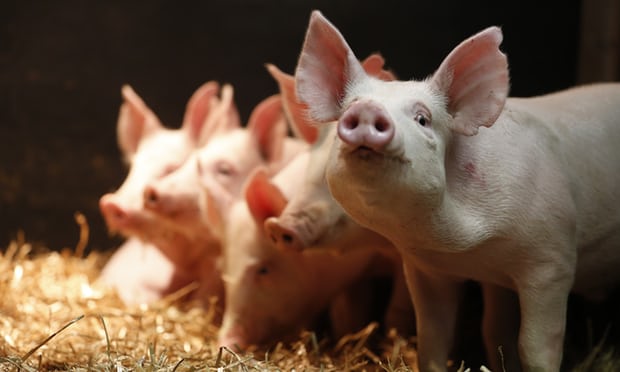
Some women in Bwari Area Council of the FCT now sustain their families by engaging in butchery and selling pig meat.
The women told reporters in Abuja on Monday that they ventured into the trade because of steady demand for pork and quick returns.
The women, who operate mostly from roadside stalls, said the business offered them an opportunity to earn a living in an environment where formal employment and other income-generating opportunities were limited.
Mrs Grace Namu, a mother of three, said she entered the business after struggling to find a reliable source of income.
“I started with very little money, but I saw that people were buying pork regularly. I decided to take the risk because I needed something that would give me daily income,” she said.
Namu said she usually sourced her pigs from local farmers and livestock dealers in neighbouring communities within Bwari and Kaduna State.
According to her, the price of pigs varies according to their size, weight and prevailing market conditions, making capital a major challenge facing women in the trade.
“Sometimes, the money you have may not be enough to buy a big pig, so you buy a smaller one.
“Pigs are expensive animals, transporting them is also expensive, and after buying the animal, you still have to think about slaughtering, processing and preserving the meat,” she said.
She said that access to cold storage would significantly reduce losses, especially when sales were slow, adding that preservation, electricity and storage were notable challenges in the business.
“If we have proper facilities, the business will be much better,” she said.
Mrs Esther Paul, another meat trader in the area, said the attraction of the business was steady patronage.
She said customers included food vendors and mostly individuals who preferred to buy freshly slaughtered pork rather than frozen products.
“Those who patronise us mostly come in the evenings when returning from work or just passing by, while some customers come very early because they want fresh meat.
“Others call us to keep a particular quantity for them to take home and prepare themselves,” Paul said.
However, the trader noted that behind the apparent bustle of the business was a daily struggle with perceptions.
According to her, some people initially questioned why women should engage in butchery, particularly because butchery had traditionally been associated with men.
“When I started, some people laughed and asked what a woman was doing in a butcher’s place, but I did not allow that to discourage me because the business feeds my family.
“My husband did not have a problem with it because he met me while I was in the trade,” she said.
She said she was ready to improve the trade if provided with appropriate facilities and training that would help boost the profession.
“I would like a clean place where I can slaughter and process the animals, and if possible, employ workers that can assist me and make a living for themselves from it too.
“With flexible access to loans, we can buy more animals and expand production for as many consumers as possible,” she said.
The trader also noted that, in spite of the challenges, she had no regrets choosing the occupation.
She said: “People may call it a dirty job, but for me, it is an honest job. I work with my hands and I earn money to take care of my family.”
Paul added that they were not asking for special treatment, but for an enabling environment that would allow them to operate safely, maintain hygiene and grow their businesses.
She also appealed for affordable credit, modern slaughtering facilities, cold-storage equipment, training and better market infrastructure.
Mr Emmanuel Danwah, a regular customer at one of the stalls, said he had no reservations about buying pork from women as long as the meat was properly handled.
“What matters to me is cleanliness and the quality of the meat, and it is softer, unlike cow meat. If a woman can provide fresh pork and maintain good hygiene, I will buy from her,” he said.
He added that the women deserved encouragement because many of them were using the business to support their families and should not be looked down upon.
Similarly, Mr Solomon Asunoh, a community member, said the women’s participation in the trade was evidence of a change in economic reality, although it had been in existence for long.
He said the women butchers had demonstrated resilience by venturing into a business that many people considered physically demanding and traditionally male-dominated.
“They have shown that women can take up difficult businesses when there is an opportunity to make a living.
“What the community should demand is that the business is done properly and hygienically,” he said.
Asunoh, however, stressed the need for proper slaughtering facilities and responsible waste disposal to prevent the business from creating environmental and public health concerns.
Another customer, Mr Isaac Dogara, said he patronised the women for the “enriching meat” that was well spiced, adding that although it was not cheap, he preferred it to cow and chicken meat.
He described the women’s trade as “a changing face of women’s entrepreneurship in local communities”, where economic necessity and determination are pushing women beyond traditional occupations.
“It is a workplace, that is their source of dignity and, above all, a means of livelihood and survival. After all, it is a business that thrives and I commend their courage.”
