


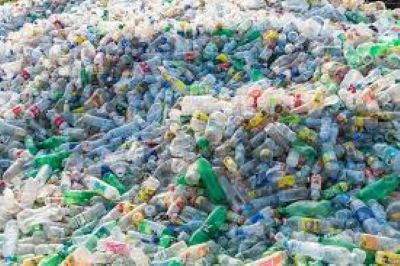
36 kilograms is the average amount of plastic packaging waste generated by a single EU citizen per year. Longer-term projections are equally grim, with the amount of plastic waste estimated to triple by 2060 globally. Increasing consumption is driving the search for alternatives – biodegradable and durable materials that would not only replace but also outperform synthetic plastics.
Today, bioplastics are often named as one of the solutions for a more sustainable future, yet few know that this material is not a result of recent scientific work. Back in 1926, a French researcher Maurice Lemoigne discovered a way to produce bioplastic polyhydroxybutyrate; however, this solution was overshadowed by the cheap and seemingly endless oil industry. The consequences, however, are evident today: depleting oil resources and hard-to-imagine 400 million metric tonnes (equal to the weight of almost 40 Eiffel Towers) of synthetic plastic waste generated in 2021 alone.
Could bioplastics save the planet? Researchers at Kaunas University of Technology (KTU) say that without the responsible use of synthetic plastics, bioplastics can make little difference. However, innovative solutions are needed to tackle today’s global ecological crisis, and bioplastics can play a crucial role in the process.
Turning back to nature
Bioplastics, according to KTU professor Dr Ramunė Rutkaitė, is a broad concept that encompasses a whole range of materials differing both in their biodegradability and the sources from which they are made.
“Plastic is considered to be a bioplastic if it is made from renewable natural raw materials derived from biomass, natural or genetically modified organisms, or if it is biodegradable. There is a third type of bioplastic, however, which has both characteristics,” says Dr Rutkaitė.
Currently, according to the KTU professor, most bioplastics are produced from agricultural, so-called first-generation, feedstock, mainly using hydrocarbon-rich plants such as potatoes, corn, sugar cane, and wheat. This choice of bioplastic raw material inevitably raises an ethical question: can we let food be used for bioplastic bag production, for example?
“In this case, there is no doubt that feeding the world is the priority,” says Dr Rutkaitė, “and bioplastics should be produced using second and third-generation raw materials: natural raw materials that are not suitable for food or animal feed, such as algae biomass, municipal and industrial waste, including by-products of the food industry.”
Although the technologies for using second and third-generation feedstock for bioplastics are still being developed, KTU researchers study one of such materials, found in the inedible parts of many plants. Dr Ayodeji Amobonye, a KTU postdoctoral trainee from Nigeria, who is working on the project “Development of bioactive and biodegradable bioplastics from sustainable polysaccharides”, says that the idea to take a closer look at the protective structures of various plants as potential sources of the components for bioplastic production came from nature itself.
“This project, like many others, is inspired by nature, which encloses many of its fruits and seeds in ‘shells’ to protect them against unfavourable natural factors like humidity, UV rays, pathogens, and pests. Although the physical protection, for example in the nut shells, is mostly created by the lignocellulosic framework, it is, however, reinforced by various bioactive compounds. Hence, in developing new ways to produce functional bioplastics, we are exploring the potential of these natural compounds as key active agents,” says Dr Amobonye.
“Bio” does not necessarily stand for biodegradable
Biodegradability is the key feature of bioplastics that make them increasingly attractive in a wide range of industries, especially because the unique chemical and physical properties of biodegradable bioplastics may even make them outperform traditional petroleum-based plastics.
“Biodegradable bioplastics, under certain environmental conditions, can fully decompose into natural materials such as water, carbon dioxide, or compost. In this case, no bioplastic particles remain, so neither soil nor water resources are contaminated,” says Dr Rutkaitė.
Bioplastics with higher bioactivity, in turn, can also have extended functionality that may, for example, help to combat food waste, another world’s most pressing problem.
“The antimicrobial and antioxidant properties of these functionalised bioplastics are relevant for the food packaging industry because they could prolong the shelf-life of packaged goods, which could also help reduce food waste,” says Dr Amobonye.
However, it is important to remember that the name “bio” does not necessarily mean that all bioplastics are biodegradable. According to Dr Rutkaitė, some 100% bioplastics made from plant-based raw materials can be non-biodegradable, while some fossil-based plastics can quickly decompose.
“Biodegradability properties are more related to the chemical structure of the material rather than the source it is made from,” says the researcher. “Therefore, when recycling bioplastics, it is very important to look at the label on the bioplastic package. If it is labelled as home compostable, it can be composted in the household or thrown in the kitchen and food waste bin. On the other hand, if there is no such information, the bioplastic packaging should go into the plastic waste bin.”
Learning to live with plastics
Bioplastics alone will not save the world, Dr Rutkaitė is convinced. It can help reduce the use of fossil fuels in the plastics industry but, first and foremost, people must learn to manage vast amounts of synthetic plastics already polluting the earth. Recycling conventional plastics, she points out, has become even more important in recent years than the production of new bioplastics.
“Synthetic plastics are not the reason our planet is polluted. Human is the polluter who is unable or sometimes even unaware of the need to collect and recycle plastics,” emphasises Dr Rutkaitė. “Therefore, it is very important to improve the collection and sorting of plastic waste in all countries around the world, to reduce the use of single-use plastic products, to reuse them, and, above all, to raise consumer awareness, because, eventually, everyday behaviour determines the level of consumption and collection of plastic products.”
Yet, deep-rooted consumer habits are not the only hurdle for a rapid worldwide transition to a bioplastic future. The low cost and durability of synthetic plastics, at least for now, are irreplaceable. Moreover, the technology and infrastructure of bioplastics production from second- and third-generation feedstock is still underdeveloped, while the cost of existing bioplastics is several times higher than that of conventional plastics. This, in turn, makes a rapid global transition to bioplastics simply impossible, both researchers admit.
“We must, however, keep in mind that Rome was not built in a day, and most of the everyday technologies that we use now were at some point exclusive and expensive. Thus, we need continuous research and developmental efforts in the bioplastics field, which would facilitate innovation and allow the industry to reach its full potential,” says Dr Amobonye. He further adds that “waste-to-energy recycling, as well as mechanical and chemical recycling schemes, are top of the approaches for addressing the plastic waste problem. All three approaches are also used in Lithuania; however, mechanical and chemical recycling rates, following the new EU Packaging and Packaging Waste Regulation, which is expected to take effect soon, will have to be increased.”
