


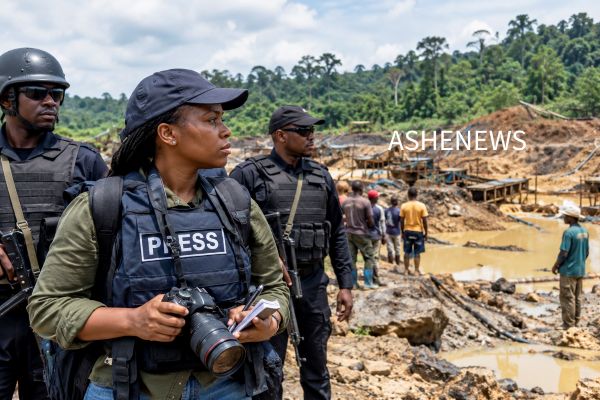
The International Press Institute (IPI) has urged African governments to strengthen legal and institutional protections for environmental journalists, investigate attacks against them, enact anti-SLAPP laws and guarantee public access to environmental information.
The recommendations, which come against the backdrop of what IPI described as a persistent pattern of attacks on journalists reporting on climate and environmental issues across Africa, are contained in the Institute’s submission to the United Nations Special Rapporteur on the right to a clean, healthy and sustainable environment, ahead of the preparation of the Rapporteur’s thematic report to the 64th session of the UN Human Rights Council.
IPI said environmental journalists should be formally recognised for their role in protecting the environment, promoting accountability and upholding the public’s right to know. It called on governments to protect them from physical and online threats, harassment, surveillance and arbitrary detention, while ensuring access to effective protection mechanisms.
It also urged states to promptly, independently and effectively investigate attacks and threats against environmental journalists, whether the perpetrators are state officials, private companies or other non-state actors.
According to its monitoring, IPI documented 45 press freedom threats and violations affecting 58 journalists covering climate and environmental issues between March 2025 and March 2026. The incidents included physical attacks, threats, arrest, detention and judicial harassment, particularly in reporting involving illegal mining, resource exploitation, land disputes, pollution and environmental degradation.
IPI said state actors accounted for approximately 62 per cent of the attacks it documented during the period, although journalists also faced reprisals from regulatory authorities, private companies, illegal mining groups and armed groups.
The institute documented 25 cases involving physical attacks and threats to journalists’ safety during the period under review.
Among the cases cited was that of Congolese journalist Fiston Wilondja Mazambi, who was abducted, tortured and killed in August 2025 while investigating allegations surrounding illegal gold mining and links between rebel groups and government authorities.
In Mozambique, journalist Carlitos Cadangue was shot at in February 2026 in an attack believed to be connected to his reporting on illegal mining and pollution. He had previously received threats.
In Ghana, at least five journalists covering an operation to shut down illegal mining facilities in Obuasi, Ashanti Region, were attacked by illegal miners on November 7, 2025. Two journalists sustained serious injuries after an accident while fleeing the attackers.
IPI also cited the January 19, 2026 assault on Daily Graphic reporter Timothy Ngnenbe and his cameraperson while covering an official investigation into illegal mining in the Offin Shelterbelt Forest Reserve. The journalists were reportedly forced to delete photographs and video footage they had taken.
Arrests, detention also target environmental reporting
IPI said environmental journalists are also being arrested and detained because of their work.
It documented 13 cases of arrest and detention between March 2025 and March 2026. In the Democratic Republic of Congo, journalist Stephane Shisso was arrested after a broadcast on land degradation and erosion linked to coltan mining and spent more than four months in military detention without being formally charged.
In Somalia, journalists reporting on sanitation, flooding and forced evictions faced arrest, assault and confiscation of their equipment.
IPI also highlighted the case of Mauritanian environmental activist Ali Ould Bakkar, who was arrested at his home in Nouadhibou on July 22, 2025 after reporting on alleged illegal fishing by Turkish foreign vessels in a restricted maritime area. Authorities accused him of publishing false information that harmed Mauritania’s foreign relations. He was released unconditionally after two months in detention.
The institute said legal and judicial harassment has become another tool used against journalists investigating environmental harm and corruption.
Its May 2026 research on Strategic Lawsuits Against Public Participation (SLAPPs) involving environmental and climate journalists identified cases in Ghana, Nigeria, Cameroon, Kenya, Somalia, Mozambique and South Africa.
IPI said weak legal safeguards, vague or restrictive laws and the absence of dedicated anti-SLAPP protections leave journalists exposed to lawsuits designed to burden, intimidate or silence them.
IPI calls for anti-SLAPP laws, access to environmental information
IPI specifically recommended comprehensive anti-SLAPP legislation, early dismissal mechanisms and effective remedies for journalists targeted through abusive litigation.
It also called for governments to guarantee access to environmental information, including proactive disclosure before, during and after environmental emergencies. Such measures, it said, should include access to affected sites and protection of confidential journalistic sources.
The institute further recommended the decriminalisation of defamation and said civil remedies should remain proportionate and should not be used to suppress public-interest environmental reporting.
It also called for an end to the misuse of cybercrime, national security, public-order and false-information laws to silence legitimate environmental journalism.
Attacks on journalists hurt communities, IPI says
Beyond the immediate harm to journalists, IPI warned that attacks on environmental reporters create information gaps that affect entire communities.
It said journalists provide communities with timely and accessible information about environmental risks, connect affected populations with authorities, amplify local concerns, expose environmental harm and failures in governance, and help counter misinformation and disinformation.
When journalists are threatened, detained or prevented from working, IPI said, communities can lose access to information needed to make decisions affecting their health, livelihoods, land and natural resources.
The institute therefore placed environmental journalism within the broader framework of environmental human rights protection. It argued that journalists occupy a distinctive position among environmental human rights defenders because they document environmental harm, expose abuses by state and private actors, inform affected communities and facilitate public participation and accountability.
IPI also linked protection of environmental journalism to international and regional commitments, including the African Union’s Agenda 2063 and the UN Sustainable Development Goals, saying both depend in practice on the availability, dissemination and use of timely and reliable environmental information.
African legal developments offer a basis for stronger protection
IPI pointed to recent court decisions and regional initiatives as evidence that stronger safeguards are possible.
It noted that courts in Kenya have struck down provisions of the Computer Misuse and Cybercrimes Act relating to false news, cyber harassment and website blocking. In Uganda, the Constitutional Court nullified several provisions of the Computer Misuse Act and criminal libel provisions, while Malawi’s High Court declared criminal defamation unconstitutional.
At the regional level, IPI highlighted the African Commission on Human and Peoples’ Rights’ Resolution 657, adopted in March 2026, which recognises access to climate and environmental information as fundamental to environmental protection, sustainable development and meaningful public participation.
The resolution also recognises the role of climate and environmental journalists in informing the public and promoting accountability, while calling for greater transparency from businesses operating in high-impact sectors such as mining, energy, agribusiness and infrastructure.
IPI further cited Resolution 667, adopted by the African Commission in July 2026, concerning the need for a study on SLAPPs in Africa. The resolution calls for action against litigation targeting journalists and human rights defenders and urges access to legal aid and support for victims, particularly vulnerable and financially disadvantaged groups.
In its submission, IPI ultimately urged the UN Special Rapporteur to treat the protection of environmental journalists and access to environmental information as integral components of the protection of environmental human rights defenders.
It said journalists must be able to work safely and independently if communities are to obtain the information they need to participate meaningfully in environmental decision-making and hold governments and private actors accountable for environmental harm.
The submission was made by IPI, a global network of editors, media executives and leading journalists dedicated to quality and independent journalism and to defending media freedom and the free flow of news.
