


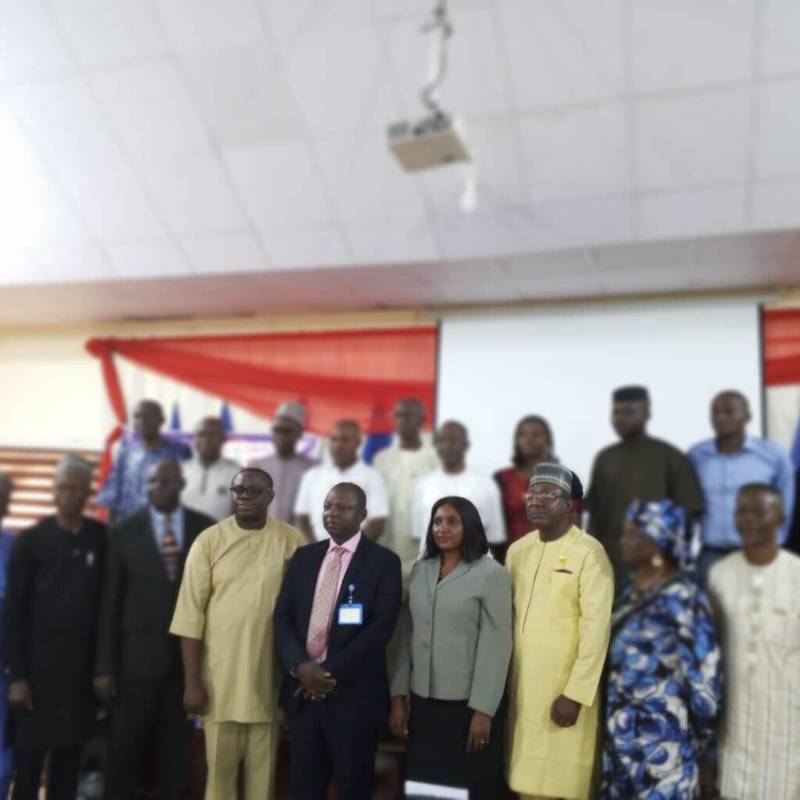
Prof. Haruna Ayuba, Vice-Chancellor of Bingham University Karu, Nasarawa State, emphasized that effective supervision and mentorship are vital to the success of the Students’ Industrial Work Experience Scheme (SIWES).
Ayuba made this statement at the Capacity Building Training Programme for Departmental SIWES coordinators, organized by the SIWES Directorate of Bingham University on Thursday in Karu.
He explained that such supervision and mentorship ensure students meet their learning objectives.
The training was titled “Transforming SIWES: Building Capacity, Strengthening Foundations for Enhanced Performance.”
Ayuba stated that the programme aligns with their goal of nurturing competent, industry-ready graduates who can contribute meaningfully to Nigeria’s development.
He noted that SIWES has been a crucial part of students’ academic journey, bridging the gap between theory and practical industry experience.
Ayuba added that the event aimed to reinforce the vital link that would equip staff and stakeholders with skills, knowledge, and innovative approaches to improve the scheme’s impact.
“For us to transform SIWES at Bingham University, we need a concerted effort to build capacity at every level.
“We have supported the Director of SIWES to participate in various trainings. Officials from the ITF Lafia Area Office have also visited the university to sensitize staff and students.
“Today, we have gathered all participating staff for training.
“We believe that strengthening staff capacity will empower students to become change agents in their fields,” he said.
Ayuba further explained that the capacity-building training included comprehensive sessions addressing key aspects of SIWES administration and implementation.
He urged participants to maximize this opportunity for learning, idea exchange, and networking, viewing it as a strategic step toward transforming SIWES into a model of excellence.
He commended the Director of the SIWES Directorate, Dr. Joyce Ishegbe, and her team for organizing the training, as well as all resource persons for sharing their insights.
“Together, let us work to make SIWES a powerful tool for capacity building, innovation, and sustainable development,” he said.
Also speaking, Ishegbe described the event as a significant step in strengthening the administration of SIWES at Bingham University.
She explained that the theme was carefully chosen because SIWES is not just a graduation requirement but a statutory bridge mandated by the Industrial Training Fund and the National Universities Commission.
“The quality of our graduates’ practical skills, the integrity of our records, and the university’s reputation depend heavily on deans, heads of departments, and departmental coordinators.
“You are the frontline officers who interface with industry, mentor students, and safeguard data that shapes their future.
“However, we have observed issues such as missing data, delayed submissions, unsubmitted logbooks, weak industry linkages, and informal handovers that erode institutional memory,” she noted.
She emphasized that the new Standard Operating Procedures launched today are a response to these challenges and will equip staff with practical tools for SIWES digitalization.
Other focus areas included effective communication strategies, proper documentation, assessment for ITF/NUC compliance, industry engagement, and a clear handover process to preserve student records.
She urged participants to ask questions and share experiences, emphasizing that the success of SIWES at Bingham University depends on teamwork.
Ishegbe appreciated the Vice-Chancellor for approving the programme and supporting SIWES operations.
Mrs. Na’anpoe Shwatshak, Head of Training at the ITF Lafia Area Office and a resource person, explained that SIWES is a skills training programme exposing students to industrial work methods and equipment.
On the topic “Best Practices for Record Keeping, SIWES Reporting, and Evaluation,” she stated that the scheme’s success relies on accurate record keeping, timely reporting, and fair evaluation.
“Students should maintain a daily logbook detailing activities, tasks, equipment used, skills acquired, challenges faced, and supervisor comments and signatures.”
She urged coordinators and supervisors to document everything, stressing that records are evidence, reports are voices, and evaluations reflect integrity.
Dr. Ibrahim Ewa, Director of SIWES at Nasarawa State University, Keffi, discussed conflict resolution strategies for SIWES challenges, noting that conflicts often involve disputes over rights, power, and resources.
He recommended early communication, thorough documentation, and separating people from problems, warning that many conflicts arise because expectations are not documented.
Dr. Gabriel Anyanwu, Director of the Advancement Office and HOD of Biochemistry, spoke on managing student supervision and feedback for optimal performance, emphasizing collaboration among institutions, employers, and students.
He explained that effective supervision involves structured orientation, continuous oversight, and actionable feedback to bridge classroom learning and workplace realities.
He advised institutions to conduct mandatory orientation seminars on scheme objectives, workplace ethics, and documentation protocols, including logbook entries and form submissions.
He also stressed ensuring students have all necessary SIWES materials, such as the SCAF, ITF Form 8, and guidelines.
