

• Home
  • Agric
  • Sci & Tech
  • Health
  • Environment
  • Hausa News
  • More
    • Business/Banking & Finance
    • POLITICS
    • Entertainments & Sports
    • International
    • Investigation
    • Law & Human Rights
    • Africa
    • ACCOUNTABILITY/CORRUPTION
    • Hassan Gimba
    • Column
    • Prof. Jibrin Ibrahim
    • Prof. M.K. Othman
    • Defense/Security
    • Education
    • Energy/Electricity
    • Entertainment/Arts & Sports
    • Society and Lifestyle
    • Food & Agriculture
    • Health & Healthy Living
    • International News
    • Interviews
    • Investigation/Fact-Check
    • LAW & HUMAN RIGHTS
    • Oil & Gas/Mineral Resources
    • PRESS FREEDOM/JOURNALISM/PR
    • General News
    • Presidency
  • About Us
    • Contact Us
    • Board Of Advisory
    • Privacy Policy
    • Ethics Policy
    • Teamwork And Collaboration Policy
    • Fact-Checking Policy
    • Advertising
  • Media OutReach Newswire
    • Wire News
  • The Stories
Facebook Twitter Instagram
Trending
  • Association trains farmers on agroforestry, carbon opportunities
  • Nigerian SMEs boost growth via digital payments, investments
  • Benin residents urge quick completion of Ramat park flyover
  • NCoS launches new PPP committee for infrastructure projects
  • Osun residents seek alternatives amid gas price surge
  • Lagos police nab woman over human trafficking of Kaduna girls
  • Jigawa techs call for vocational skills support
  • Oyo assembly cancels anniversary celebrations over security concerns
Facebook Twitter Instagram YouTube
AsheNewsAsheNews
  • Home
  • Agric

    Association trains farmers on agroforestry, carbon opportunities

    June 18, 2026

    IWMI, IFPRI link Kano farmers to solar irrigation support

    June 17, 2026

    Dangote expects over $4bn annual forex earnings from fertiliser exports

    June 16, 2026

    AFAN Kano calls for fertilizer subsidy to boost agriculture

    June 16, 2026

    Food security expert urges youth involvement in agriculture

    June 16, 2026
  • Sci & Tech

    Nigerian SMEs boost growth via digital payments, investments

    June 18, 2026

    Jigawa techs call for vocational skills support

    June 18, 2026

    Mupita warns against rising Afrophobic sentiments

    June 18, 2026

    AI expert urges youth to focus on human skills

    June 18, 2026

    Nigeria fully digitized 38 MDAs, says civil service head

    June 17, 2026
  • Health

    WHO releases first guidelines for Filovirus diseases

    June 18, 2026

    NAFDAC prepares for second phase of sachet alcohol enforcement

    June 18, 2026

    Nigeria launches N50m fund for cancer patients

    June 17, 2026

    NEDC boosts healthcare in Adamawa

    June 17, 2026

    Niger intensifies Ebola screening for returning pilgrims from Saudi Arabia

    June 17, 2026
  • Environment

    Benin residents urge quick completion of Ramat park flyover

    June 18, 2026

    Shettima urges states to document assets, boost investment, tourism

    June 18, 2026

    GlobalFact summit brings 500 fact-checkers from 80 countries to Lithuania

    June 17, 2026

    All injured passengers discharged after train accident

    June 16, 2026

    SWEEP calls for waste management reforms in Lagos

    June 16, 2026
  • Hausa News

    UNA signs MoU to launch air Bissau in Guinea-Bissau

    June 15, 2026

    Otti plans 250-room 5-star hotel in Umuahia

    April 11, 2026

    Anti-quackery task force seals 4 fake hospitals in Rivers

    August 29, 2025

    [BIDIYO] Yadda na lashe gasa ta duniya a fannin Ingilishi – Rukayya ‘yar shekara 17

    August 6, 2025

    A Saka Baki, A Sasanta Saɓani Tsakanin ‘Yanjarida Da Liman, Daga Muhammad Sajo

    May 21, 2025
  • More
    1. Business/Banking & Finance
    2. POLITICS
    3. Entertainments & Sports
    4. International
    5. Investigation
    6. Law & Human Rights
    7. Africa
    8. ACCOUNTABILITY/CORRUPTION
    9. Hassan Gimba
    10. Column
    11. Prof. Jibrin Ibrahim
    12. Prof. M.K. Othman
    13. Defense/Security
    14. Education
    15. Energy/Electricity
    16. Entertainment/Arts & Sports
    17. Society and Lifestyle
    18. Food & Agriculture
    19. Health & Healthy Living
    20. International News
    21. Interviews
    22. Investigation/Fact-Check
    23. LAW & HUMAN RIGHTS
    24. Oil & Gas/Mineral Resources
    25. PRESS FREEDOM/JOURNALISM/PR
    26. General News
    27. Presidency
    Featured
    Recent

    Association trains farmers on agroforestry, carbon opportunities

    June 18, 2026

    Nigerian SMEs boost growth via digital payments, investments

    June 18, 2026

    Benin residents urge quick completion of Ramat park flyover

    June 18, 2026
  • About Us
    1. Contact Us
    2. Board Of Advisory
    3. Privacy Policy
    4. Ethics Policy
    5. Teamwork And Collaboration Policy
    6. Fact-Checking Policy
    7. Advertising
    Featured
    Recent

    Association trains farmers on agroforestry, carbon opportunities

    June 18, 2026

    Nigerian SMEs boost growth via digital payments, investments

    June 18, 2026

    Benin residents urge quick completion of Ramat park flyover

    June 18, 2026
  • Media OutReach Newswire
    • Wire News
  • The Stories
AsheNewsAsheNews
Home»Environment/Climate Change»Airborne mercury from gold mining is contaminating African food crop – New study
Environment/Climate Change

Airborne mercury from gold mining is contaminating African food crop – New study

Abdallah el-KurebeBy Abdallah el-KurebeOctober 22, 2025Updated:October 22, 2025No Comments4 Mins Read
Share
Facebook Twitter LinkedIn Pinterest Email

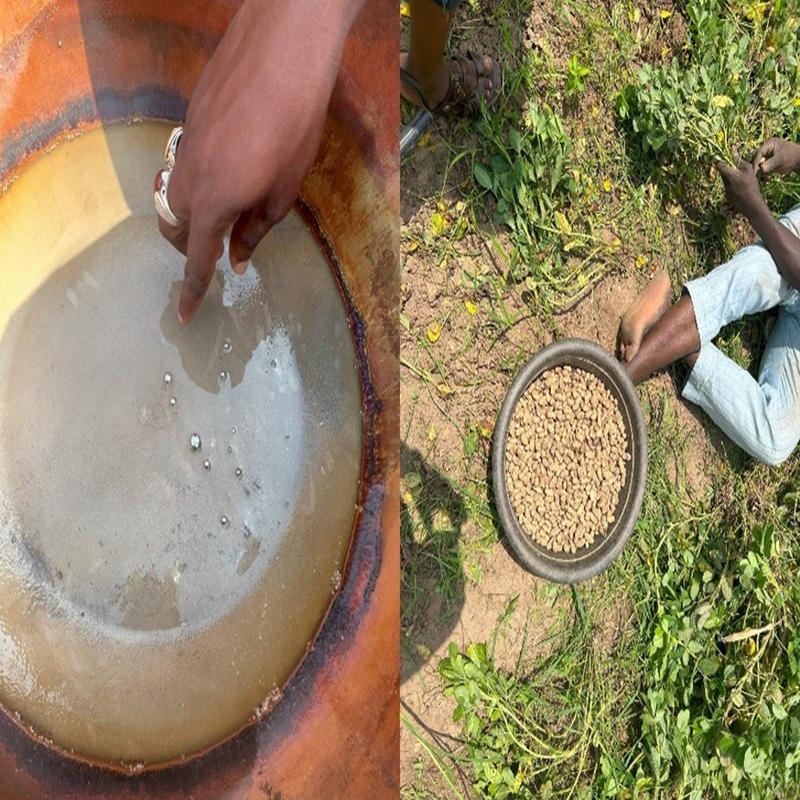
In a recent study published today in the European Geosciences Union (EGU) journal Biogeosciences, scientists have confirmed that mercury pollution from artisanal and small-scale gold mining (ASGM) is contaminating food crops not through the soil, as previously believed, but directly from the air. Driven by the surging price of gold, which has increased by more than tenfold since 2000, the rapid expansion of unregulated mining in these regions raises urgent questions about food security, human health, and environmental justice

The study, conducted by an international team of scientists led by Excellent O. Eboigbe and David McLagan at Queens University, and Abiodun Odukoya Mary at the University of Lagos, focused on a farming community in Nigeria situated near an artisanal and small-scale gold mining site. The researchers compared crops from a field located 500 meters from the ASGM site with those grown 8 kilometres away. The contrast was striking mercury concentrations in leaves and grains were approximately 10-50 times higher in the farm closer to the mining site.

For decades, scientists have assumed that mercury enters food crops primarily via the roots, after leaching into the soil or water. But this new research, using sophisticated mercury stable isotope analyses, reveals a very different mechanism at work. Most of the mercury found in plant tissues came from the atmosphere, taken up through leaves during photosynthesis. In short: plants are breathing in mercury. David McLagan states that:

“Mercury uptake by plants from air represents the largest sink of mercury from air to terrestrial [land and freshwater] systems. While this critical ecosystem service helps reduce the amount of mercury being globally redistributed through the atmosphere, it raises human health concerns when it is staple crops that are the mechanism stripping the air of mercury.”

The research team found that leafy plant parts, which are often consumed by humans and livestock, retained the highest mercury concentrations. Edible, non-leafy parts of the plants, like cassava roots or maize kernels, had lower concentrations yet still showed significant contamination. While levels remained below international mercury consumption thresholds, the authors warn that there could still be health concerns when consuming mercury contaminated crops near ASGM sites, as international standards employed conservative crop consumption rates, and that even greater contamination of air, soils, and crops have been observed in other studies. This is especially relevant in communities dependent on local agriculture for survival.

Used to extract gold from raw ore, Mercury is a powerful neurotoxin. Long-term exposure, even at low levels, can damage the nervous system, impair cognitive development in children, and cause serious cardiovascular and reproductive problems. Due to its frequent use in artisanal and small-scale mining operations, vulnerable populations in low-income rural areas are at higher risk.

“Miners will not stop using mercury for gold extraction unless they get a readily available alternative that is also cost-effective,” said Odukoya Abiodun Mary.

ASGM is now the largest source of mercury emissions globally, according to the UN Environment Programme. Yet regulation and monitoring are limited in many parts of the Global South, where ASGM is often an economic lifeline for communities facing poverty and displacement. This study pushes a critical but overlooked consequence of that boom to the forefront: food systems are being contaminated, quietly and invisibly, by elevated levels of mercury in the air.

The research is also a call to action for governments and international organizations tasked with enforcing the ‘Minamata Convention on Mercury’. Current monitoring strategies focus largely on water bodies, sediment, and seafood, not crops. This study shows those efforts are missing a key vector of exposure.

“Due to the toxicity of bioaccumulation and biomagnification potential of methylmercury, fish consumption in ASGM areas has been a major focus of epidemiological research in ASGM areas. Yet this work demonstrates that there are other dietary sources of mercury, and mercury from these different sources can have cumulative effects.”

The study concludes that new policies are urgently needed to monitor and mitigate airborne mercury exposure in agricultural regions near mining activities. Considering the rapid growth of artisanal and small-scale gold mining, millions of people across Africa, South America, and Asia may be facing long-term health risks from something as simple and essential as growing and consuming local foods.

Source: Egu.eu

Food crop Gold mining Mercury
Share. Facebook Twitter Pinterest LinkedIn WhatsApp Reddit Tumblr Email
Abdallah el-Kurebe
  • Website
  • Facebook
  • Twitter
  • LinkedIn

Related Posts

Association trains farmers on agroforestry, carbon opportunities

June 18, 2026

Benin residents urge quick completion of Ramat park flyover

June 18, 2026

Shettima urges states to document assets, boost investment, tourism

June 18, 2026

Leave A Reply Cancel Reply

Association trains farmers on agroforestry, carbon opportunities

June 18, 2026

Nigerian SMEs boost growth via digital payments, investments

June 18, 2026

Benin residents urge quick completion of Ramat park flyover

June 18, 2026

NCoS launches new PPP committee for infrastructure projects

June 18, 2026
About Us
About Us

ASHENEWS (AsheNewsDaily.com), published by PenPlus Online Media Publishers, is an independent online newspaper. We report development news, especially on Agriculture, Science, Health and Environment as they affect the under-reported rural and urban poor.

We also conduct investigations, especially in the areas of ASHE, as well as other general interests, including corruption, human rights, illicit financial flows, and politics.

Contact Info:
  • 1st floor, Dogon Daji House, No. 5, Maiduguri Road, Sokoto
  • +234(0)7031140009
  • ashenewsdaily@gmail.com
Facebook Twitter Instagram Pinterest
© 2026 All Rights Reserved. ASHENEWS Daily Designed & Managed By DeedsTech

Type above and press Enter to search. Press Esc to cancel.