


“Football is the most important of the least important things in life,” the great Italian football thinker Arrigo Sacchi once observed. The enduring wisdom of that paradox is that football matters precisely because it offers humanity a temporary republic of emotion. For ninety minutes, borders become jerseys, ideology retreats before artistry, and the complicated grammar of power gives way to the simpler language of passes, tackles, goals and saves. A child in Kano, a taxi driver in Buenos Aires and a banker in Madrid can inhabit the same moment of wonder. That is the beautiful game.
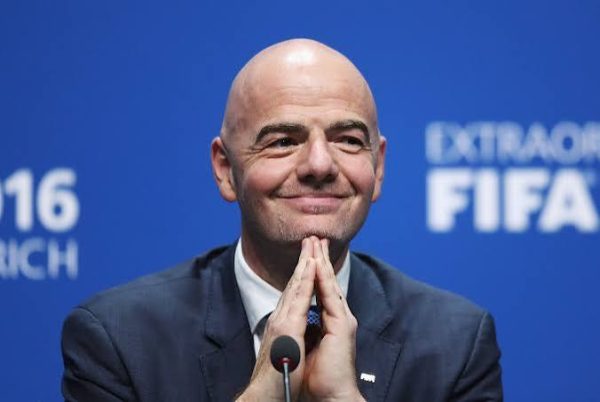
Yet, as the curtain falls on another expansive and spectacular FIFA World Cup, one is left with the uncomfortable feeling that football’s most powerful administrator has been playing in another formation. Under Gianni Infantino, FIFA has not merely entered the political half of the pitch. It appears increasingly comfortable there, developing an unmistakable appetite for presidential palaces, state honours, political spectacle and the warm embrace of powerful rulers.
The problem is not that football can ever be completely separated from politics. It cannot. The World Cup is a gathering of nations. Flags fly, anthems sound, presidents attend, and victories become part of national memory. From Mussolini’s Italy in 1934 to Argentina’s military government in 1978, and from the diplomatic symbolism of the United States against Iran in 1998 to the scrutiny surrounding Russia in 2018 and Qatar in 2022, the tournament has always carried political meaning. The real question is whether FIFA maintains enough institutional distance to referee the encounter fairly. On that question, Infantino increasingly appears offside.
FIFA’s own principles proclaim political neutrality, and Infantino has repeatedly described sport as a force capable of uniting humanity. It is a noble proposition, but neutrality cannot survive merely as ceremonial language in speeches. It must be visible in conduct, relationships, symbols and decisions. The difficulty with Infantino’s FIFA is the widening distance between the whistle it blows for others and the position its president occupies when powerful political players advance.
In Russia, Infantino stood beside Vladimir Putin after the 2018 World Cup and enthusiastically celebrated the country’s hospitality and organisational success. He was subsequently awarded Russia’s Order of Friendship. At the time, such gestures were presented as sporting diplomacy. In retrospect, they also illustrate the danger of allowing FIFA’s president to become a supporting actor in the image-making projects of states.
FIFA had wandered from referee to advocate. FIFA should function neither as an instrument of Western moral superiority nor as the reputation-management department of wealthy states. Its duty is to establish clear standards and apply them consistently.
That consistency has become more difficult to discern because Infantino’s presidency increasingly operates through personal diplomacy. He appears to relish the role of football’s head of state, moving easily among presidents, monarchs and geopolitical power brokers, exchanging gifts, honours and compliments while presenting FIFA as a global sovereign in its own right.
His relationship with Donald Trump brought this tendency into particularly sharp focus. The United States, as the principal host of the 2026 World Cup, necessarily required close cooperation with FIFA on security, visas, transportation, taxation and tournament organisation. A functional relationship between the FIFA president and the American administration was therefore essential. But there is a difference between institutional cooperation and personal alignment. When the head of FIFA becomes publicly associated with the political image or validation of a particular leader, neutrality begins to look less like a governing principle and more like a slogan.
Even where direct interference cannot be established, conspicuous political friendships cast shadows over FIFA’s decisions. In football administration, as in refereeing, the appearance of influence can be almost as damaging as influence itself. Supporters must believe that the referee is not receiving instructions from the presidential box, that disciplinary panels are not checking the nationality of offenders, and that access to political power does not operate as an invisible video assistant referee. That is the cost of proximity.
Infantino’s defenders will point, with justification, to his achievements. Under his leadership, FIFA’s revenues have grown, development funding has expanded, and the World Cup has opened its doors to more countries. The 48-team format gave nations from Africa, Asia, Oceania and the Americas a greater chance to participate in football’s grandest festival. For many smaller federations, FIFA funding supports pitches, coaching, women’s football, youth development and administrative structures that domestic markets cannot adequately finance. These are substantial accomplishments. Infantino understands that FIFA is not UEFA and that the World Cup belongs as much to the developing football world as it does to Europe’s traditional powers.
But a full stadium is not a complete moral argument. Commercial success cannot excuse weak governance. Revenue is a result, not a constitution. Expensive tickets, expanding competitions and an increasingly congested calendar raise questions about whether the game is being developed for its people or packaged primarily as commercial inventory. More teams, matches, ceremonies, sponsors, and revenue may represent growth, but growth without restraint can eventually destroy rhythm. A tournament can be enlarged until qualification loses meaning, while a calendar can be filled until players become exhausted assets moving between competitions designed mainly to generate content. The beautiful game needs space to breathe.
Infantino’s greatest contradiction is therefore not simply that he brings politics into football. It is that he invokes football’s universality while allowing FIFA’s institutional personality to become increasingly presidential, personalised and politically transactional. He speaks the language of unity but often practises the diplomacy of access. He promises neutrality yet repeatedly appears in intimate proximity to the powerful.
This is not necessarily corruption in its crude and familiar form. No brown envelope needs to change hands. Modern institutional capture can operate more subtly through proximity, prestige, mutual validation and the exchange of symbolic capital. Political leaders gain the legitimacy and emotional authority of football. FIFA gains access, guarantees, commercial opportunity and diplomatic protection. Each applauds the other, the embrace tightens, and football is left trapped in the middle.
The solution is not to demand the impossible fiction of a World Cup without politics. Major tournaments cannot be organised without governments. Security, immigration, labour regulation, transportation, taxation and public infrastructure are inherently political responsibilities. What FIFA requires is not isolation, but institutional discipline.
Its president should operate under a transparent protocol for political engagement. Meetings with political leaders should have clearly stated official purposes. Representations concerning disciplinary matters, refereeing or competition decisions should be prohibited and disclosed. FIFA awards should be governed by published criteria and independent adjudication, while host selection should involve credible human rights assessments, measurable obligations and enforceable remedies.
The culture of presidential glorification must also be restrained. The World Cup trophy belongs emotionally to the players who win it, the coaches who plan for it and the supporters who sustain the game across generations. Political leaders may attend, and FIFA officials may perform ceremonial duties, but neither should become the centre-forward of the final.
Gianni Infantino has expanded FIFA’s revenues, reach and political weight. He has opened the World Cup to more nations and placed football at the centre of conversations with the most powerful people on earth. These are not minor accomplishments. But power is not merely the ability to enter every palace. Sometimes, it is the wisdom to maintain a respectful distance from the throne.
The FIFA president must be able to shake the hand of power without allowing power to hold his hand throughout the match. Football does not need its leader to become another politician. It needs him to protect the pitch from those who already possess enormous power beyond it. Neutrality is not silence in the face of injustice, nor is it friendship with every ruler capable of hosting a tournament. It is consistency and the courage to apply the same rules to the strong and the weak, the rich and the poor, the host and the visitor.
Infantino often says that football unites the world. He is right. But football unites precisely because no president, monarch, billionaire or governing official is supposed to own its soul. As the stadium lights fade, the champions lift the trophy, and another World Cup enters history. FIFA must confront a question more consequential than the scoreline: Can the guardian of the beautiful game continue to preach neutrality while standing so comfortably in an ugly political embrace?
For now, the flag is raised, and Gianni Infantino is standing offside.
