


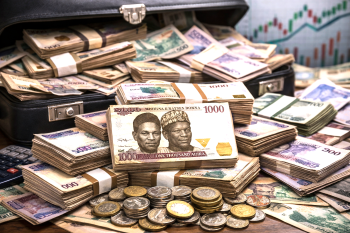
Despite sustained efforts by the government and financial institutions to deepen digital payments and financial inclusion, Nigerians continue to hold significant amounts of cash outside the formal banking system, with the figure rising to N5.19 trillion in May 2026.
Latest Money and Credit Statistics released by the Central Bank of Nigeria showed that currency held outside banks increased from N5.08 trillion recorded in April to N5.19 trillion in May, representing a month-on-month increase of N109.34 billion or 2.15 per cent.
The development underscores the continued reliance on cash transactions across the country, despite years of investments in digital payment infrastructure and campaigns aimed at promoting a cashless economy.
According to the data, cash held outside banks accounted for a substantial portion of the total currency in circulation during the review period, indicating that a large volume of physical cash remains outside the formal banking sector. Analysts say the trend reflects the dominance of Nigeria’s informal economy, limited banking penetration in some rural communities, and lingering concerns over banking system disruptions experienced during previous cash shortages
The persistent preference for cash comes even as electronic payment channels, including mobile banking, point-of-sale transactions and digital wallets, continue to expand nationwide. Experts note that while digital transactions have grown considerably, many Nigerians still prefer cash for everyday transactions due to convenience, trust issues and infrastructural challenges such as network failures and inconsistent electricity supply.
The rising volume of cash outside the banking system could pose challenges for monetary policy implementation, as it limits the ability of the apex bank to effectively monitor liquidity and manage inflationary pressures.
The increase in cash holdings outside banks comes amid broader changes in Nigeria’s monetary landscape, including a rise in private sector credit and continued efforts by the CBN to tighten monetary conditions in a bid to curb inflation.
