


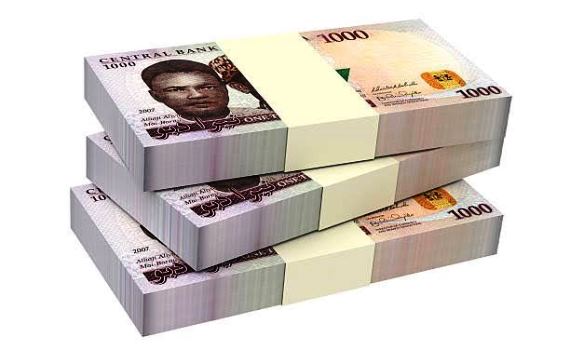
The naira has strengthened for three consecutive trading sessions, recovering N21 against the US dollar following the sharp depreciation recorded on October 23.
The local currency closed at N1,349/$ on Wednesday, October 28, compared with N1,357/$ on Tuesday, according to data published by the Central Bank of Nigeria (CBN).
The latest performance represents an N8 gain against the dollar in one trading session and extends the currency’s recovery from its October 23 closing rate of N1,370/$.
The naira had traded between N1,365/$ and N1,357/$ on Monday and Tuesday before recording its latest appreciation.
Market data showed that the currency traded between N1,342/$ and N1,363.50/$ on Wednesday, while the weighted average exchange rate stood at N1,347.53/$.
However, foreign exchange turnover at the interbank market declined significantly to $244.61 million from $543.74 million recorded on Tuesday.
The latest recovery comes amid an improvement in Nigeria’s external reserves, which have crossed $55 billion, their highest level in more than 18 years.
The reserve position has also exceeded the CBN’s earlier projection of approximately $51.04 billion for the end of 2026.
The reserves provide a buffer for meeting external obligations and supporting confidence in the country’s capacity to meet foreign exchange demand.
However, the increase in reserves does not automatically explain the naira’s appreciation, as the currency’s performance also depends on dollar supply, import demand and other foreign exchange transactions.
The October 23 trading session had exposed renewed volatility in the market, with the naira fluctuating between N1,340/$ and N1,395/$ before closing at N1,370/$.
Global currency movements, particularly developments surrounding US monetary policy, are also expected to influence the naira’s near-term performance.
The Federal Reserve retained its benchmark interest rate at its October meeting, while signalling that future decisions would depend on incoming economic and inflation data.
