


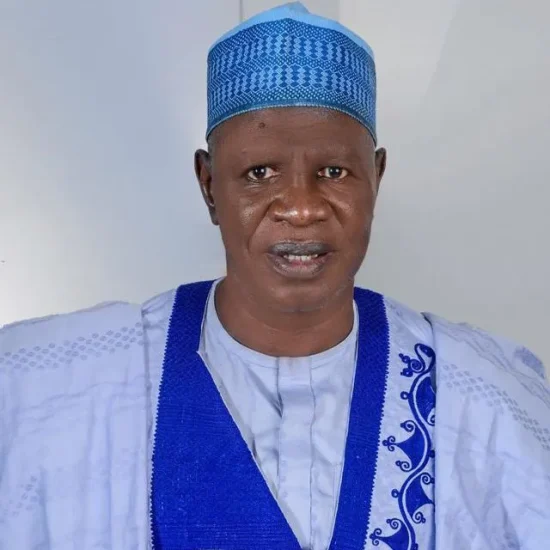
On 8 July 2021, I published a column examining what I then described as “the art of wearing two caps”—a reflection on Governor Mai Mala Buni of Yobe State’s ability to navigate the simultaneous demands of partisan political leadership and subnational governance. The argument in that essay was neither celebratory nor predictive. Rather, it was an inquiry into institutional balance: whether the burden of national political responsibility could coexist with focused attention to the quotidian, unglamorous work of state development. At the time, the conclusion was cautious. The essay noted discipline, timing, and restraint as key ingredients but stopped short of extrapolating long-term outcomes.
Almost five years later, events in Damaturu on January 29 and 30, 2026, provide an opportunity to revisit that earlier reflection—not personalities, but process, priorities, and precedent. The commissioning of the Biomedical Research and Training Centre (BioRTC) at Yobe State University, followed the next day by an international-standard scientific symposium, raises questions far beyond one state or one administration. It invites us to ask what it means to invest seriously in biomedical science in Nigeria today and why such investments remain disturbingly rare across the federation.
The commissioning ceremony, held on the Yobe State University campus on 29 January 2026, drew a notably diverse audience: international biomedical scientists from the United States, France, Germany, Morocco, and Egypt; Nigerian academics and clinicians; industry representatives; policymakers; and traditional rulers. The following day’s symposium—hosted in the new complex—was not ceremonial padding. It was a substantive scientific engagement in which I participated as a panelist alongside four other senior academics, addressing issues in biomedical research ecosystems, training pipelines, diagnostics, and the relevance of health systems.
In Nigeria, we are accustomed to project launches ending with ribbon-cutting, but the BioRTC launch extended beyond the ribbon-cutting— into intellectual work—discussions about how such a facility should function, what standards must guide its operation, and how to translate research into workable policies. That continuity between infrastructure and intellect is precisely what is missing in many well-intentioned but poorly embedded interventions across the country.
To appreciate the significance of the BioRTC, one must situate it within Nigeria’s broader biomedical deficit. Across the country, state-of-the-art laboratories remain scarce, unevenly distributed, and often disconnected from structured training programs. Many universities teach biomedical science in theory, with limited exposure to modern diagnostic platforms, molecular techniques, or translational research environments. Teaching hospitals struggle with obsolete equipment, and diagnostic accuracy suffers. Research output remains constrained not by talent but by tools. The implications are profound. Poor laboratory capacity undermines medical education, producing graduates insufficiently exposed to contemporary biomedical practice, and it also undermines clinical care, as diagnoses are delayed, imprecise, or outsourced at high cost. Moreover, public health surveillance is compromised where laboratory capacity is poor, especially for non-communicable diseases. Research credibility is also weakened, limiting Nigeria’s participation in global scientific consortia.
It is therefore not a coincidence that biomedical breakthroughs in Africa are still disproportionately concentrated in a handful of institutions in South Africa, North Africa, and select East African hubs. West Africa—and Nigeria in particular—lags behind not because of intellectual poverty, but because of systemic underinvestment.
Indeed, Yobe State is rarely cited in discussions of high-end biomedical research. That reality is precisely why the BioRTC warrants attention. Subnational governments in Nigeria often prioritize visible infrastructure—roads, markets, government buildings—over less visible but more consequential investments in knowledge systems. Biomedical research facilities are costly, technically demanding, and politically quiet. They do not yield immediate electoral dividends.
Yet the BioRTC was conceived not as a symbolic appendage but as a functional research and training center explicitly linked to pressing regional health challenges, including the rising incidence of kidney disease in the North-East. This alignment between local disease burden and research infrastructure reflects a level of planning still uncommon in state-level interventions. Importantly, the project is embedded within a university ecosystem rather than standing apart as a detached government laboratory. This integration matters for sustainability. Universities provide continuity, peer review, training pipelines, and institutional memory—elements many standalone projects lack once political attention shifts.
Furthermore, the January 30 symposium deserves separate mention. Too often, such post-commissioning events are dominated by speeches rather than scholarship. In Damaturu, the focus was unmistakably scientific, addressing laboratory governance, training models, international collaboration, and, especially, the translation of biomedical research into policy and practice. Moreover, the presence of international scientists was not incidental, as their participation underscored a fundamental truth: that biomedical science today is collaborative by default. No single institution, and certainly no single state, can operate in isolation. What matters is whether a facility is built to standards and whether it enables collaboration—technical, ethical, and administrative.
When assessing the leadership context in which the BioRTC emerged, it is important to acknowledge that such outcomes do not occur in an institutional vacuum. While Nigerian public discourse often swings unhelpfully between vilification and excessive adulation, a more restrained reading is warranted here. The establishment of the BioRTC reflects a governing choice to prioritize long-term knowledge infrastructure—an area frequently neglected in subnational planning. In that sense, the executive leadership of Governor Mai Mala Buni demonstrated discernment by backing a project whose returns are strategic rather than immediately political. Rather than praise-singing, this recognition simply acknowledges that development outcomes are the product of decisions, not accidents. In this sense, the BioRTC fits into a broader pattern observed in Yobe State over recent years: targeted investments in education and health that privilege functionality over flamboyance. Whether this pattern will endure beyond the present political moment remains an open question—but the infrastructure now exists, and that fact alone alters future possibilities.
The deeper value of the BioRTC lies not in what it says about Yobe but in what it asks of other states and the federal system. Nigeria operates a federal structure in which education and health are shared responsibilities. Yet too many states outsource serious thinking about research capacity to the federal government, while federal institutions remain overstretched. If a state like Yobe can establish a biomedical research and training complex of this calibre, then the familiar excuses of resource constraints, security challenges, geographic disadvantage, etc., require reassessment: The issue is not the availability of funds alone but priority setting. States with far larger internally generated revenues have no comparable facilities. Many federal universities operate without functional molecular laboratories. Teaching hospitals refer routine tests abroad. This is not sustainable for a country of Nigeria’s size, ambition, or epidemiological complexity.
At the continental level, the BioRTC speaks to Africa’s struggle to control its own biomedical destiny. The COVID-19 pandemic exposed the continent’s dependence on external diagnostics, vaccines, and research infrastructure; since then, much rhetoric has focused on homegrown African solutions. But rhetoric without laboratories is hollow. Biomedical research and training centers are not a luxury but a sovereign infrastructure. They determine whether Africa generates data or merely consumes it; whether diseases are studied in context or inferred from elsewhere; and whether young scientists stay or emigrate to Europe and America. Nigeria, by virtue of its population and intellectual capital, should be leading this agenda; instead, progress has been uneven. The BioRTC in Yobe is thus understood as a provocation—a quiet but firm challenge to complacency.
Finally, let me call on the Executive Governor of Yobe State, HE Mai Mala Buni, as well as the leadership of the Centre (headed by Professor Mahmoud Bukar Maina). Commissioning a laboratory is the beginning, not the end. Sustainability will depend on stable funding for maintenance and consumables; retention of skilled technical staff; integration into national and international research networks; strong governance and ethical oversight; and deliberate training pipelines for students and early-career researchers. These are not glamorous tasks, but they require institutional discipline long after the applause fades.
In 2021, when I wrote about the challenges of wearing two hats, I suggested that leadership balance is ultimately tested not by rhetoric but by outcomes. The Biomedical Research and Training Centre in Damaturu is one such outcome. It does not fully resolve Nigeria’s biomedical deficit, nor does it elevate any individual beyond scrutiny. What it has done is demonstrate that serious investments in knowledge infrastructure are possible at the subnational level. The task now is to ensure that such efforts become the norm rather than remain novel or one-off events. Nigeria does not need isolated centers of excellence admired from afar; rather, it needs a network of functional, well-governed, research-driven institutions capable of training the next generation and addressing local health challenges with globally standard tools. If the BioRTC prompts governors, ministers, university councils, and policymakers to rethink what is possible—and what is necessary—then its significance will extend far beyond Damaturu. And that, ultimately, is the measure that matters. Meanwhile, I doff my cap to Mai Mala Buni, may other governors join the queue, amen
