


A few weeks ago, I had a heartfelt conversation with a young scholar I consider one of my mentees. He asked to meet me because he wanted to discuss issues he couldn’t share over the phone, and it took weeks before we finally connected. All my friends and mentees know that I am a passionate supporter of Nigeria and disapprove of people leaving the country in search of better opportunities. His reasons: My salary doesn’t cover the essentials for my small family at the end of the month. Teaching and research consume my time, leaving me with little energy or opportunity to pursue additional income sources that could supplement my salary. Therefore, the financial stress is overwhelming and unbearable. Besides, how can I own a house, travel to Mecca for the Hajj, and meet the expectations and responsibilities of my extended family? What about attending to health issues and social obligations within my communities? These are almost impossible tasks with the current salaries for academics in Nigeria. I could not help but give up and wish him all the best.
While I reflect on our interaction with the young academic, I remember my own experience at his age. Back then, I was engaged in part-time lecturing at a university, a role distinct from the visiting lecturing that is common today. Although the tasks for both part-time and visiting lecturing are similar, they differ in pay. Payment for part-time lecturing is made per hour, with the total amount accumulated and paid at the end of the semester, which was almost nothing. In contrast, visiting lecturers receive half of their salary every month. With the payments I received from a single university over twenty years ago, I was able to build a modest house in my hometown. I intentionally used the proceeds from part-time lecturing for my housing project. Today, it is impossible to do so, even if one is visiting many universities, due to the low pay in Nigerian universities.
As this disturbing phenomenon weighed on my mind, I cogitated on the death of Professor Abubakar Roko of Usman Danfodiyo University Sokoto after he failed to raise N13 million, about $8,000 US, for a medical bill in Egypt. $8,000 is less than one month’s salary for a professor in a place where intellectuals are valued, rated, and paid fairly. While believing that Prof Roko died because his time was up, the real cause was his inability to pay the medical bill and the failure of his friends, colleagues, and society to donate the needed amount quickly. Roko’s death was a national shame, sad and shocking, which dismayed every discerning patriotic Nigerian.
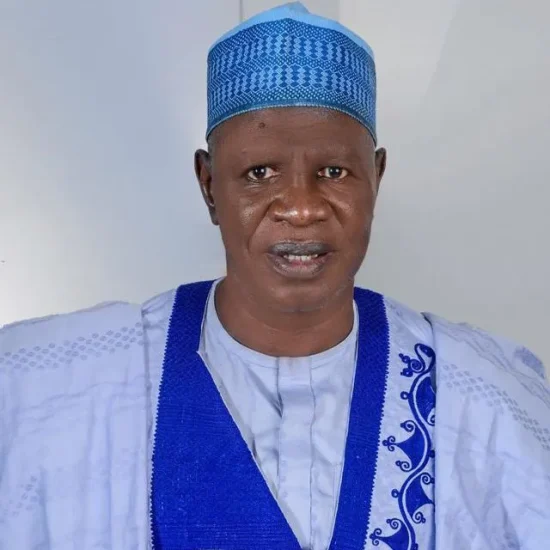
A few weeks after Roko’s death and my interaction with my mentee, who had already flown out of the country, as usual, silence and indifference continued to normalize the anomalies. Then, a video clip from France Radio International (Hausa Service) featuring Prof. Balarabe Abdullahi surfaced, passionately criticizing the dire situation of professors in Nigeria. The clip was released on July 8th, 2025. Three days later, it was viewed on YouTube by 6,455 people, not including the thousands who watched it on various social media platforms. More than ten people from different parts of the world, including the USA, sent me the clip; even though it was in Hausa, the video went viral worldwide. Paraphrasing Professor Abdullahi’s statement in a 9-minute clip, the key messages in the video are:
“The extremely low pay for the lecturers in the university has made the current economic situation unbearable for most of them. A professor might come to you with tears, begging for money to buy food for his family. This is because the professor’s salary cannot cover his basic needs by the end of the month. To supplement their low monthly pay and ensure their financial stability, many lecturers take on visiting lectureships at other universities. This is especially common since the government has established several new universities that lack enough staff. As a result, lecturers from older institutions teach at these new universities as visiting scholars and earn only half their usual salary. They often travel hundreds of kilometers weekly to conduct these visiting lectures. Many have died from accidents or fatigue while performing these duties, which are rarely reported. Today, many professors cannot afford to drive their cars due to the high cost of fuel; they travel on commercial vehicles and tricycles. Professors have been relegated to the lowest social class. A nation maltreating its intellectuals has a bleak future.
ALSO READ Nigeria’s perennial flood: Occurrence of preventable disasters (I), By Prof M. K. Othman
During the last industrial dispute, which lasted eight months of the strike, many lecturers left the university system. For example, the VC of the University of Calabar reported that 52 professors left her university for better opportunities abroad due to the salary stoppage for the striking lecturers. A loss of a professor through death or brain drain is a great loss to the nation because, if you recruit 100 graduates to teach in the university, only ten will become professors after over twenty years of continuous teaching and research; the rest would have left the system or could not reach the prestigious position.
One can only become a professor after completing a required period of service, accompanied by tangible achievements such as academic publications. Nearly every professor in Nigerian universities today was an academic achiever and likely received academic awards at primary, secondary, or higher education levels.
Another fatal blow to the university system is the delay in salary payments. Over the past six months, university workers have received their salaries 40 to 45 days after the previous payment. Poor pay, combined with salary delays, is destroying the university system, and everyone is remaining silent. Can you believe that the salaries of lecturers in polytechnics and colleges of education are higher than those of university lecturers? These lecturers are our postgraduate students, yet they earn higher pay than we do in this country”.
What Prof. Abdullahi said is not new or unfamiliar to us. However, it reflects the reality we have been facing, which is slowly causing the university system to decline into a state of deterioration. This process will eventually destroy all sectors of development, including the economy, agriculture, energy, and education, among others.
The university system is a fundamental pillar upon which all other developments rely. Its neglect ultimately causes a decline in educational quality at all levels. The declining standard of the university system produces poorly prepared graduates. Engineers who lack the necessary knowledge to engineer, lawyers unfamiliar with the laws, accountants who neither understand checks nor balances, and medical practitioners whose services often lead to patients’ deaths rather than healing. What do we do to unlock the solution to change the bleak future to a glorious future?
The key to resolving the ongoing decline in the university system is within reach of President Bola Ahmed Tinubu, who was overwhelmingly voted into office against all odds—remember the currency exchange issues before the 2023 election. He can resolve the issue by carefully considering and explicitly approving Yayale’s renegotiation outcomes, which we hope will permanently address the problems facing public universities in Nigeria. Yayale’s negotiation committee finished its work months ago and is waiting for the President’s decision. May God grant him wisdom and the political strength to openly accept the committee’s recommendations to end the decay in the university system once and for all, amen.
