


Unknowingly and knowingly, I was in a callous bandits’ den last September 2023. I was on a team inspecting a ten-hectare maize-cowpea farm in the Yakawada-Sabuwa axis, notorious for bandit dastardly activities. Hitherto, I would not have allowed my worst enemy to do so if I had known I would visit the location. As we approached the area, it downed on me how dangerous our mission was, but we went ahead without ado. I was surprised to find the area calm and peaceful, with several people busy on their farms, and I went ahead and did what brought us. On our return trip, my journalistic instinct forced me to find out if the area was as dangerous as we believed. It was hazardous enough, but the farmers negotiated to cultivate their farms. I was so ashamed and sad not to let myself know the details of such a negotiation. How many places are under siege and can only be utilized with monetary bargaining? How did we reach this dangerous crescendo with ragtag miscreants, called bandits, dictating the tune? How do the political leaders – councillors, legislative members, and other political appointees- sleep (wherever they may be) knowing that bandits siege parts of their constituencies (banditry) and their electorates are helpless and powerless? Will the politicians shamelessly return to seek their votes in 2027?
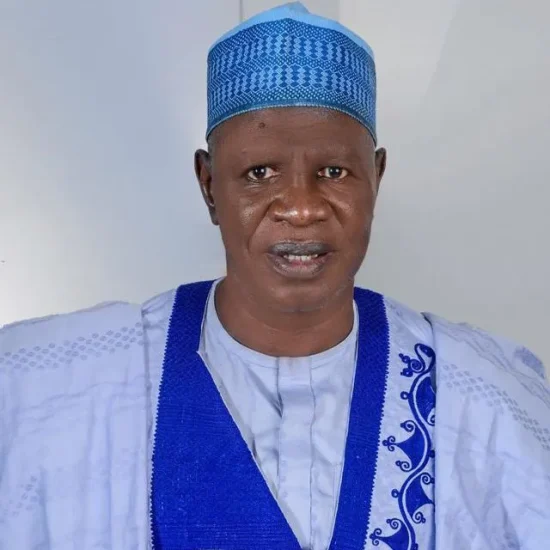
Bandits are only powerful due to their free access to firearms and illicit drug-induced bravery to gun down people at the slightest provocation or even for the fun of it. Today, this precarious trend blossoms to a scary climax beyond “kidnap for ransom” to unperturbed free movement with heavy arms while crushing perceived and unperceived resistance. It was during such movements that Prof. Yusuf Saidu was dastardly gunned down on Monday, 24th June 2024, at Kucheri village in Zamfara state. Prof Saidu was a high-profile scholar, a passionate researcher, a dedicated educator, and an esteemed Deputy Vice-Chancellor of Research, Innovation, and Development at Usmanu Danfodio University Sokoto. He was killed on his way to Kaduna from Sokoto during the day.
According to Zagazola, an independent counter-terrorism network, Professor Saidu and his driver were travelling when their vehicle, a blue-coloured Hilux, was mistakenly identified as a police vehicle by bandits fleeing soldiers opened fire, killing Professor Saidu instantly and injuring his driver.
Today, we constantly fear security breaches at home or in transit, in the morning, evening, or night, and there is no haven for anybody. The bullets of insurgents, bandits, and assassins have cut down the low and the mightiest in cold blood, more often than not, without an iota of provocation. Sometimes, a whole village is sacked, tortured, maimed, killed, and their women raped for just a “heck of it,” making one wonder and ponder about the purpose and the aim. Our prayers to the Almighty God for protection against the pervading insecurity situation keep us moving: trepidation and suffering but smiling and hopeful. The insecurity has been worrisome to all Nigerians in the last three months; the killing, maiming, and kidnapping have just become part of daily statistics, and the situation is desperately becoming hopeless. I can endlessly write about several incidences of kidnapping and banditry activities enough to make discerning minds sleepless. No one seems immune to being a victim of this godless act. What do we do to halt the trend and reverse it?
First, we must realize that banditry and insurgency have become the most lucrative business enterprises, benefiting thousands and luring more people daily into the calamitous venture. They have transformed insecurity into a highly complex, multifaceted hydra problem without a single solution but a combination of approaches and strategies. We must adopt kinetic and non-kinetic solutions to eliminate the bedevilling insecurity or reduce it to the bare minimum.
ALSO READ Meta: Content creators in Nigeria, Ghana can earn money on Facebook [CHECK CRITERIA]
On the kinetic approach, we must recruit more people into the police force most transparently and competitively without corruption. Right now, there are less than 500,000 police officers in the country. They are grossly inadequate to police over 200 million people. Our police force and other security organizations need the best among us, not societal miscreants who pay their way to be employed. We must equip our security personnel with adequate arms, intelligence services, capacity building, logistics, and clear and coherent aims and specific objectives for each operation. What is the strategic plan to curb security challenges in an area? Synergy among the security personnel is paramount in general and specific operations. Preferably, the police should lead the operation with the support of the military, civil defense, and other relevant personnel. There should be community policing, which entails the involvement of grassroots people in the supply of intelligent information, operational guidance, and support services.
“We must identify and destroy sources of arms, food, fuel, and mechanisms for money laundering to the bandits. How do they utilize 100s of millions of Naira they collect as ransoms? Who helps them launder such a tremendous amount of money? Who supplies these essential commodities and services? If one supplier is arrested, a thorough investigation without bail should reveal all the layers of the suppliers and service providers. Here, our legislative arm should make the legal framework for holding such suspects to avoid infringing on their rights. The security personnel must go beyond the foot soldiers and banditry pawns who could be expended without qualms. The people are coming to kidnap, and informants are banditry pawns on the terrorism chessboard. Who are the kingpins? Who gives them arms, information, directives, guidance, and supplies? Who bail them and provide legal services when they are arrested? State and Local governments should create and adequately support community policing with training, equipment, and logistics.
To successfully carry out the kinetic approach, we must decentralize resources – funds, logistics, equipment, and highly trained tactical personnel from the center to the field operational areas at the grassroots where the security challenges exist. Decentralization will make the security structure go beyond reaction to the crime and prevent, mitigate, and objectively respond to adverse events. I feel the pain whenever I hear security personnel losing their lives in the cause of reacting to the crimes or being ambushed by the criminals. Let us reduce the casualties, who are primarily highly trained personnel.
The non-kinetic approach should be adopted alongside the other approach. Poverty, unemployment, hyperinflation, and poor remuneration of workers are critical causes of corruption and subsequent insecurity. There should be full local government autonomy to take resources to the grassroots. The autonomy entails the freedom to impose local taxation, generate revenue within its assigned sources, allocate its economic and material resources, and determine and authorize its annual budgets without external interference. The autonomy will improve the local administration’s capacity and control and reduce unemployment. These have a lot to offer regarding the security of lives and property. Thus, local government autonomy devoid of corruption can mark the end of security challenges bedevilling the country.
Another area of the non-kinetic approach is to launch discreet studies on the causes of banditry and insurgency in the country to address them. In this regard, the nation should create a soft-landing strategy for kidnappers, bandits, and militants who genuinely wish to repent, reintegrate, and provide helpful information to address the causes of insecurity.
My deviant compatriots, the bandits, I urge you to lay down your arms as your current situation is full of constant terror, uncertainty, and worry. You are living by the hour since you never know what will occur in the next minutes. Many of you want to go about your daily lives but cannot since the blood of your helpless victims looms large over you. Stop these crimes against your fellow citizens, fatherland, family, and friends. Society ought to be willing to forgive for the nation’s glorious future; if you surrender, show remorse. The unrepentant among the criminals should bear the full wrath of the law to deter potential criminals. Last note, for the death of Prof. Yusuf Saidu and several others, let us begin to end banditry and insurgency in Nigeria. May the Almighty God show us the path and make us do what is needed. Amen.
