


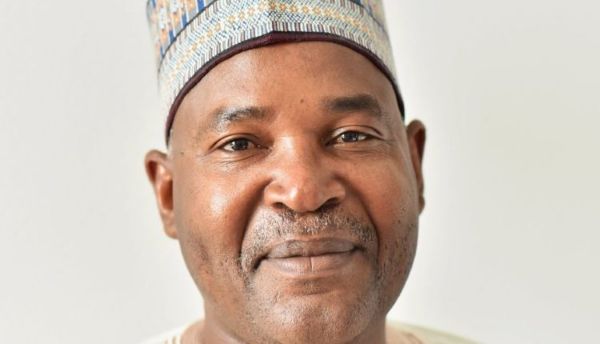
On December 3, 2024, my good friend and comrade, Moussa Tchangari, was arrested at his home in Niamey by plainclothed officers. He was later charged with “criminal association in connection with a terrorist enterprise,” “undermining national defence,” as well as “intelligence with enemy powers.” It has been very painful to me ever since because he was just returning from my 70th Anniversary Birthday Symposium in Abuja, where comrades had assembled to debate the contributions of activists and progressive intellectuals to improving the lives and livelihoods of Africans, and he was one of several comrades attending from outside Nigeria.
Tchangari’s English was not very good, so he addressed the symposium in Hausa, calling for African solidarity in defending democracy and the civic space. He took a flight back to Niamey the following day and was arrested. Maybe it is more accurate to describe what happened to him as a kidnap because those that took him did not identify themselves or explain why they were taking him. He was simply taken by a large number of armed operatives from his house one hour after he arrived from Abuja. The charges emerged following his public critiques of recent military governance policies and his advocacy against the repression of civic space. Indeed, three weeks before his arrest, on 12 November 2024, Tchangari had criticised on social media the decision of Niger’s interior minister to revoke the licenses of two humanitarian non-governmental organizations operating in the country.
Moussa Tchangari is a well-respected Nigerien journalist, civil society leader, and human rights defender with a record of over thirty years of activism. He is the Secretary-General of Alternative Escapes Citoyens (Citizens’ Alternative Spaces), a civic organisation in Niger engaged in advocacy and public education using community radio stations he had established in many cities in the country. Tchangari began his career in the 1990s and has been active in Nigerien media and civil society since then. Tchangari has also published commentary on Niger’s democratic development and the security situation in the Sahel. He is best known for organising street processions and demonstrations against hunger and poverty and for expanding the democratic space in Niger. Previous military juntas in the country had arrested him on numerous occasions.
In 2015, Tchangari was arrested by the democratically elected President Mahamadou Issoufou Administration for his criticism of the government’s inadequate response to the Boko Haram Insurgency and the negative effects of the insurgency on the civilian population. His release was facilitated after support from international organizations, including Amnesty International and Reporters Without Borders.
Tchangari was initially imprisoned in Niamey, where his family had some access to him, before he was moved to Filingue, making family access more difficult. Numerous human rights organisations such as Amnesty International, Transparency International, Centre for Democracy and Development, Human Rights Watch, the International Federation for Human Rights (FIDH) and the World Organisation Against Torture (OMCT) have denounced his arrest and called for his release. Others are the Observatory for the protection of human rights defenders, Transparency International Niger, Civil Society Centre for Legislative Advocacy (CISLAC) and the Association for the Fight against Corruption (l’Association nigérienne de lutte contre la corruption, ANLC-TI). A collective of lawyers in Niamey has been providing their defence on a pro-bono basis.
Last week, the UN Working Group on Arbitrary Detention, an independent expert body that investigates cases of deprivation of liberty, found that Tchangari’s detention is arbitrary and violates international human rights law. In its opinion released on June 23 2026, the UN working group called on Nigerien authorities to release Tchangari and provide him with reparations. It also called for an independent investigation into his arbitrary detention and accountability for those responsible. They described him as a 56-year-old outspoken critic of the military junta. He was arrested at his home in Niger’s capital, Niamey, on December 3, 2024 and was held incommunicado for two days before finally being located at the Central Service for Combating Terrorism and Organized Transnational Crime, an inter-agency law enforcement body, headquartered in the capital.
On January 3, 2025, Niamey’s High Court charged him with “terrorism apology,” and “plotting against the authority of the state through collaboration with enemy powers,” among other offenses. The investigating judge ordered his pretrial detention in Filingue prison, about 170 kilometres from Niamey. Family visits require judicial authorization and, because of the distance, are limited to twice a week. In 2025, Tchangari’s lawyers unsuccessfully filed three appeals seeking his release. He is yet to stand trial.
It is 18 months since the arrest, and Moussa Tchangari has still not been informed of the identity of the alleged terrorist group he is accused of having links to. The charges brought against him, including allegedly plotting with enemy powers, mean he could face the death penalty. It is worth noting that since seizing power in July 2023, the junta has targeted political opponents, civil society members and journalists. The military authorities continue to arbitrarily detain former President Mohamed Bazoum and have withdrawn Niger from key regional and international accountability bodies, including the regional bloc Economic Community of West African States and the International Criminal Court.
I join the UN working group, Amnesty International and others calling on Niger’s military authorities to immediately release Tchangari and the other detainees who are languishing in prison because of baseless and politically motivated charges. The authorities in Niamey should uphold their obligations under international law and ensure respect for fundamental human rights, including the rights to liberty, due process and a fair trial. Above all, Niger’s authorities should stop using terrorism-related charges to silence dissent.
Dear Comrade Moussa, remain strong. Progressive forces all over the world are struggling to secure your release.
