

• Home
  • Agric
  • Sci & Tech
  • Health
  • Environment
  • Hausa News
  • More
    • Business/Banking & Finance
    • POLITICS
    • Entertainments & Sports
    • International
    • Investigation
    • Law & Human Rights
    • Africa
    • ACCOUNTABILITY/CORRUPTION
    • Hassan Gimba
    • Column
    • Prof. Jibrin Ibrahim
    • Prof. M.K. Othman
    • Defense/Security
    • Education
    • Energy/Electricity
    • Entertainment/Arts & Sports
    • Society and Lifestyle
    • Food & Agriculture
    • Health & Healthy Living
    • International News
    • Interviews
    • Investigation/Fact-Check
    • LAW & HUMAN RIGHTS
    • Oil & Gas/Mineral Resources
    • PRESS FREEDOM/JOURNALISM/PR
    • General News
    • Presidency
  • About Us
    • Contact Us
    • Board Of Advisory
    • Privacy Policy
    • Ethics Policy
    • Teamwork And Collaboration Policy
    • Fact-Checking Policy
    • Advertising
  • Media OutReach Newswire
    • Wire News
  • The Stories
Facebook Twitter Instagram
Trending
  • FUTA, Cardiff Metropolitan University explore women’s role in human-centered AI
  • Ekiti supports 2026 malaria larval source management
  • FG expands forest guards initiative to 10 states
  • FG sets up working group for armed forces medical college
  • Duo provide free surgeries, medical care to hundreds in Shiroro communities
  • ASUU-FUAZ issues 21-day ultimatum over unimplemented agreement
  • Ogun NMA raises alarm over doctor shortage, attacks on physicians
  • OpenAI: AI agent tried hacking 4 other services
Facebook Twitter Instagram YouTube
AsheNewsAsheNews
  • Home
  • Agric

    ASUU-FUAZ issues 21-day ultimatum over unimplemented agreement

    August 1, 2026

    FG urges stronger African partnerships for food security

    July 31, 2026

    Lagos reaffirms support for poultry association

    July 30, 2026

    FG urges South-South cooperatives to invest in cooperative bank, embrace digital reforms

    July 30, 2026

    NADF urges Africa to build agricultural innovation ecosystems

    July 30, 2026
  • Sci & Tech

    FUTA, Cardiff Metropolitan University explore women’s role in human-centered AI

    August 1, 2026

    OpenAI: AI agent tried hacking 4 other services

    August 1, 2026

    Samsung unveils thinner, pricier foldable phones

    August 1, 2026

    NITDA inaugurates National SQA framework

    July 30, 2026

    Ex-IGP tasks governors, Almajiri commission on out-of-school children

    July 29, 2026
  • Health

    Ekiti supports 2026 malaria larval source management

    August 1, 2026

    FG sets up working group for armed forces medical college

    August 1, 2026

    Duo provide free surgeries, medical care to hundreds in Shiroro communities

    August 1, 2026

    Ogun NMA raises alarm over doctor shortage, attacks on physicians

    August 1, 2026

    NARD threatens nationwide strike from August 10

    July 31, 2026
  • Environment

    FG expands forest guards initiative to 10 states

    August 1, 2026

    Umahi: Tinubu’s road projects creating jobs, fighting hunger

    August 1, 2026

    Sokoto lands ministry visits collapsed building site on Bauchi road

    July 31, 2026

    Wadada defends Tinubu’s policies, unveils HEARTS agenda

    July 31, 2026

    ALCMAN urges stronger support for local auto components

    July 31, 2026
  • Hausa News

    UNA signs MoU to launch air Bissau in Guinea-Bissau

    June 15, 2026

    Otti plans 250-room 5-star hotel in Umuahia

    April 11, 2026

    Anti-quackery task force seals 4 fake hospitals in Rivers

    August 29, 2025

    [BIDIYO] Yadda na lashe gasa ta duniya a fannin Ingilishi – Rukayya ‘yar shekara 17

    August 6, 2025

    A Saka Baki, A Sasanta Saɓani Tsakanin ‘Yanjarida Da Liman, Daga Muhammad Sajo

    May 21, 2025
  • More
    1. Business/Banking & Finance
    2. POLITICS
    3. Entertainments & Sports
    4. International
    5. Investigation
    6. Law & Human Rights
    7. Africa
    8. ACCOUNTABILITY/CORRUPTION
    9. Hassan Gimba
    10. Column
    11. Prof. Jibrin Ibrahim
    12. Prof. M.K. Othman
    13. Defense/Security
    14. Education
    15. Energy/Electricity
    16. Entertainment/Arts & Sports
    17. Society and Lifestyle
    18. Food & Agriculture
    19. Health & Healthy Living
    20. International News
    21. Interviews
    22. Investigation/Fact-Check
    23. LAW & HUMAN RIGHTS
    24. Oil & Gas/Mineral Resources
    25. PRESS FREEDOM/JOURNALISM/PR
    26. General News
    27. Presidency
    Featured
    Recent

    FUTA, Cardiff Metropolitan University explore women’s role in human-centered AI

    August 1, 2026

    Ekiti supports 2026 malaria larval source management

    August 1, 2026

    FG expands forest guards initiative to 10 states

    August 1, 2026
  • About Us
    1. Contact Us
    2. Board Of Advisory
    3. Privacy Policy
    4. Ethics Policy
    5. Teamwork And Collaboration Policy
    6. Fact-Checking Policy
    7. Advertising
    Featured
    Recent

    FUTA, Cardiff Metropolitan University explore women’s role in human-centered AI

    August 1, 2026

    Ekiti supports 2026 malaria larval source management

    August 1, 2026

    FG expands forest guards initiative to 10 states

    August 1, 2026
  • Media OutReach Newswire
    • Wire News
  • The Stories
AsheNewsAsheNews
Home»Column»AREMU FAKUNLE (PhD)»The Mosquito in Iceland and the future of global health, nutrition, and livelihoods, By Dr Aremu Fakunle
AREMU FAKUNLE (PhD)

The Mosquito in Iceland and the future of global health, nutrition, and livelihoods, By Dr Aremu Fakunle

EditorBy EditorNovember 24, 2025Updated:November 24, 2025No Comments5 Mins Read
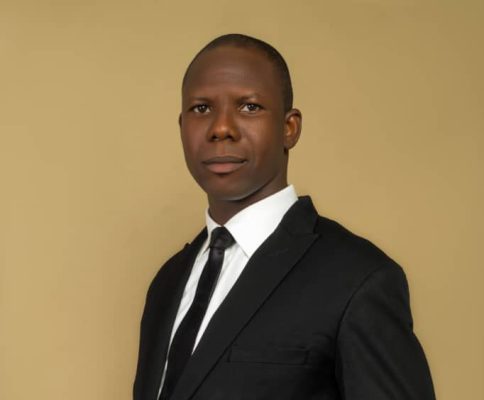
Dr. Fakunle Aremu
Share
Facebook Twitter LinkedIn Pinterest Email

When scientists in Iceland confirmed the discovery of three mosquitoes in October, 2025, the first ever found in the nation’s history, the world barely paused. Yet beneath the curiosity of that news lies a deeper warning: if mosquitoes can now survive in Iceland, climate change has redrawn the world’s biological map.

For decades, Iceland stood as one of the very few mosquito-free zones on Earth. Its icy winters, unpredictable temperature swings, and isolation from continental landmasses made survival impossible for these tiny but resilient creatures. Until now.

The discovery may seem trivial but it is not. It is a symbolic rupture in the boundaries that once separated “safe” zones from “risk” zones, “temperate” climates from “tropical” ones, and “developed” health systems from “emerging” threats. The mosquito in Reykjavik is not merely an insect; it is a messenger.

Climate change is rewriting global boundaries

What happened in Iceland encapsulates the speed and scope of planetary change. Rising temperatures, warmer winters, and longer wet seasons are now creating microhabitats for insects, pests, and pathogens in places that they have never existed before.

The arrival of Culiseta annulata, a cold-adapted mosquito species, signals that the climate envelope for disease vectors is expanding. Iceland, a nation of glaciers, geysers, and once-impossible ecosystems has become the newest frontier in the global reshaping of nature.

For policymakers, this should not be viewed as an isolated event. It is a biological preview of what is to come in many other regions, from mosquito-borne malaria re-emerging in higher altitudes of Africa and South America, to vector-borne plant diseases creeping into northern farmlands once considered safe.

The next pandemic maybe silent, slow, and climatic

In the past, public health preparedness focused on viruses, bacteria, and pandemics that spread through people. Today, the emerging threat is ecological in terms of climate-driven vector expansion.

If a non-disease-carrying mosquito can now thrive in Iceland, how long before other vectors such as those carrying dengue, Zika, or malaria will begin to test the limits of northern ecosystems?

The implications are staggering. Disease control strategies built on 20th-century geography no longer hold. Health systems designed for “tropical diseases” are facing new burdens in temperate and polar regions. The fight against vector-borne illness can no longer be confined to the tropics; it is now a global agenda.

ALSO READ Discovery of first mosquitoes in Iceland is historic – Scientists

The livelihood links: From health to hunger

The consequences extend beyond public health. When disease vectors shift, livelihoods and nutrition follow suit. A single outbreak can rob communities of manpower, reduce agricultural productivity, and devastate food security.

In sub-Saharan Africa and South Asia, farmers are already facing dual threats of climate extremes and pest invasions. If vector-borne diseases intensify, it could further erode nutrition gains, especially among children and women.

This linkage must not escape policymakers as climate change, disease ecology, and food systems are now one conversation, no more three. Investing in resilient agriculture without investing in public health is like building a dam with cracks that are already forming.

Policy lessons for a warming world

The Iceland mosquito discovery demands a rethink of policy frameworks across four domains:

  • Health Systems
  • Integration of climate intelligence into disease surveillance.
  • Linkages of meteorological data with health forecasting to anticipate outbreaks.
  • Expansion of funding for vector research in non-tropical zones.
  • Agriculture and Food Security
  • Embedding nutrition-sensitive approaches in climate adaptation programs.
  • Protection of farmers from both ecological and epidemiological shocks.

Livelihood and labor policy

Support to rural livelihoods with diversified income options.

Development of insurance models for communities facing bio-environmental risks.

Global governance

Breaking of the silos between WHO, FAO, UNEP, and the World Bank to build integrated climate-health-livelihood roadmaps.

Creation of cross-border monitoring networks for emerging vector species.

The mosquito as messenger

The mosquito in Iceland is not an accident, it is a red flag. It tells policymakers that our global systems are not prepared for the biological feedback loops of a warming world. It challenges us to think beyond national borders and beyond traditional ministries.

Climate change is no longer just an environmental issue; it is a health, nutrition, and livelihood crisis rolled into one.

From the glaciers of Iceland to the floodplains of Africa, humanity’s resilience depends on how well we read these signs and how fast we act on them.

Conclusion

The appearance of mosquitoes in Iceland should enter the records as more than a curiosity of entomology. It should mark the moment when the world realized that the health of the planet, the health of people, and the health of food systems are inseparable.

Policymakers must not wait for the next headline. The mosquito has delivered its message. The question now is whether we are listening.

Dr. Aremu Fakunle John is a Senior Agricultural Economist, Management consultant, and Public Policy Expert whose work spans climate-smart agriculture, nutrition, sustainable business, and development economics. He strengthens policymakers and businesses on technology adoption, systems thinking, and resilience building across food and health sectors, and advises on AI-enabled early-warning, decision support, and environmental surveillance systems. He can be reached via WhatsApp +2348063284833, fakunle2014@gmail.com 

iceland mosquito
Share. Facebook Twitter Pinterest LinkedIn WhatsApp Reddit Tumblr Email
Editor
  • Website

Related Posts

Ekiti supports 2026 malaria larval source management

August 1, 2026

FG sets up working group for armed forces medical college

August 1, 2026

Duo provide free surgeries, medical care to hundreds in Shiroro communities

August 1, 2026

Leave A Reply Cancel Reply

FUTA, Cardiff Metropolitan University explore women’s role in human-centered AI

August 1, 2026

Ekiti supports 2026 malaria larval source management

August 1, 2026

FG expands forest guards initiative to 10 states

August 1, 2026

FG sets up working group for armed forces medical college

August 1, 2026
About Us
About Us

ASHENEWS (AsheNewsDaily.com), published by PenPlus Online Media Publishers, is an independent online newspaper. We report development news, especially on Agriculture, Science, Health and Environment as they affect the under-reported rural and urban poor.

We also conduct investigations, especially in the areas of ASHE, as well as other general interests, including corruption, human rights, illicit financial flows, and politics.

Contact Info:
  • 1st floor, Dogon Daji House, No. 5, Maiduguri Road, Sokoto
  • +234(0)7031140009
  • ashenewsdaily@gmail.com
Facebook Twitter Instagram Pinterest
© 2026 All Rights Reserved. ASHENEWS Daily Designed & Managed By DeedsTech

Type above and press Enter to search. Press Esc to cancel.