



Across Africa, few indigenous foods enjoy the universal acceptance, cultural significance and economic relevance of Akara. Whether served as breakfast in Lagos, sold in bustling markets in Accra, prepared in households in Cotonou or enjoyed in northern Cameroon, this humble fried bean cake has become one of the continent’s most recognizable traditional foods. Although it is known by different names and prepared with slight regional variations, akara remains a powerful symbol of Africa’s shared culinary heritage, food security and entrepreneurship (McCann, 2009; FAO, 2023).
In Nigeria, it is popularly known as Akara, particularly among the Yoruba people, although it is consumed by virtually every ethnic group. In Ghana, it is widely called Koose, especially in the northern regions and among Hausa communities. In Benin and Togo, it is commonly referred to as Akara or Ata, while in Cameroon, Niger and Chad it is often known as Kosai. In Sierra Leone and Liberia, akara is equally popular as an affordable street food, while in Brazil, descendants of enslaved Africans continue to preserve the tradition through Acarajé, one of the country’s most celebrated Afro-Brazilian foods (McCann, 2009; National Research Council, 2006).
The widespread presence of akara across national boundaries reflects centuries of migration, regional trade, cultural interaction and agricultural exchange throughout West and Central Africa. Long before the emergence of modern nation states, African communities were already sharing farming practices, food processing methods and culinary traditions. Akara is therefore not merely a local delicacy but a Pan-African food that represents the continent’s interconnected history and cultural identity (McCann, 2009).
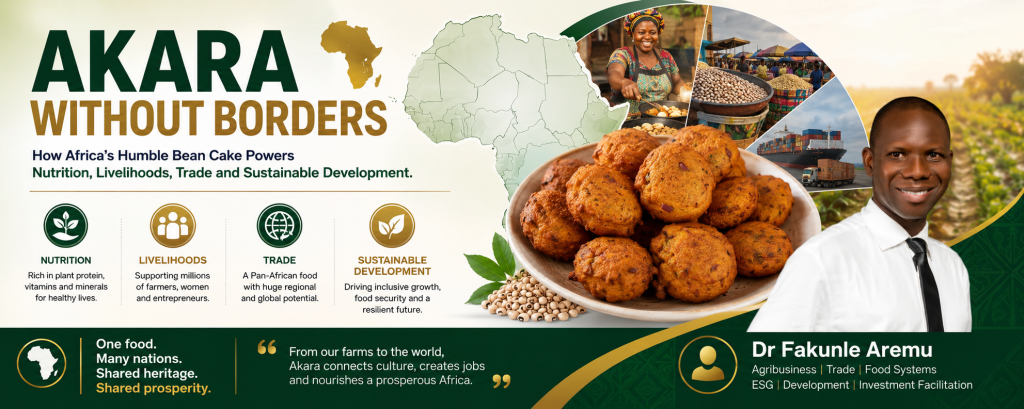
At the heart of akara is the cowpea (Vigna unguiculata), commonly known as black-eyed beans. Cowpea is one of Africa’s oldest and most important indigenous grain legumes. It is highly adapted to semi-arid environments, requires relatively little water and performs well under challenging climatic conditions. This makes it an important climate-resilient crop for millions of smallholder farmers across Sub-Saharan Africa (National Research Council, 2006; IITA, 2022). Nigeria remains the world’s largest producer of cowpea, followed by Niger and Burkina Faso, together accounting for a significant proportion of global production (FAOSTAT, 2024).
The nutritional value of akara makes it much more than a snack. Cowpea contains approximately 20 to 30 percent protein and provides essential amino acids, dietary fibre, iron, zinc, magnesium, potassium and B vitamins, making akara an affordable source of high-quality plant protein for millions of households (National Research Council, 2006; FAO, 2023). In many African communities where access to animal protein remains limited due to rising food prices, akara provides an important alternative that contributes to household nutrition, child development and food security. When consumed alongside pap, bread, custard, millet porridge or other staple foods, it forms a balanced and satisfying meal.
Beyond its nutritional importance, akara represents one of Africa’s largest informal food economies. Every akara sold on the street represents the work of multiple actors across an extensive value chain. The journey begins with seed producers, input suppliers and smallholder farmers cultivating cowpea. It continues through aggregators, transporters, wholesale traders, processors, cooking oil suppliers, equipment manufacturers and finally thousands of street vendors who prepare and sell akara daily. This interconnected value chain generates employment and income for millions of Africans, particularly women and young entrepreneurs (FAO, 2023; CGIAR, 2021).
Across West Africa, women dominate the akara business. For many households, daily income generated from selling akara pays children’s school fees, supports healthcare expenses, finances household consumption and provides working capital for other small businesses. The relatively low start-up cost makes akara production one of the most accessible micro-enterprises available to women and youth, creating inclusive economic opportunities with minimal barriers to entry (UN Women, 2022; FAO, 2023). In an era where youth unemployment remains a major development challenge across Africa, the proper branding of indigenous food enterprises, such as akara, deserves greater recognition as viable pathways for entrepreneurship and self-employment.
Urbanization is creating new opportunities for the commercialization of akara beyond traditional street vending. Rising demand for convenience foods has stimulated interest in frozen akara, ready-to-fry bean batter, packaged bean flour, instant akara mixes and modern quick-service restaurants specializing in indigenous African foods. Food processing companies are beginning to recognize that traditional foods can compete successfully with imported convenience products when supported by appropriate branding, quality assurance and modern packaging (World Bank, 2024). This transition offers significant investment opportunities for agribusiness entrepreneurs, food processors and institutional investors interested in Africa’s growing food market.
The social significance of akara extends well beyond commerce. Across many African societies, akara accompanies important moments of daily life and community interaction. It is served during family breakfasts, religious celebrations, festivals, weddings, naming ceremonies and social gatherings. The aroma of freshly fried akara evokes memories of childhood, family and neighbourhood life for millions of Africans. Such cultural attachment strengthens social cohesion and reinforces indigenous knowledge that has been transmitted from one generation to another over centuries (McCann, 2009).
From an environmental, social and governance (ESG) perspective, akara also represents a model for sustainable food systems. Environmentally, cowpea improves soil fertility through biological nitrogen fixation, reducing dependence on synthetic fertilizers while contributing to sustainable agricultural production (IITA, 2022). As a drought-tolerant crop, cowpea also enhances climate resilience in regions increasingly affected by erratic rainfall and rising temperatures. Compared with many animal protein sources, plant-based foods such as akara generally have a lower greenhouse gas footprint, making them an important component of sustainable diets (FAO, 2023).
Socially, akara contributes to inclusive development by supporting women-led enterprises, promoting affordable nutrition, creating employment opportunities and preserving Africa’s rich culinary heritage. It demonstrates how indigenous foods can simultaneously improve livelihoods, strengthen food security and reinforce cultural identity. From a governance perspective, there is considerable scope to formalize and strengthen the akara value chain through improved food safety standards, hygiene certification, quality assurance, cooperative development and access to finance. Such measures would enhance consumer confidence while opening new domestic and export market opportunities (World Bank, 2024).
The implementation of the African Continental Free Trade Area (AfCFTA) presents an exciting opportunity to reposition akara as a continental food product. Standardized bean flour, frozen akara, packaged ready-to-cook mixes and premium indigenous food brands could find growing markets across Africa as trade barriers decline and regional value chains become more integrated. African diaspora communities in Europe, North America and the Caribbean also represent expanding markets for authentic African convenience foods. Similar to how hummus, falafel and sushi have achieved global recognition, akara possesses the potential to become one of Africa’s internationally recognized indigenous food products.
Despite its enormous potential, several constraints continue to limit the growth of the akara economy. Rising bean prices, increasing cooking oil costs, inadequate processing technology, limited cold chain infrastructure, insufficient access to affordable finance and the predominance of informal business structures all constrain productivity and profitability (FAO, 2023). Addressing these challenges will require coordinated investments by governments, development partners, research institutions and the private sector to modernize the cowpea and indigenous food value chain.
Africa’s future food systems should not rely exclusively on imported diets or highly processed foods. The continent already possesses resilient, nutritious and culturally accepted indigenous foods capable of driving economic transformation. Akara is a compelling example of how a traditional food can support agriculture, generate employment, empower women, improve nutrition, strengthen local industries and preserve cultural heritage simultaneously.
As Africa pursues sustainable development, climate resilience and inclusive economic growth, perhaps it is time to recognize akara for what it truly is: not simply a fried bean cake, but a Pan-African symbol of innovation, resilience and shared prosperity. By investing in indigenous foods and modernizing their value chains, Africa can transform everyday traditions into globally competitive industries that create jobs, improve nutrition and celebrate the continent’s remarkable cultural diversity.
What other indigenous African foods do you believe have the potential to become global brands? Would I be interested in hearing your perspectives? Call/W +2348063284833; fakunle2014@gmail.com
