


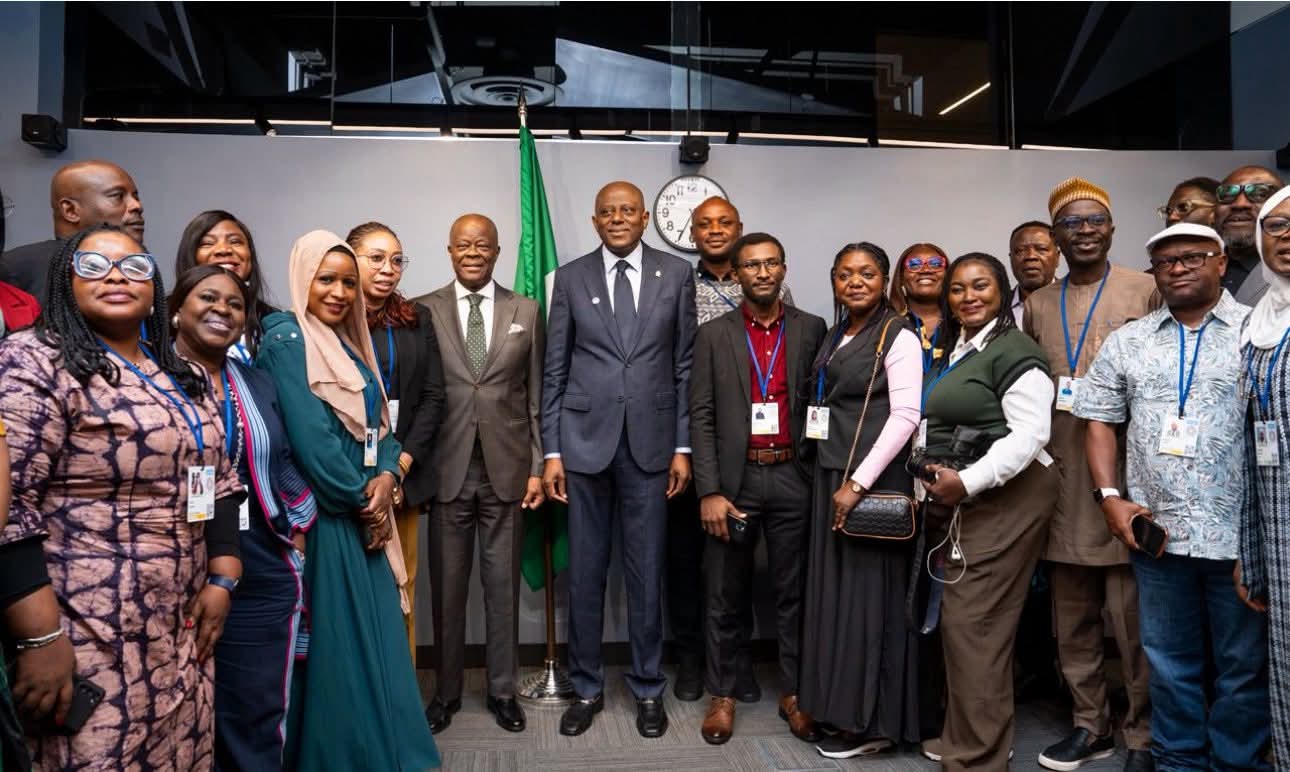
As the 2026 Spring Meetings of the International Monetary Fund and World Bank concluded in Washington, the Governor of the Central Bank of Nigeria (CBN), Olayemi Cardoso, has reaffirmed that Nigeria’s economic reforms are yielding positive results and positioning the country for long-term stability.
Cardoso said the CBN remains firmly on track, focusing on consolidating existing gains, sustaining reforms, and strengthening institutional capacity to deliver macroeconomic stability.
According to him, Nigeria demonstrated strong leadership at the meetings, reaffirming its commitment to reforms aimed at promoting stability, growth, and economic opportunity.
“Despite global uncertainty, Nigeria’s reform progress continues to stand out. Our policies are strengthening the naira, boosting reserves, and building investor confidence and capital inflows,” he said.
The CBN governor noted that ongoing reforms are already delivering measurable outcomes, including easing inflationary pressures, stabilising the foreign exchange market, and reinforcing monetary policy credibility.
He added that Nigeria’s foreign exchange market has become more market-driven, with improved liquidity capable of sustaining operations independently, while the country’s external reserves remain robust.
On financial sector reforms, Cardoso highlighted the recent banking recapitalisation exercise, which raised ₦4.65 trillion, with 72.55 per cent sourced domestically and 27.45 per cent from foreign investors. He said the outcome reflects growing investor confidence and strong domestic participation.
Cardoso also disclosed that the apex bank’s target of achieving one billion dollars in monthly diaspora remittances by the end of 2026 remains on course. He urged commercial banks to leverage the enabling environment created by the CBN to ensure seamless remittance flows for Nigerians in the diaspora.
Reaffirming Nigeria’s role in regional financial integration, he said the country is proud to host the African Monetary Institute in Abuja, describing it as a critical step toward deeper monetary cooperation and integration across the continent.
Speaking on institutional development, Cardoso underscored the CBN’s partnership with IMF AFRITAC West II, emphasising the importance of investing in human capacity and strengthening institutions.
“Our focus is unwavering: sustain reforms, strengthen institutions, and ensure data-driven decisions that support a stable, growing economy for all Nigerians,” he said.
