


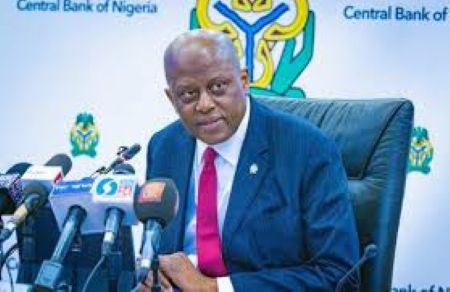
The completion of the Central Bank of Nigeria’s (CBN) capital requirement exercise has heightened expectations for the banking sector, with experts projecting a shift in focus toward lending expansion and customer-centric reforms.
The CBN on Wednesday confirmed that 33 banks met the revised minimum capital requirements under its recently concluded recapitalisation programme, marking a significant milestone in efforts to strengthen the country’s financial system.
The apex bank disclosed that a total of N4.65 trillion was raised over the 24-month exercise, with capital adequacy ratios across the sector now above Basel benchmarks, reinforcing banks’ capacity to support economic growth and absorb shocks.
The programme also recorded strong domestic investor participation, with 72.55% of the capital raised sourced locally, underscoring growing confidence among Nigerian investors in the banking sector.
Dr. Jerry Igwilo, former banker and CEO of Wynk Limited, told Nairametrics that the next phase of banking reform must shift from capital to customers, with greater emphasis on protection and accountability.
“More importantly, banks need to be mindful of the customer protection side of their business,” he said.
According to Igwilo, Nigeria’s current complaint management framework remains significantly underdeveloped, limiting regulators’ ability to detect systemic issues early.
“I think the complaint management system we have in banking today is very poor. There needs to be a consolidated, digital system that allows the central bank to monitor, in real time, what customers are complaining about,” he explained.
“That is how we begin to move banking into a more democratized environment, one where customers are not just participants but are genuinely satisfied with the system.”
He added that the industry must also rethink how it measures success, moving beyond capital thresholds as the dominant benchmark.
“I look forward to a system where banks are not evaluated solely on their capital base, but also on how well they comply with regulations, how they treat their customers, how their products are supervised, and ultimately, how they impact their customers,” he said.
Igwilo noted that the next phase of reforms should prioritise robust customer monitoring services, integrated complaint management systems, and a more technologically driven supervisory framework—one that enables regulators to identify early warning signs of unsustainable practices through real-time customer feedback.
Olubunmi Ayokunle, Head of Financial Institutions Ratings at Augusto & Co., also told Nairametrics that the increased capital is expected to drive greater investment in risk assets and expansion of banks’ loan books.
“We anticipate more deployment of the funds into supporting the risk sector and expansion in the loan book,” Ayokunle said.
“Some of them want to scale across the continent, particularly those with international banking licences. We anticipate some announcements in the coming weeks or months.”
Ayokunle also highlighted expected growth in product offerings for deposit customers.
“We’re going to see more deposit products, and some banks will strengthen their technology platforms. SMEs will also be a key target segment for deploying funds. Over 70% of registered businesses in Nigeria are SMEs, so it makes sense for banks to focus on them,” he added.
Nigeria’s banking sector raised over N4.6 trillion under the CBN’s recapitalisation programme, reflecting strong investor interest and increased foreign participation.
The CBN launched the Banking Sector Recapitalisation Programme in 2024 as part of efforts to strengthen the financial system amid ongoing macroeconomic reforms.
CBN Governor Olayemi Cardoso recently confirmed that 32 banks had met the revised minimum capital requirements, signalling significant progress in the sector.
Speaking at the Monetary Policy Forum in Abuja, Cardoso described the achievement as “commendable” and emphasised the banking sector’s role in supporting long-term investment and economic growth.
He added that the recapitalisation programme is central to Nigeria’s ambition of becoming a $1 trillion economy.
Dr. Muda Yusuf, CEO of the Centre for the Promotion of Private Enterprise (CPPE), noted that while the recapitalisation strengthens the sector’s resilience, financial intermediation in Nigeria remains weak.
“Private sector credit is just 17% of GDP, which is well below the sub-Saharan African average of 25%. Small and medium enterprises (SMEs) receive just 1% of total bank credit, despite contributing roughly 50% of GDP and over 80% of employment,” he said.
Yusuf stressed the need for a policy shift.
“Now that the banks are recapitalised, policy must move towards improving financial intermediation and ensuring that credit flows effectively into productive sectors,” he said.
He also pointed out that most bank lending is short-term, with only about 25% of loans classified as long-term—an issue he described as critical.
The recapitalisation initiative has already yielded tangible gains, including improved investor confidence and the expansion of Nigerian banks into regional markets.
The CBN aims to build a more resilient financial system capable of withstanding economic shocks while supporting sustainable long-term growth.
Notably, the N4.65 trillion in new capital raised represents an increase of about N600 billion compared to the N4.05 trillion disclosed earlier in February 2026.
