


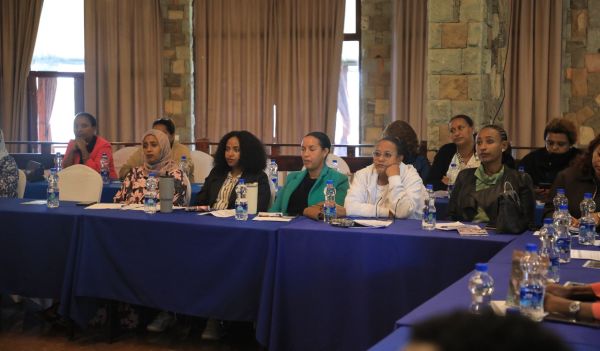
Forty women traders and exporters from across Ethiopia have received training on export procedures, customs requirements and market access as part of efforts to increase women’s participation in formal trade along the Djibouti-Ethiopia Corridor.
The two-day export-readiness workshop, held in Bishoftu on July 30 and 31, 2026, focused on helping women-led businesses formalise their operations, comply with product standards, complete export documentation and connect with regional buyers.
The training was organised under the Promoting Regional Economic Integration in the Horn of Africa through the Development of the Djibouti Corridor Programme. The €32 million initiative is financed by the European Union under its Global Gateway strategy, with funding delegated to Agence Française de Développement and implementation led by TradeMark Africa in partnership with the governments of Ethiopia and Djibouti.
Participants included members of the Addis Ababa and Oromia Women Traders’ Associations, the Ethiopian Women Exporters Association, Women in Coffee and the Centre for Accelerated Women’s Economic Empowerment. Officials from government institutions and trade-support organisations also took part.
Tackling barriers to formal trade
The workshop addressed challenges faced by women traders working in sectors including coffee, horticulture, textiles, handicrafts and consumer goods.
A gender analysis commissioned under the programme found that 94 per cent of surveyed women traders operated without business licences, while more than one-third reported making informal payments at border crossings. The findings highlight barriers that can limit access to finance, regulatory compliance and formal regional markets.
Training sessions covered business formalisation, legal and regulatory requirements, export documentation, access to finance, product and packaging standards, logistics, customs procedures, e-commerce, digital marketing and business negotiation.
Participants also examined the COMESA Simplified Trade Regime, the African Continental Free Trade Area, Ethiopia’s bilateral trade arrangements, and customs and transit procedures for goods moving through Djibouti.
“Ethiopia has expanded its trade partnerships and strengthened its market-access frameworks. The priority now is to ensure that the traders who sustain cross-border commerce can participate in these opportunities,” said Yasmin Wohabrebbi, State Minister of Trade and Regional Integration.
She said improving women traders’ understanding of trade procedures would enable them to operate within formal systems and benefit from trade agreements negotiated by the country.
Linking training to corridor reforms
The Djibouti-Ethiopia Corridor is Ethiopia’s principal maritime trade route and a key channel for businesses seeking access to regional and international markets.
The programme combines infrastructure investment with trade-facilitation measures aimed at reducing the time and cost of moving goods along the corridor. These measures include stronger corridor governance, digital trade systems such as electronic phytosanitary certification, regulatory reforms, technical assistance and capacity development.
Organisers said the workshop complemented these reforms by equipping women-led enterprises with the knowledge needed to use improved transport, customs and digital-trade systems.
“Women traders support household incomes, businesses and local markets across the region. Ensuring that they can access relevant knowledge, legal frameworks and institutional support strengthens their participation in formal trade and contributes to more resilient communities,” said Solomon Asfaw, Adviser to the State Minister of Women and Social Affairs.
According to World Bank data sourced from ILOSTAT and cited in the press release, 48 per cent of Djibouti’s female labour force was unemployed in 2025. The programme said stronger participation by women in formal trade and regional value chains could create opportunities for businesses, households and communities across the corridor.
Follow-up assessment planned
The workshop was delivered in partnership with Ethiopia’s Ministry of Trade and Regional Integration and Ministry of Women and Social Affairs. It followed an earlier training session held during International Women’s Month in March 2026.
TradeMark Africa’s Ethiopia Country Director, Ewnetu Taye, said improving women traders’ export readiness, business competitiveness and access to formal markets would contribute to a more efficient and inclusive corridor.
Pre- and post-workshop assessments were conducted to measure participants’ knowledge and confidence. A six-month follow-up assessment will examine whether participants have applied the training, including progress in business formalisation, export compliance and participation in regional trade.
