


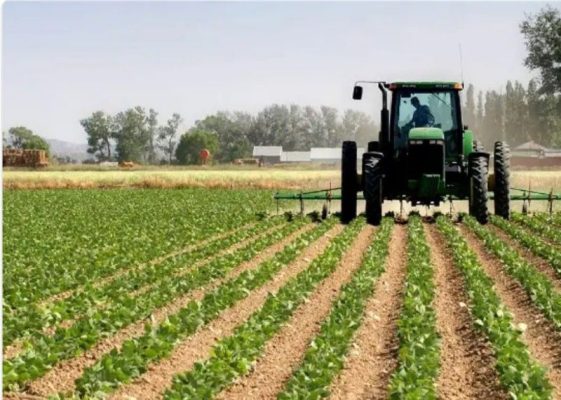
The National Agricultural Extension and Research Liaison Services (NAERLS) has projected cereal production of 29.39 million tonnes this year.
NAERLS disclosed this in a statement made available to reporters in Lagos on Wednesday. It was signed by the institute’s Head of Public Relations, Protocol and Advancement Unit, Dr Haruna Abdul-Aziz.
The statement followed NAERLS’ presentation of its survey findings to the Minister of Agriculture and Food Security, Senator Abubakar Kyari, in Abuja.
“The projections show that maize and rice are expected to drive the increase, while flooding, crop pests and a shortage of extension agents remain threats to food security.
“The survey projects higher output for 13 of the 17 major crops assessed, while also identifying risks to those gains.
“Seven states reported severe flooding, and each active extension agent serves an average of 4,982 farm families nationwide.
“Nineteen multidisciplinary teams conducted fieldwork across all 36 states and the Federal Capital Territory (FCT) from Aug. 31 to Sept. 6, 2026,” the statement said.
NAERLS said it assessed state ministries, agricultural research institutes, Agricultural Development Programmes and development partners.
The survey projected Niger as the leading rice-producing state, Kano as the leading sorghum producer and Yobe as the leading millet producer.
“The North-Central zone accounts for the largest share of cereal, legume, root and tuber production, while the North-West leads in vegetable production.
“National cowpea output is projected at 4.46 million tonnes and groundnut output at 5.41 million tonnes, with Gombe and Bauchi states leading production of the respective crops.
“Sesame, cotton, plantain and banana production are also expected to increase.
“Soybean output is projected to fall by 2.65 per cent to about 956,745 tonnes. Benue remains the leading soybean-producing state,” it said.
NAERLS said erratic rainfall, dry spells and flooding affected farming communities during the wet season.
Niger, Jigawa, Yobe, Ogun, Osun, Enugu and Ebonyi states reported severe flooding, while Kaduna, Nasarawa and Benue were among the states that reported moderate flooding.
The organisation also said Kano and Taraba reported severe fall armyworm infestations.
“The survey also recorded Tuta absoluta in Kano and Kaduna, cassava mosaic disease in Anambra, and stem borer infestations in Katsina, Zamfara, Jigawa and Kogi.
“It identified 2,064 active agricultural extension agents nationwide.
“Coverage was thinnest in the South-South, where one agent serves an average of 8,858 farm families, compared with the national average of 4,982.
“This limits farmers’ access to timely advice on pest control, weather risks and production practices,” the statement said.
NAERLS said the survey found uneven livestock vaccination coverage, particularly in Taraba and Gombe. Several livestock-producing states also reported cases of contagious bovine pleuropneumonia and foot-and-mouth disease.
The organisation called for wider vaccination coverage and stronger veterinary surveillance.
It said fish production rose by 114.3 per cent in Niger, more than doubling its previous level. Gombe, Rivers and Kwara recorded increases of 26.4 per cent, 13.3 per cent and 9.5 per cent, respectively, while production declined in the FCT, Kogi and Katsina.
“Food prices moved in different directions. Garri prices fell by 21 per cent and white maize prices by 13 per cent.
“Onion prices rose by 18.8 per cent, while locally produced rice and eggs recorded smaller increases of 1.6 per cent and 2.1 per cent, respectively,” it said.
NAERLS called for agricultural performance to be monitored throughout the year so federal and state authorities could identify emerging production shortfalls and respond earlier.
It also called for stronger extension services, closer links between researchers and field agents, and better access to affordable inputs, finance and agricultural machinery.
“Other priorities include delivering flood warnings to farmers earlier, expanding climate-smart farming practices, strengthening pest surveillance and integrated pest management, and improving livestock vaccination and support for fisheries.
“The survey also recommends better storage, post-harvest handling and market access so that more of what farmers produce reaches consumers,” NAERLS said.
