


By NJ Ayuk
Western leaders often urge African nations to make a rapid transition from fossil fuels to renewable energy sources. They seem to think that African nations can switch to renewable power sources fairly easily, as if a good energy infrastructure was already in place.
But this is not the case in Africa, where roughly half of the population lacks access to electricity. Far too many our people can’t buy milk from a refrigerated grocery aisle, do schoolwork after sunset, or get an X-ray at their local hospital. Right now, those 620 million souls don’t need green electricity — they need electricity, period. Then there are the 900 million Africans who lack clean cooking fuel. For them, cooking with wood, charcoal, and even waste, is part of daily life. So is walking up to 20 hours a week to gather these fuels—and the dramatic health risks associated with inhaling smoke from cooking.
The sheer urgency of these situations demands that we prioritize a reliable grid first and everything else second.
Different Timelines
Contrast this with the United Kingdom and United States, where the majority of homes have been energized since 1930 and 1960, respectively. Currently, Britain generates 41% of its electricity from renewable sources, and the U.S. recently saw its renewable generation outpace coal. Worthy milestones, but let’s not forget that both nations had already been enjoying and expanding their fossil fuel-based grids for nearly a century. They spent decades industrializing and building robust infrastructure before implementing successful green policies. I don’t believe that every single African state must follow the same timeline, especially as renewable technology improves. I do, however, ask long-industrialized nations to consider the vast differences between their energy landscapes and ours.
Different Needs
Many Western states supplement their grids with wind or solar but ultimately rely on natural gas, oil, or coal. Take the U.S., which generates 60% of its electricity with fossil fuels and 21% with renewables. The hard truth remains: Fossil fuels are still more reliable.
How much more reliable? Natural gas has a capacity factor of 65%, which means that gas-powered plants operate at full power 65% of the time. Contrast that with wind and solar, which operate at 36% and 25%, respectively. In other words, these renewables are about half as reliable as natural gas.
Asking developing nations to ignore natural gas is essentially requesting that they ignore half their power capacity. It’s a declaration that Africans deserve half the energy, half the standard of living, and half the safety of their Western peers.
It’s admirable and forward-thinking that many modern states supplement their grids with wind or solar. However, when panels crack or wind farms fail, their people have the luxury of falling back on a safe, reliable, and established fossil fuel grid. It’s significantly easier to make an existing network eco-friendly than it is to build a green one from the ground up. Once Africans have universal access to electricity, climate-centric conversations will be much more welcome.
Different Costs
Africa contains 70% of the least developed nations in the world. Only one state – South Africa – is fully industrialized. It’s one thing to hear these statistics, and quite another to make decisions on the ground of a developing nation. I believe that many talented, well-meaning Western thinkers simply aren’t accustomed to the fiscal environment that African leaders operate in.
For example, consider the logistics behind solar panels. In the U.S., it can cost anywhere from USD15,000 to USD35,000 to purchase and install a panel — and that’s not counting the upfront costs of fixing a roof that’s not solar-ready, the recurring cleaning and maintenance fees, or replacing the panels every 20 to 30 years.
And for undeveloped areas, those fees are just the tip of the iceberg. Even in a scenario where a subsidy pays for every single panel, transporting them (via gas-powered engines, seeing as we don’t have the grid to support electrical vehicles) to their destinations becomes ruinous — there are no reliable trains or roads in our poorest areas. The labor costs of finding people to install, repair, and replace the panels also add up.
Once these panels are magically purchased, installed, and repaired, the biggest problems still remain: Storing and transmitting the energy. Even first-world nations have not overcome the technological hurdles of creating reliable, long-term batteries and long-distance transmission for renewable plants. Developing, much less implementing, that infrastructure will entail staggering expenses even for an industrialized nation.
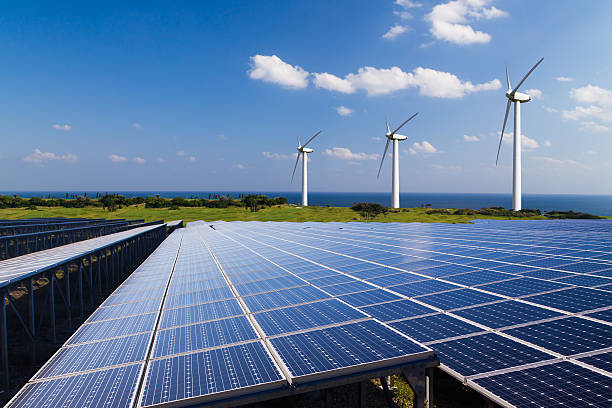
I do not say this to discourage solar solutions as a whole— the technology has great potential for Africa, which contains 60% of the world’s best solar resources. My point is simply that, as of now, widespread renewable energy use is not realistic for most developing nations. Our capital is limited, and we need to invest it in more tried and true solutions.
Different Investment
Attracting foreign investment into Africa is difficult enough under the best of circumstances. Despite the enormous potential of our natural resources and growing population, investors often put African projects on the chopping block first. As we point out in our 2024 Outlook Report, the ratio between actual greenfield spending and potential spending remains concerningly low. And those numbers only involve investments into tried and true fossil fuel exploration — pouring billions of dollars of capital solely into renewables is an even less feasible venture. When it comes to renewables, we’re dealing with relatively fragile and unreliable technology, along with the challenges of high startup costs, poor infrastructure, and urgent energy needs.
For activists who refuse to believe this economic reality, I invite them to reread the financial pledges made by developed states at COP15. Wealthy nations acknowledged the transition challenges facing developing nations and pledged USD100 billion by 2020 to help them fight climate change. Thirteen years later, the real spending value came in around $24.5 billion. Climate promises do not often survive first contact with a checkbook.
Solar, wind, hydroelectric, green hydrogen, and geothermal energy have vital roles to play in Africa’s future — but it is ludicrous to suggest that our developing nations go 100% renewable before Western nations manage it first. Our current humanitarian, infrastructure, and financial situations require actionable solutions that will reward investors.
Natural gas has supported the West’s grocery stores, hospitals, and schools for decades — let’s use our abundant reserves to do the same.
Priorities
World leaders saw approximately 2.3 million people dying each year from COVID-19 and acted accordingly. Swathes of the globe locked down for months, shut down businesses, and changed social routines. Today, nations continue to pour millions of dollars into revamping their public health infrastructure. Policymakers advocate changes in medicine, law, and even culture to cope with the crisis.
Meanwhile, approximately 1.1 million Africans die each year from using hazardous cooking fuel. In other words, from 2020-2023, unsafe fuel caused at least half as many deaths as COVID. Why don’t more world leaders treat energy poverty with a fraction of the urgency, compassion, and resources that they put into COVID containment?
Simply put, energy poverty is a humanitarian crisis. That is why African leaders will continue to advocate for the most pragmatic solutions possible, particularly natural gas. This plentiful, clean-burning, tried-and-tested resource remains our best tool to tackle energy poverty. I urge investors to embrace gas, and I encourage the global community to respect African leaders’ commitment to using every means possible, including our petroleum resources, to meet Africans’ needs.
Ayuk is Executive Chairman, African Energy Chamber
