


The eight-year administration of ex-President Muhammadu Buhari, was amongst others, characterized by indulgence and generosity to state governors in form of bailouts to their states.
Variously called salary arrears bailout, bridge financing facility, budget support, recession, and excess crude facility, the previous government, as at 2021 had doled out N1.7 trillion to states. However, instead of the funds being utilized to improve lives and provide massive infrastructure, much of it is alleged to have found its way to the private accounts of state governors as it became another window for their profligacy and lavish lifestyle.
The outcry and complaints that trailed the mismanagement of the bailout once prompted the Independent Corrupt Practices and other Related Offences Commission (ICPC) and the Nigeria Labour Congress (NLC) to wade in, yet not much was achieved after all. As usual with money, litigations over consulting and repayment soon followed. All these back-and-forth overshadowed substantive issues of governors’ misapplication of the funds until a new government came in and some of them went away without query and accountability over the previous facilities.
Unfortunately, the Bola Ahmed Tinubu presidency, just like Buhari’s in 2015, seems to be making the same mistake of throwing monies at governors without a framework for their(funds) application for the benefit of the people. In a country and especially in states with low accountability, this increased FAAC might not change the lot of our people.
To think that President Tinubu started on this wrong footing of “sharing money to over-indulged governors”, shortly afterthe removal of fuel subsidy, the only thing that benefited the poor in an oil-producing state, is to say the least, insensitive of Mr. President. The disbursement of the proceeds from that subsidy removal led to FAAC sharing N1.9 trillion for the 36 states of the federation.
In the last two months, Nigerians have been grappling with numerous challenges, ranging from food crisis, poverty and high fuel cost, to social unrests. However, amidst the struggles, President Tinubu’s government made a significant move by sharing the 1.9 trillion naira that accrued to the federation account to the 36 states of the country. This doleout has ignited both hope and skepticism among Nigerians, as they ponder the potential impact of such a substantial fund injection. Concerns also loom large due to previous instances of mismanagement and lack of accountability in previous bailouts.
Granted that FAAC is a constitutional provision. However, in a country that is not as democratic as it sounds on paper, President Tinubu could have exercised his discretion and ingenuity and repurposed the windfall to other pressing needs, to signal his commitment to change our narrative, and redeem his promise to rejuvenate the Nigerian economy. Amidst mounting pressure and high expectations, the government announced this significant financial injection as part of its development strategy, unfortunately to the wrong arm of government under the supervision of state governors that are not known for prudence.
Nigeria’s economic challenges, such as over-reliance on oil revenues and a lack ofdiversified economy is hurting the country. There is the need for comprehensive economic reforms that would drive sustainable growth and create jobs for the millions of unemployed youth in the country.
Such humongous amount could be directed to the industrial sector, which is in dire strait. According to the Manufacturers Association of Nigeria, power shortage, poor infrastructure, forex crisis, devaluation of the Naira, tax burden excetra are some of the challenges that confront the sector. The Nigeria Bureau of Statistics (NBS) noted that the manufacturing sector contributed a meagre 10.20% to the economy in 2022. This sector needs to be revived.
The money could be used to fixed the power crisis or railway services, and kickstart development projects that were previously hindered by financial constraints. Also, if properly managed the funds could lead to improved infrastructure, better healthcare facilities, enhanced education systems, and increased opportunities for Nigerians, all laudable initiatives our governors do not care much about. How about our comatose refineries? When will the president beam his searchlight on their resuscitation and stop importation of crude oil?
To build public trust, President Tinubu’s government must address the historical misapplication of such funds and ensure the judicious application of the extra FAAC funds, by channelling same strategically into key infrastructure projects, road networks, bridges, railways, and the power sector and job creation. Robust infrastructure would attract investments, boost productivity and enhance the overall quality of life for citizens.
Establishing well-structured social safety net programmes would provide support for vulnerable populations, including the unemployed, elderly, and disabled. These programmes could include cash transfer schemes, healthcare subsidies, and food assistance to alleviate poverty and ensure basic needs are met.
Prioritizing education and skills development is essential for empowering the youth and preparing them for the workforce of the future. To achieve meaningful impact, Nigeria can draw lessons from global best practices.
One notable example is the Marshall Plan, which aided in Europe’s post-World War II reconstruction. Similarly, the money could be utilized to catalyze development in a systematic and coordinated manner in states. By adopting a focused and transparent approach, the funds could address critical issues, create jobs, and boost economic growth.
The removal of fuel subsidies in Nigeria has had a significant impact on the cost of living for citizens. To mitigate the effects of subsidy removal, President Tinubu’s government should consider targeted subsidies for essential goods and services, along with investing in renewable energy and alternative sources to reduce dependence on fossil fuels.
Through the governors’ Forum, independent and regular audits should be conducted on state finances to assess how the funds are being utilized and identify areas of improvement, engage citizens and civil society in the budgeting and decision-making processes, encourage and protect whistleblowers to, uncover corruption and financial impunity within the government, strengthen legislative oversight. Implementing stringent monitoring mechanisms, independent audits, and involving civil society organizations in oversight can help ensure that the funds are utilized well.
Above all, punishing corruption and financial impunity must be taken seriously. To instill a culture of accountability, public officials found guilty of corruption or financial mismanagement should face severe consequences. This includes prosecuting those involved in embezzlement and fraudulent activities and ensuring they face the full force of the law. Unfortunately, governors are reckless because they have impunity, but once out of office, investigation and prosecution against those found wanting can be initiated. Above all, President Tinubu’s government must lead by example and hold state governments accountable, ensuring that every naira is spent for the betterment of the people and to reduce the excruciating poverty that has burdened the nation.
Mali’s example in African renaissance
Anti-France sentiment in West Africa was further boosted recently when Mali, in a referendum ditched French as the country’s official language. In the same vein, the country has recognised 13 other national languages and have received official language status, even as French remains the working language. According to Africanews report, Mali has 70 other languages, but in a in June 18 referendum, Mali passed an overwhelming 96.1 % vote in favour of the change.
Despite Mali’s latest history of coups and counter coups, the country was able to come to a consensus in the nation’s interest. Nigeria can and should take a cue from Mali and seek to upgrade some local languages to national status, without much rancour as it often happens when some contentious colonial legacies are revisited. Some Nigerian languages are going into extinctions. Many a youth and young adults cannot converse in their local languages without code-switching.
Along with losing the local language is the loss of one’s culture and way of life. That also means loss of identity. That is unfortunate. Everyone comes from somewhere, and no matter our cosmopolitan and global outlook, Nigerian languages should not be allowed to die in favour of our colonial imposed language. The only way out is to speak it and for government to officially recognise them one way or the other. Before the British came, before the slave trade and colonialism, we had our cultures and languages, which must be preserved for generations to come. Mali has shown the way. Let’s begin the rescue.
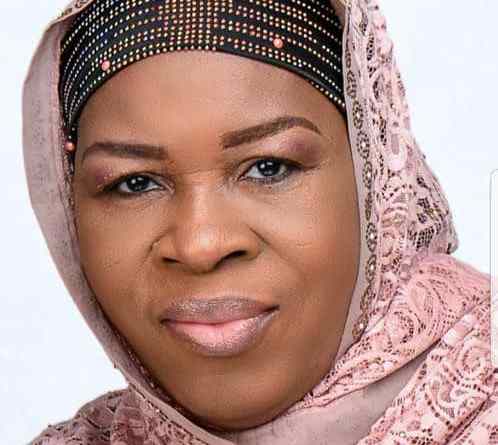
Zainab Suleiman Okino chairs Blueprint Newspaper. She is a syndicated columnist. She can be reached via: zainabokino@gmail.com
