


• Home
  • Agric
  • Sci & Tech
  • Health
  • Environment
  • Hausa News
  • More
    • Business/Banking & Finance
    • POLITICS
    • Entertainments & Sports
    • International
    • Investigation
    • Law & Human Rights
    • Africa
    • ACCOUNTABILITY/CORRUPTION
    • Hassan Gimba
    • Column
    • Prof. Jibrin Ibrahim
    • Prof. M.K. Othman
    • Defense/Security
    • Education
    • Energy/Electricity
    • Entertainment/Arts & Sports
    • Society and Lifestyle
    • Food & Agriculture
    • Health & Healthy Living
    • International News
    • Interviews
    • Investigation/Fact-Check
    • LAW & HUMAN RIGHTS
    • Oil & Gas/Mineral Resources
    • PRESS FREEDOM/JOURNALISM/PR
    • General News
    • Presidency
  • About Us
    • Contact Us
    • Board Of Advisory
    • Privacy Policy
    • Ethics Policy
    • Teamwork And Collaboration Policy
    • Fact-Checking Policy
    • Advertising
  • Media OutReach Newswire
    • Wire News
  • The Stories
Facebook Twitter Instagram
Trending
  • CONUA: Our advocacy has brought stability to university system
  • MRTBN registrar calls for better funding, more physiotherapists
  • Cancer survivors demand better psychological support, affordable treatment
  • Shettima: MSMEs hold key to Nigeria’s economic growth
  • Matna foods executive calls for value addition in Nigeria’s cassava sector
  • Tech expert urges community approach to boost Nigeria’s 5G adoption
  • BUA cement reaffirms support for displaced farmers in Sokoto
  • Niger inaugurates 28 member state health advisory committee
Facebook Twitter Instagram YouTube
AsheNewsAsheNews
  • Home
  • Agric

    Matna foods executive calls for value addition in Nigeria’s cassava sector

    June 27, 2026

    BUA cement reaffirms support for displaced farmers in Sokoto

    June 27, 2026

    Jigawa launches agricultural support for 90,000 farmers

    June 27, 2026

    BOA introduces strict data-driven credit profiling for farmers

    June 26, 2026

    ADP urges farmers to utilise extension services for higher yields

    June 26, 2026
  • Sci & Tech

    MRTBN registrar calls for better funding, more physiotherapists

    June 27, 2026

    Tech expert urges community approach to boost Nigeria’s 5G adoption

    June 27, 2026

    Expert warns against charging phones while sleeping

    June 27, 2026

    Former APWEN Chair, Eterigho, addresses global engineering conference

    June 26, 2026

    ISAAA AfriCenter launches Africa-wide biotech, biosafety information portal

    June 25, 2026
  • Health

    Cancer survivors demand better psychological support, affordable treatment

    June 27, 2026

    Niger inaugurates 28 member state health advisory committee

    June 27, 2026

    Association urges FG to strengthen PHCs for early disease detection

    June 27, 2026

    NHIA introduces 1 hour authorisation approval limit

    June 26, 2026

    EFCC doctor warns pregnant women against eclampsia

    June 26, 2026
  • Environment

    Shettima: MSMEs hold key to Nigeria’s economic growth

    June 27, 2026

    FCT NUJ pledges support for community policing in Abuja

    June 27, 2026

    ESWAMA warns violators of monthly sanitation exercise

    June 26, 2026

    Enugu gov invites global investors for climate projects

    June 26, 2026

    Recycling boom creates jobs for thousands in Lagos

    June 24, 2026
  • Hausa News

    UNA signs MoU to launch air Bissau in Guinea-Bissau

    June 15, 2026

    Otti plans 250-room 5-star hotel in Umuahia

    April 11, 2026

    Anti-quackery task force seals 4 fake hospitals in Rivers

    August 29, 2025

    [BIDIYO] Yadda na lashe gasa ta duniya a fannin Ingilishi – Rukayya ‘yar shekara 17

    August 6, 2025

    A Saka Baki, A Sasanta Saɓani Tsakanin ‘Yanjarida Da Liman, Daga Muhammad Sajo

    May 21, 2025
  • More
    1. Business/Banking & Finance
    2. POLITICS
    3. Entertainments & Sports
    4. International
    5. Investigation
    6. Law & Human Rights
    7. Africa
    8. ACCOUNTABILITY/CORRUPTION
    9. Hassan Gimba
    10. Column
    11. Prof. Jibrin Ibrahim
    12. Prof. M.K. Othman
    13. Defense/Security
    14. Education
    15. Energy/Electricity
    16. Entertainment/Arts & Sports
    17. Society and Lifestyle
    18. Food & Agriculture
    19. Health & Healthy Living
    20. International News
    21. Interviews
    22. Investigation/Fact-Check
    23. LAW & HUMAN RIGHTS
    24. Oil & Gas/Mineral Resources
    25. PRESS FREEDOM/JOURNALISM/PR
    26. General News
    27. Presidency
    Featured
    Recent

    CONUA: Our advocacy has brought stability to university system

    June 28, 2026

    MRTBN registrar calls for better funding, more physiotherapists

    June 27, 2026

    Cancer survivors demand better psychological support, affordable treatment

    June 27, 2026
  • About Us
    1. Contact Us
    2. Board Of Advisory
    3. Privacy Policy
    4. Ethics Policy
    5. Teamwork And Collaboration Policy
    6. Fact-Checking Policy
    7. Advertising
    Featured
    Recent

    CONUA: Our advocacy has brought stability to university system

    June 28, 2026

    MRTBN registrar calls for better funding, more physiotherapists

    June 27, 2026

    Cancer survivors demand better psychological support, affordable treatment

    June 27, 2026
  • Media OutReach Newswire
    • Wire News
  • The Stories
AsheNewsAsheNews
Home»Food & Agriculture»25 years of GMO crops: Economic, environmental and human health benefits
Food & Agriculture

25 years of GMO crops: Economic, environmental and human health benefits

Abdallah el-KurebeBy Abdallah el-KurebeMay 13, 2018No Comments5 Mins Read
Share
Facebook Twitter LinkedIn Pinterest Email

By Stuart Smyth

1994 is generally regarded as the first year of genetically modified crop production, the first being the GM Flavr Savr tomato in the US. The crops that will be planted in 2018 represent the 25th year of GM crop production. While many eNGOs of social media ‘celebrity’ rant, rave and troll that GM crops are the cause of every leading social, medical and environmental misfortune in existence, this could not be further from the truth. While GM crops celebrate their 25th production anniversary, these technologies have been researched for a decade longer. During this time, they have been proven safe countless times and will continue to offer more benefits as future technologies are commercialized. This blog summarizes and celebrates the global economic, environmental and human health benefits of GM crops over the past 25 years.

Economic benefits

With the adoption of GM crops rapidly expanding, the benefits from the technology must be significant otherwise farmers would begin to return to previous crop options. Such economic benefits include:

  • Brookes and Barfoot estimated for2014, that the global economic benefits of GM crops exceeded US$17 billion, cumulatively reaching US$150 billion between 1996 and 2014.
  • Production increases have also improved global food security. Brookes and Barfoot estimate that leading up to 2014 an additional 158 million tonnes of soybeans and 322 million tonnes of corn have been produced.
  • In a meta-analysis of 147 studies on GM crop impacts, Klümper and Qaim found pesticide use has decreased 37%, yields increased 22% and farmer profits increased 68%.
  • Subramanian and Qaim found Bt cotton adoption in India raised vulnerable household incomes (those defined as living on less than $2/day) by 134%.
  • In the USA, Hutchinson and his group found GM corn adoption created an additional $6.8 billion in value, of which 60% went to non-adopters due to lower insect pressures.
  • According to researchers at the University of Saskatchewan, Western Canada experiences $350 – $400 million in annual benefits from the production of GM canola.
  • Yorobe and Smale found that the adoption of GM corn in the Philippines increased household income from $400/year to $600/year, that’s a 50% increase.
  • Vitale and colleagues calculated that Bt cotton adoption in Burkina Faso resulted in a profit of $150/ha versus $70/ha for conventional cotton.

Environmental benefits

GM crops have not just been about profits and yield growth, agronomic improvements have driven GM development, resulting in environmental benefits. The improved weed and insect control from GM crops has resulted in substantial environmental benefits through fewer chemical applications. Evidence of the environmental benefits of GM crops include:

  • Pray and colleagues found that Bt cotton adoption in China allowed farmers to spray less frequently, in some instances dropping from 30 applications per season to 3 but more commonly from 12 to 3-4.
  • Huang and colleagues observed that Chinese Bt cotton farmers had reduced insecticide applications by 71% from 14kg/ha to 4kg/ha. The spillover of environmental benefits from lengthy Bt cotton adoption found that in some non-Bt cotton fields the amount of insecticide used dropped from in excess of 40kg/ha to less than 10kg/ha.
  • Benefits of Bt cotton adoption in India were quantified by Subramanian and Qaim, reduced pesticide use by 41%.
  • In Western Canada, Smyth and colleagues found the environmental impact of chemicals applied to GM canola dropped by 53% when compared to the chemicals previously used on non-GM canola.
  • Globally, Brookes and Barfoot calculated that CO2 emission reductions from GM crops were equal to removing 10 million cars from the road for one year.
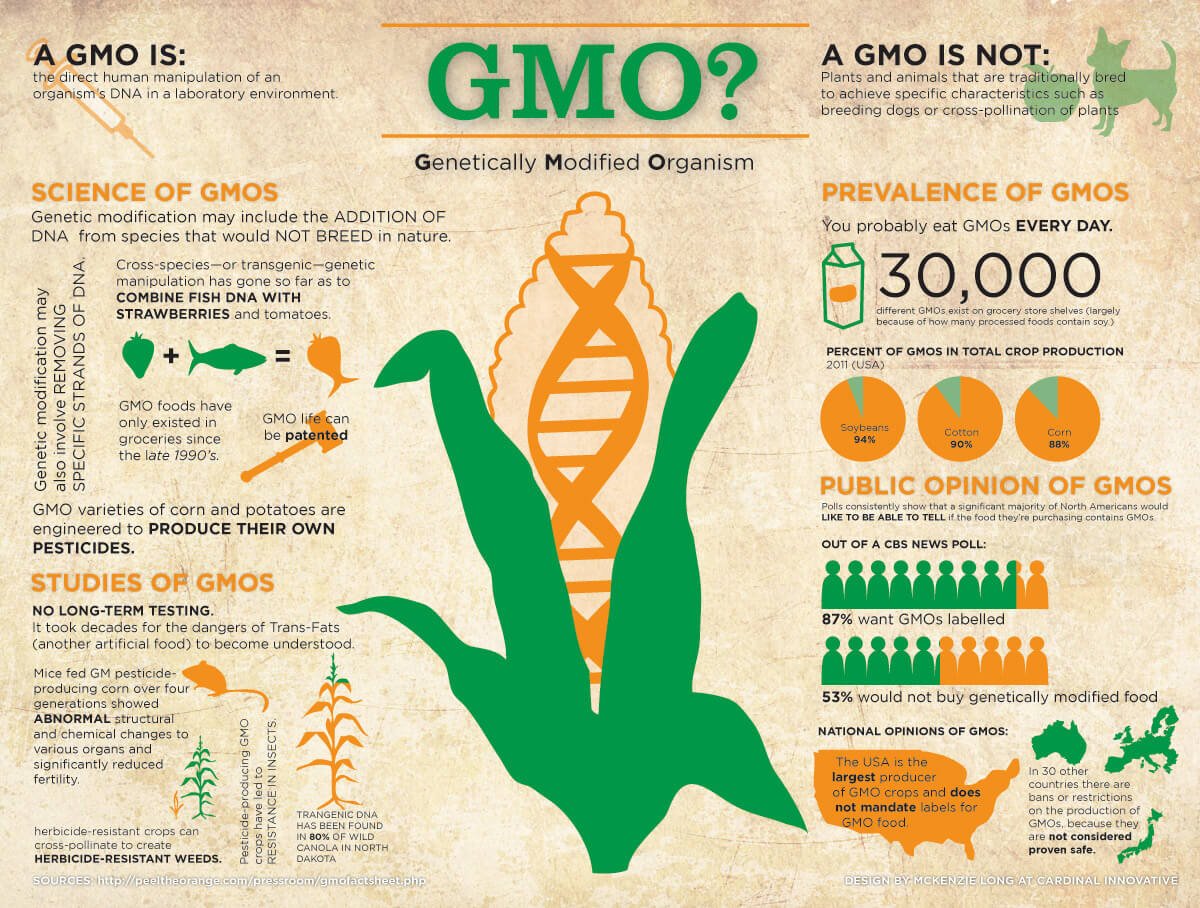
Click image to enlarge

Human health

Some of the most significant benefits from GM crops, yet least recognized, are the health and lifestyle benefits. Identified benefits in this area range from:

  • Gruère and Sengupta documented a reduction of suicide rates by one third following the release of Bt cotton among Indian farmers based on extrapolating the pre-Bt cotton suicide rate.
  • Gouse and colleagues found small landholders’ adoption of GM corn resulted in 10 -12 fewer days of female hand weeding per season.
  • Vitale et al. estimated 30,000 fewer cases of pesticide poisoning per year were occurring among Bt cotton farmers in Burkina Faso.
  • Kouser and Qaim estimated that the number of pesticide poisonings following India’s Bt cotton adoption were reduced by 4 – 9 million cases a year.

While those opposed to GM innovation in agriculture continue to advocate there have been no benefits from GM crops, the above evidence totally refutes these claims. The adoption of GM crops has resulted in economic benefits for farmers, reduced chemical use in the environment and most importantly a reduction of millions of cases of pesticide poisoning. Not to mention, these benefits are not only gained by developed nations but have had significant impacts in developing nations, helping agricultural regions leap from agrarian to modern practices. The time has come to stop denying there are no benefits from GM crops or to be called out a lack of ethics and morals. GeneticLiteracyProject.org

Stuart Smyth is an assistant professor in the department of agricultural and resource economics at the University of Saskatchewan. Follow him on Twitter @stuartsmyth66

This article was originally published at Sustainable Agricultural Innovations & Food as “Twenty-Five Years of GM Crop Benefits” and has been republished here with permission.

environment GMO health Stuart Smyth
Share. Facebook Twitter Pinterest LinkedIn WhatsApp Reddit Tumblr Email
Abdallah el-Kurebe
  • Website
  • Facebook
  • Twitter
  • LinkedIn

Related Posts

Matna foods executive calls for value addition in Nigeria’s cassava sector

June 27, 2026

BUA cement reaffirms support for displaced farmers in Sokoto

June 27, 2026

Jigawa launches agricultural support for 90,000 farmers

June 27, 2026

Leave A Reply Cancel Reply

CONUA: Our advocacy has brought stability to university system

June 28, 2026

MRTBN registrar calls for better funding, more physiotherapists

June 27, 2026

Cancer survivors demand better psychological support, affordable treatment

June 27, 2026

Shettima: MSMEs hold key to Nigeria’s economic growth

June 27, 2026
About Us
About Us

ASHENEWS (AsheNewsDaily.com), published by PenPlus Online Media Publishers, is an independent online newspaper. We report development news, especially on Agriculture, Science, Health and Environment as they affect the under-reported rural and urban poor.

We also conduct investigations, especially in the areas of ASHE, as well as other general interests, including corruption, human rights, illicit financial flows, and politics.

Contact Info:
  • 1st floor, Dogon Daji House, No. 5, Maiduguri Road, Sokoto
  • +234(0)7031140009
  • ashenewsdaily@gmail.com
Facebook Twitter Instagram Pinterest
© 2026 All Rights Reserved. ASHENEWS Daily Designed & Managed By DeedsTech

Type above and press Enter to search. Press Esc to cancel.