


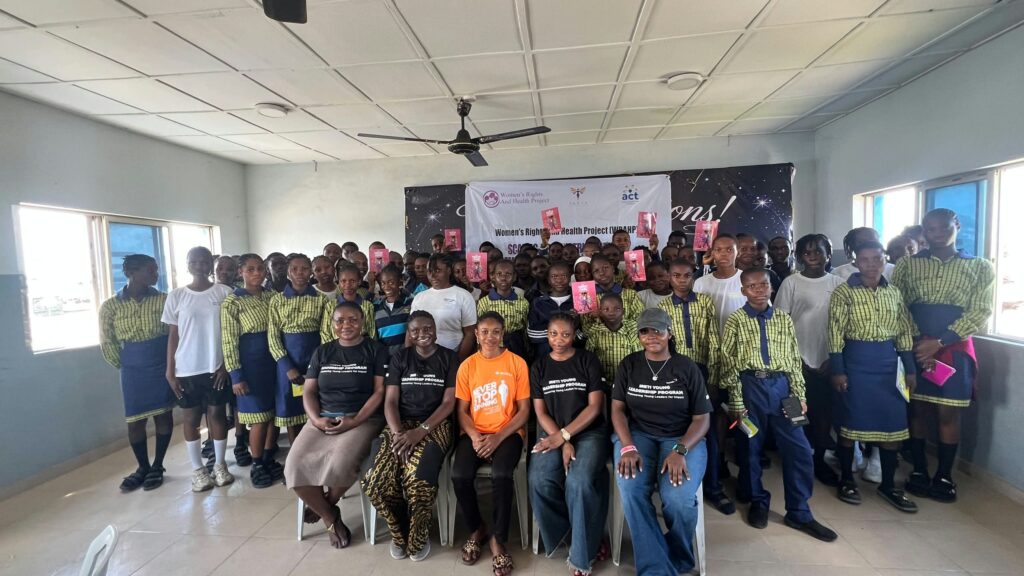
The Women’s Rights and Health Project (WRAHP), a non-governmental organisation, has launched a period comic initiative to improve menstrual health education and reduce stigma among secondary school students across Lagos State.
WRAHP Executive Director Bose Ironsi told reporters in Lagos on Thursday that the initiative was launched under the organisation’s Young Leadership Programme in the state.
With support from the Aspire Coronation Trust (ACT) Foundation, the initiative is expected to reach 3,000 girls and boys in four local government areas (LGAs) from May 2026 to April 2027, Ironsi said.
“The Women’s Rights and Health Project (WRAHP) has begun a 12-month initiative to improve menstrual health knowledge, reduce stigma and promote gender sensitivity among adolescents in Lagos State.
“The period comic initiative, ‘Transforming Menstrual Health Education and Reducing Stigma Among Youth’, aims to reach adolescent girls and boys in secondary schools across Oshodi-Isolo, Eti-Osa, Badagry and Ikorodu,” she said.
Ironsi said the sessions gave students accurate information and encouraged positive attitudes towards menstruation. They also helped students understand that menstrual health is a shared responsibility.
In October, WRAHP held interactive sessions at three schools in Badagry, reaching 577 students—240 boys and 337 girls, she said.
Facilitators provided puberty education, explained the physical and emotional changes associated with adolescence, demonstrated how to use sanitary pads and discussed hygienic disposal practices.
The executive director said the sessions involved boys in discussions to challenge harmful stereotypes, reduce menstrual stigma and foster inclusive, supportive school environments.
Female students received sanitary kits to improve their access to essential menstrual hygiene resources. WRAHP also trained 13 teachers from the three Badagry schools as Menstrual Health Management (MHM) ambassadors, she said.
“These teachers are equipped to act as peer educators, guide students and conduct step-down sessions to sustain menstrual health education and ensure a supportive environment beyond the project period.
“Menstrual health is not just a girls’ issue. When boys and girls learn together, myths lose their power and schools become more supportive places for everyone,” Ironsi said.
She said involving boys was central to the initiative, adding: “That is why this initiative brings both into the conversation.”
