


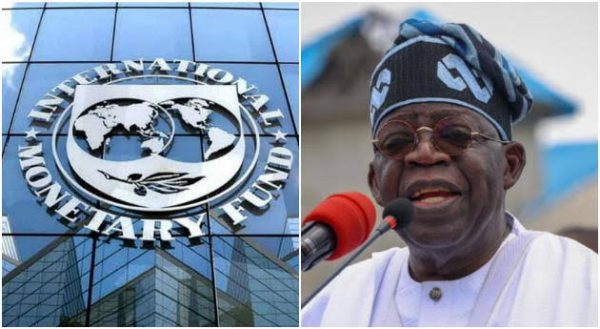
The International Monetary Fund (IMF) has warned that rising food and energy costs continue to worsen hardship, poverty and food insecurity among households, but upgraded Nigeria’s economic growth forecast for 2026 to 4.2 per cent.
The revised projection, contained in the IMF’s October 2026 World Economic Outlook, represents an increase of 0.1 percentage point from its previous estimate. The Fund also projects Nigeria’s economy to expand by 4.3 per cent in 2027.
Despite the improved outlook, the IMF said stronger economic performance had yet to shield many Nigerians from the effects of high living costs and declining purchasing power.
The Fund attributed Nigeria’s growth prospects partly to improved macroeconomic stability and favourable terms of trade, while cautioning that rising prices of essential goods could deepen poverty and food insecurity.
Speaking during the presentation of the report in Bangkok, Thailand, Deniz Igan, an IMF Division Chief in the Research Department, said policymakers needed to address the immediate needs of vulnerable households without undermining long-term economic stability.
Igan recommended targeted cash transfers and temporary income support for low-income households to help them cope with rising food and energy prices.
She said such interventions should be accompanied by more efficient public spending and stronger revenue collection to ensure that assistance remained fiscally sustainable.
The recommendation highlights the challenge facing the Nigerian government as it pursues economic reforms aimed at improving stability while households continue to grapple with the cost of basic necessities.
The IMF’s assessment comes against the backdrop of recent reforms that have reshaped Nigeria’s economic landscape but also increased financial pressure on many consumers and businesses.
Globally, the Fund projects economic growth of 3.1 per cent in 2026, before improving to 3.4 per cent in 2027. It also expects global headline inflation to reach 4.7 per cent this year before easing to 4.1 per cent next year, citing pressures from higher energy and commodity prices linked to geopolitical conflicts.
Meanwhile, the World Bank recently raised its forecast for Nigeria’s economic growth in 2026 to 4.3 per cent, with projections of 4.4 per cent for both 2027 and 2028.
Nigeria’s National Bureau of Statistics reported that the economy grew by 4.43 per cent year-on-year in the second quarter of 2026, compared with 4.23 per cent in the corresponding period of 2025.
However, the improved growth projections do not necessarily translate into immediate improvements in household welfare, as economic expansion and the affordability of food, transport and energy measure different aspects of economic performance.
The IMF’s latest position therefore underscores the need for policies that combine macroeconomic stability with targeted support for vulnerable Nigerians, particularly those most exposed to rising living costs.
Nairametrics
