


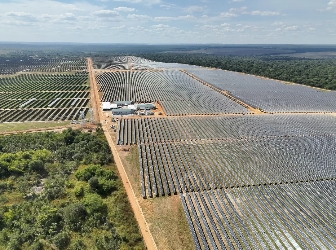
Zambia’s Copperbelt Energy Corporation (CEC) Plc has increased its renewable energy generation by 97 per cent to 158.78 gigawatt-hours (GWh) in the first half of 2026, helping to reduce carbon emissions as the country seeks to strengthen its energy security.
The increase, from 80.75 GWh recorded in the corresponding period of 2025, comes amid Zambia’s efforts to diversify its energy mix and reduce dependence on hydropower, which is vulnerable to drought and changing weather conditions.
CEC Renewables Limited, a subsidiary of CEC Plc incorporated in 2022 to drive renewable energy expansion, has emerged as a key player in the transition towards a more diversified and climate-resilient electricity supply.
The company said its increased renewable energy generation avoided approximately 53,000 tonnes of carbon dioxide (CO₂) emissions during the period. This is equivalent to taking about 11,500 conventional petrol-powered passenger vehicles off the road for one year.
Itimpi II solar project drives growth
CEC attributed the increase in renewable energy generation largely to the commissioning and integration of its 136-megawatt (MW) Itimpi II solar photovoltaic project, alongside strong operational performance across its renewable energy portfolio.
Hilton Fulele, Managing Director of CEC Renewables, said the company recorded unprecedented performance in the six months ended June 30, 2026, driven primarily by progress in implementing its renewable energy investment strategy.
“A key milestone achieved during the period was the successful commissioning and integration of the 136 MW Itimpi II Solar PV project, increasing the Company’s installed solar generation capacity from 94 MW to 230 MW,” Fulele said.
“This significant expansion strengthens our generation portfolio, increases the availability of locally generated renewable energy, and provides additional capacity to support growing energy demand.”
CEC’s installed solar capacity of 230 MW comprises a 34 MW plant in Riverside, Kitwe, and a 196 MW facility at Itimpi Park, Kitwe.
Following the completion of major construction work on the Itimpi II project, the company’s capital expenditure fell to US$16.6 million in the first half of 2026, from US$42.075 million in the corresponding period of 2025.
The reduction reflects a shift in management’s focus from construction towards maximising returns from completed assets.
Revenue more than doubles
According to CEC’s recently released unaudited results for the first half of 2026, the company maintained an average plant availability of 99.96 per cent, while its renewable energy portfolio achieved an average performance ratio of 83.59 per cent.
The strong operational performance translated into higher revenue, which rose to US$9.555 million from US$4.657 million in the first half of 2025.
Solar power supports energy security
Energy expert and engineer Boniface Zulu commended CEC’s performance, saying the expansion of renewable energy generation and the associated reduction in carbon emissions demonstrated how clean energy could support national development while protecting the environment.
“In simple terms, it means less pollution released into the atmosphere, helping to reduce the effects of climate change while improving air quality for communities,” Zulu said.
He added that investment in solar power was strengthening Zambia’s energy security by increasing electricity supply from clean, locally available resources.
According to him, the additional capacity would help ease pressure on hydropower generation, particularly during droughts, while contributing to a more reliable and diversified energy mix.
Zulu said CEC’s expansion aligned with the government’s Grow Zambia Agenda and the country’s Eighth National Development Plan (8NDP).
The 8NDP targets an increase in national electricity generation capacity to 4,457 MW by the end of 2026, from 3,307.43 MW in 2021.
It also aims to increase the contribution of renewable energy sources other than large hydropower to the national electricity mix from three per cent to 10 per cent over the same period.
Zulu said CEC’s performance demonstrated how clean energy investments could support economic growth, attract investment, create jobs and promote environmental protection.
