


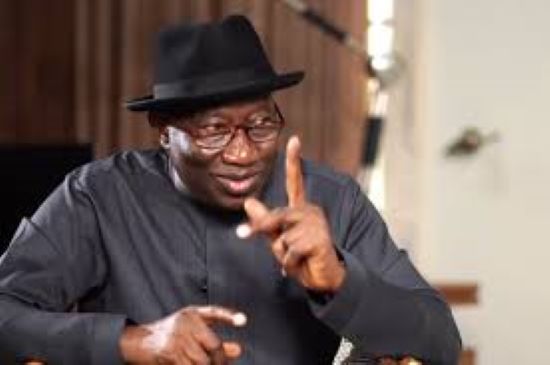
Former President Goodluck Jonathan has urged African nations to transition from exporting raw materials to high-value processed goods to unlock economic prosperity and create more opportunities for the continent’s youth population.
Special Adviser on Media to Jonathan, Mr Eze Ikechukwu, in a statement on Tuesday in Abuja, quoted Jonathan as making the statement while delivering his chairman’s address at the 13th Anniversary Memorial Lecture for the late Dr Olusegun Agagu, a former governor of Ondo State.
Speaking on the theme “Africa’s Resources, Africa’s Prosperity: Capturing More of the Value We Create,” he noted that the theme of the conference was very relevant to Africa’s present circumstances.
He said that Africa remained the world’s top producer of natural wealth but ranks last in value addition.
“Africa is richly endowed with natural resources, yet too often we remain exporters of raw materials and importers of finished products.
“The challenge before us is to change this paradigm; to move from extraction to value addition, from dependence to productive capacity and from resource wealth to broad-based prosperity.
“We must ensure that our natural resources generate industries, create jobs, enhance our technology and opportunities, particularly for our young population. With value addition, we can earn more from our natural resources,” he said.
Illustrating the resource gap, the former president said that the West African cocoa sector produces about 70 per cent of the world’s cocoa beans.
Citing data from the Ghana Cocoa Board and the Cocoa Barometer, Jonathan noted that while a kilogramme of cocoa beans sells for roughly five dollars, the equivalent in mass-market chocolate sells between 12 dollars and 18 dollars.
This, according to him, leaves local farmers with only about 6.6 per cent of the final product’s retail value.
“The lesson is clear: the real opportunity is not simply in producing more cocoa; it is in capturing more of the value created from cocoa.
“Every stage we add within Africa creates additional businesses, skilled jobs, technology, tax revenues and entrepreneurial opportunities.
“This is the value-addition gap that we must confront across the continent.
“Whether it is in cocoa, cotton, coffee, crude oil, precious stones, gold, diamonds, lithium, uranium or other strategic mineral resources, Africa must move beyond the model in which we export raw materials and import finished products,” he said.
He identified visionary leadership, strong institutions, strategic partnerships and political will as key requirements to change the narrative.
“Agagu understood the importance of these principles. Throughout his distinguished career, he demonstrated a deep commitment to knowledge, development and the responsible use of public office,” Jonathan added.
He also noted that Botswana’s strategic resource management model offers crucial economic lessons for the rest of Africa.
Jonathan praised the guest speaker, former Botswana President Mokgweetsi Masisi, honouring his commitment to democratic values and referencing his peaceful political transition following his country’s recent elections.
Jonathan also commended the Olusegun Agagu Foundation for sustaining the annual lecture series to keep Agagu’s ideals alive.
