


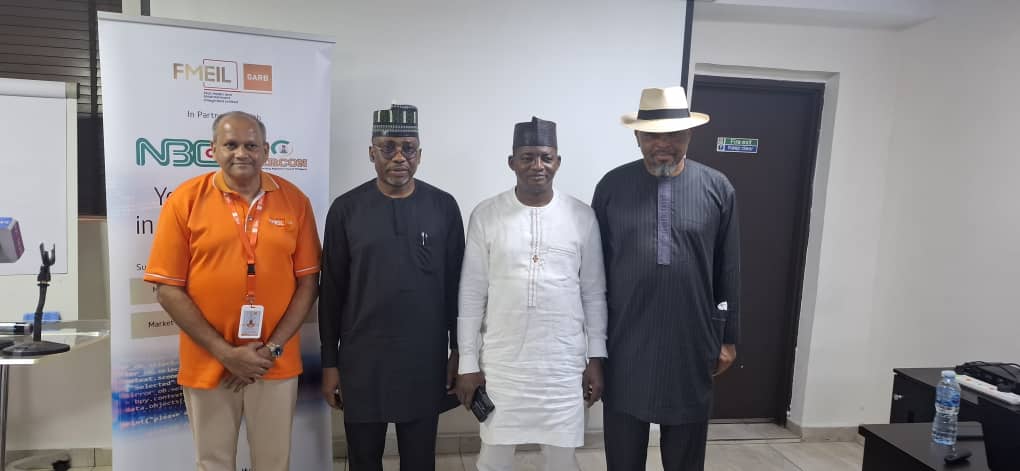
The Federal Government has commenced the first phase of its national Audience Measurement System (AMS) in Lagos, following the June 2026 unveiling of the Digital Switch Over (DSO).
The Minister of Information and National Orientation, Mr Mohammed Idris, said this during a media conference on the rollout of AMS on Tuesday in Lagos.
Idris, who was represented by the Director-General of the Advertising Regulatory Council of Nigeria (ARCON), Dr Olalekan Fadolapo, said credible audience data would strengthen Nigeria’s broadcast industry.
He said the system would provide reliable information on who watched television, what they watched and when they watched it.
“It can help broadcasters improve programming, enable advertisers to make better-informed decisions and support content producers,” the minister said.
He said reliable audience measurement would strengthen investor confidence, support quality Nigerian content and create opportunities across Nigeria’s media and creative industries.
Idris said public trust was essential to the exercise, urging operators to ensure transparency and protect the privacy and dignity of participating households.
“Nigeria deserves clear, credible information about how the system works, why households are selected and what participation entails,” he said.
Mr Rotimi Pedro, the Executive Chairman of First Media and Entertainment Integrated Ltd. (FMEIL), said the Lagos rollout was a major milestone in establishing Nigeria’s national audience measurement system.
Pedro said FMEIL was licensed by the National Broadcasting Commission (NBC) and ARCON to establish a system that met global standards while reflecting Nigeria’s advertising market.
He said the firm partnered with GARB, a Bulgarian technical company, to ensure the system and its data complied with international standards.
Pedro said the company began with a proof-of-concept demonstration in Abuja about two years ago and had since calibrated the system for wider deployment.
“We are now beginning to roll out the measurement in households in Lagos,” he said.
Pedro said the automated system would provide audience delivery data at specific times, giving advertisers a stronger basis for media buying.
“Essentially, what we are doing is decoding currency,” he said.
The Director-General of NBC, Mr Charles Ebuebu, said audience measurement was one of the significant deliverables of the DSO initiative.
Ebuebu said Nigeria had previously relied on diary-based audience measurement, which was unreliable and economically inefficient.
“We need to have reliable data that leads to several other things,” he said.
The director-general said the data would support strategic content development, advertising decisions and a better understanding of television audiences.
He said the rollout would eventually establish audience panels across the country, beginning with Lagos.
Ebuebu said the development was already encouraging broadcasters to migrate from terrestrial to digital platforms, with NBC receiving 20 applications within a week.
According to him, broadcasters are seeking wider coverage so that they can demonstrate increased audience reach when negotiating with advertisers.
He appealed to Nigerians to embrace the equipment being installed in selected homes, assuring them that it was designed to measure television consumption.
Ebuebu said the equipment would capture programmes watched, viewing duration and audience demographics without monitoring other household activities.
The Chief Operating Officer of FMEIL-GARB, Mr Patrick Gomes, said the Lagos deployment was based on Nigeria’s first nationwide television Establishment Survey.
Gomes said the survey covered 60,000 households across the 36 states and the Federal Capital Territory, including 7,000 households in Lagos.
He said the survey was completed in the first half of 2023 and provided the statistical baseline for recruiting panel households.
According to him, the exercise covered all 774 local government areas and was designed to ensure that selected households represented Nigeria’s television-owning population.
He said the Lagos rollout followed technical testing and a successful proof-of-concept pilot conducted in selected Lagos homes.
Gomes said the pilot results were presented to stakeholders in Abuja in the second quarter of 2024, confirming the robustness of the system.
He said the infrastructure comprised Peoplemeter devices, data-enabled routers and backend data centre operations.
Gomes said the Peoplemeters would passively capture television viewing patterns in selected homes and transmit the information daily to a central data centre.
He said participating households would receive monthly data incentives for contributing to the national panel.
Gomes said the data would help broadcasters make programming decisions and enable advertisers and media planners to make more efficient media purchases.
Also, Dr Olalekan Fadolapo, Director-General of ARCON, said credible audience measurement was critical to reforms in Nigeria’s advertising industry and would improve accountability in media investments.
“We have gone past the age of guessing estimates,” Fadolapo said.
He said the system would enable advertisers and agencies to assess the cost-effectiveness of campaigns and make better-informed media buying decisions.
Fadolapo commended FMEIL and GARB for the rollout, saying audience measurement would also be critical to the success of DSO.
It was reported that DSO, spearheaded by NBC under the FreeTV brand, is driving Nigeria’s transition from analogue to digital broadcasting.
DSO provides the digital infrastructure on which the AMS will operate, while the audience measurement system provides the measurement layer for the broadcast ecosystem.
The national AMS rollout will be conducted in phases, with Lagos serving as the first phase before deployment expands to other parts of Nigeria.
