


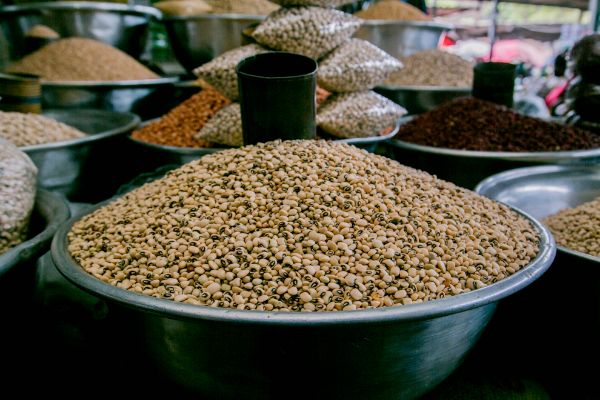
The International Trade Centre (ITC) has begun efforts to address production and export challenges affecting the cowpea and sesame value chains in Benue.
Dr Alexander Rutikanga, an agricultural policy and food safety expert with ITC, disclosed this on Tuesday during the flag-off of the cowpea planting season in Makurdi.
Rutikanga said the team was in the state to identify gaps and opportunities and develop interventions to improve production and exports of both crops.
“We want to carry out an in-depth diagnosis to know the gaps and opportunities and how we can support farmers and other actors along the value chains,” he said.
He stated that the intervention aims to increase exports of cowpea and sesame to Europe, Japan and other international markets.
The expert commended Benue farmers for adopting safer alternatives to chemical pesticides.
Rutikanga noted that Nigeria ranks among the world’s leading exporters of cowpea and sesame, stressing the need to maintain and improve its position through better farming and export practices.
“Nigeria has been managing to increase exports, particularly non-oil exports like sesame and cowpeas across the world.
“However, excessive chemical pesticide use and resulting residues are major threats to export.
“Once chemical residues are beyond the requirements, the products exported will be sent back or destroyed,” he said.
He urged farmers to use only approved pesticides and observe pre-harvest intervals, noting that reduced chemical use would protect consumers and the environment while improving access to premium markets.
Rutikanga also advocated drought-resistant varieties, irrigation and mechanisation to boost productivity and help farmers cope with climate change.
He said ITC would work with the Nigerian government to provide technical support and mobilise resources to address the identified challenges.
“The immediate benefit is that we are carrying out a diagnosis to know the issues they have. Once we know the issues, solutions are all around,” he added.
Rutikanga, who also flagged off the 2026 cowpea planting season in Benue, urged stakeholders to strengthen the value chain for increased production, food security and export earnings.
Earlier, Vitalis Tarnongu, Managing Director of Teryima Nigeria Ltd and Benue State Cowpea Coordinator, said more than 3,000 farmers cultivate cowpea across the state, with production taking place in both the rainy and dry seasons.
He attributed low production to inadequate land development, mechanisation, farm inputs and limited government support.
Tarnongu also cited poor markets and low prices as challenges, urging the government to provide better support, mechanisation and inputs to boost output.
Dr Adaniken Bamidele of the Nigeria Agricultural Quarantine Service (NAQS) confirmed that an ITC-led team was in Benue to improve the export value chain for cowpea and sesame.
He identified high pesticide residues and contamination as major barriers to export, saying the team would work with farmers to meet international standards and conduct commodity sampling for analysis.
Mrs Erdoo Jato, Cowpea Coordinator of the Teyima and Msushima Foundation Women’s Group, listed mobilisation, mechanisation and limited production capacity as key challenges.
Jato said the group had received no government support but appealed to the visiting team and government to assist women farmers expand cowpea production and eventually export from Benue.
The team comprises representatives from ITC, NAQS, the National Agency for Food and Drug Administration and Control (NAFDAC), the Nigerian Export Promotion Council (NEPC) and the Standards Organisation of Nigeria (SON).
