


The 46th Ordinary Summit of Southern Africa Development Community (SADC) Heads of State and Government, held in Durban on 17 August 2026, has placed critical minerals, infrastructure and industrialisation firmly at the centre of the region’s development ambitions. Its theme — “Resilient, Sustainable, and Inclusive Industrialisation through Infrastructure Development, Agricultural and Critical Minerals Transformation in Pursuit of a Just World” — is ambitious and, on the surface, compelling.
I welcome the recognition that critical minerals, agriculture and infrastructure will shape the region’s economic future. I also welcome the communiqué’s commitments to women’s leadership, gender-based violence prevention, climate preparedness and inclusive development.
But as an ecofeminist, I am compelled to ask a more uncomfortable question: just industrialisation for whom, and at whose cost?
This is not a rejection of SADC’s industrialisation ambitions. It is a challenge to make the promise of a “just world” real for the women, girls and communities whose land, labour and natural resources are increasingly being drawn into the region’s new extractive economy.
Critical minerals are not just an economic opportunity
SADC’s communiqué identifies critical minerals as key drivers of industrialisation and competitiveness. The Summit also identifies critical minerals and a just energy transition among the high-impact priorities for the region’s development strategy.
ALSO READ [VIEWPOINT] Africa’s green transition must not become a new colonial project, by Dr Melania Chiponda
There is an obvious economic logic to this. Southern Africa possesses mineral resources that are increasingly important to the global energy transition.
But minerals do not exist in a vacuum.
They exist under land where people farm, collect water, raise families and sustain communities. They exist in landscapes where women’s livelihoods are often intimately connected to forests, rivers, agricultural land and other natural resources.
My concern is that the current language of industrialisation can make the mineral itself visible while making the people living around it invisible.
We talk about lithium, cobalt, graphite, copper and rare earth minerals as strategic resources. We talk about investment, value addition, industrialisation and regional competitiveness. But we must also ask: whose land is being transformed, whose livelihoods are being disrupted, who makes the decisions, who benefits and who carries the risks?
An industrialisation strategy cannot genuinely be inclusive if the costs are systematically transferred to women, girls and rural communities.
We cannot separate extraction from gender justice
My work on the SADC Model Law on Eradicating Child Marriage has led me to a conclusion that deserves much greater attention in regional policy discussions: child marriage is not simply a problem of culture, tradition or household poverty.
It is also a political-economic issue.
The loss of land, water and subsistence livelihoods can undermine the economic foundations that allow girls to remain in school and delay marriage. The region is now experiencing a critical-minerals rush at precisely the same time as climate shocks are eroding household resilience.
This creates a dangerous convergence.
When drought destroys harvests, when water sources recede, when families lose access to productive land or when communities are displaced by mining, households become more economically vulnerable. Girls can bear a disproportionate share of the consequences.
In such circumstances, marriage can become a coping strategy. My analysis identifies drought, failed harvests, displacement and water insecurity as pathways through which climate change can heighten the risk of child marriage.
This means that a mining policy can have implications for child protection even when it says nothing about children.
A climate policy can have implications for child marriage even when it says nothing about marriage.
And an energy-transition policy can have profound implications for women’s rights even when it speaks primarily about jobs, investment and carbon reduction.
These issues are connected.
A “just transition” can still be gender-blind
SADC’s commitment to a just transition is welcome. But we must be honest about what current just-transition conversations often leave out.
They tend to focus on jobs, skills, industrial policy, energy systems, critical-mineral supply chains, investment and financing.
What is often missing are the gender-differentiated impacts of mining expansion, the risks of gender-based violence and child marriage in extractive areas, community consent, women’s land rights and the protection of girls. This is the contradiction we must confront.
We cannot call a transition “just” simply because it moves us from one energy source to another.
A transition from fossil fuels to renewable energy can still be unjust if the minerals required for renewable technologies are extracted through land dispossession, environmental degradation, inadequate consultation and the exclusion of women from decision-making.
A transition is not just merely because it is green.
Justice requires us to ask how the transition is produced, who controls it and who benefits from it.
The community must have a voice before the mine arrives
This is why Free, Prior and Informed Consent must become more than a technical phrase in policy documents.
If SADC is serious about inclusive industrialisation, affected communities must have meaningful participation in decisions concerning mining, land, displacement, compensation and environmental impacts. And that participation must be gender-responsive.
Women cannot be invited into a consultation simply to demonstrate that a consultation was held. They must have the information, power and institutional space to influence decisions affecting their land, livelihoods and futures.
Women cannot remain an afterthought
The SADC communiqué rightly calls on Member States to accelerate women’s participation in leadership and decision-making and to strengthen policies addressing gender-based violence and human rights.
But women’s participation cannot be confined to political leadership.
Women must also have decision-making power over the economic transformations taking place in their communities.
A woman whose land is acquired for mining is not simply a “beneficiary” of development. She is a rights-holder.
A girl whose school closes or whose family loses its livelihood because of displacement is not an unfortunate statistic. She is part of the development equation.
And a community environmental defender is not an obstacle to progress. They may be protecting the very social and ecological foundations upon which sustainable development depends.
SADC has an opportunity to get this right
I do not believe that the answer is to abandon industrialisation or reject the development of critical-mineral value chains.
The opportunity before SADC is much more important: to create a different model of industrialisation. One that does not simply extract minerals from the region and export their value.
The Summit has already created an important political opening. Its language of resilience, sustainability, inclusion and justice provides a foundation upon which civil society, governments and communities can build.
But words must now become safeguards, laws, budgets and accountability mechanisms.
The critical-minerals agenda should therefore be linked explicitly to gender justice, child protection, climate resilience and community land rights.
Extractive companies and investors must have clear obligations to communities. Gender-responsive FPIC should be strengthened. Environmental defenders must be protected. And the social consequences of mining and climate change must become part of how SADC measures development.
The real test of a just world
The success of SADC’s industrialisation agenda should not ultimately be measured only by the amount of investment attracted, minerals extracted, roads constructed or factories established.
The deeper test is whether ordinary people experience greater security, dignity and control over their futures.
No transition is truly just while women and girls are expected to subsidise it with their land, labour, livelihoods or bodies. SADC has an opportunity to demonstrate that Africa’s energy and industrial transition can be different. Let us make it a transition that is not only green, but genuinely just, feminist, community-centred and accountable.
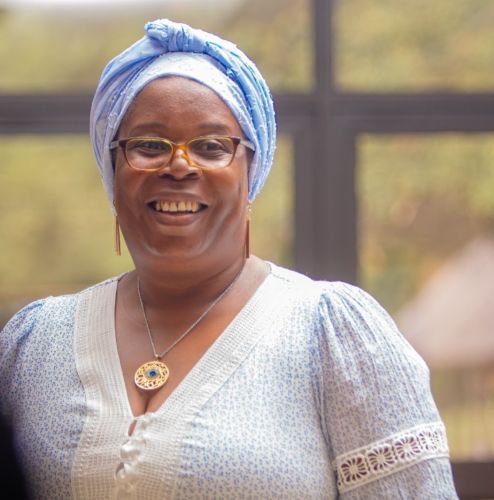
The writer is a climate activist and executive director of Shine Collab, a global feminist network advancing women-led energy access, climate justice, and community power across Africa and the Global South.
