


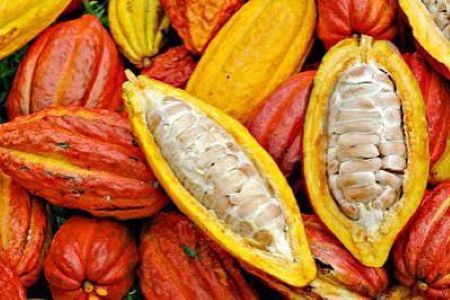
KAMPALA — Uganda’s cocoa has risen to become the country’s second-largest agricultural export after coffee, overtaking tea, fish, flowers and maize. Before 2022, cocoa ranked fourth, behind coffee, tea and fish. Four years later, it has moved ahead of them all.
According to a “Green Gold” report by the Bank of Uganda, the relatively little-adopted tropical crop earned the East African country more than US$632 million (about UGX 2.27 trillion) in 2025, up from US$108.58 million by May 2025. The report says Uganda earned US$632 million from cocoa beans alone in 2025, out of a record US$13.43 billion in total exports.
The report also indicates that, by May 2024, cocoa’s foreign exchange earnings had tripled from US$22.14 million as global prices surged. The increase was driven by poor harvests in West Africa, particularly Côte d’Ivoire and Ghana, which pushed cocoa prices from US$2.50 per kilogramme to US$6. Uganda’s Bundibugyo cocoa-growing area benefited from the price increase.
Cocoa is now Uganda’s second-largest agricultural export after coffee, whose earnings also surged in 2024 because of global supply shortages caused by poor harvests in West Africa. By November 2025, cocoa had reportedly earned US$621.1 million.
One of Uganda’s leading cocoa-growing advocates and proponents of state-led agricultural development, Mr Nandala Mukoota, welcomed cocoa’s emergence as the country’s second-largest agricultural export after coffee. However, he said the crop could generate substantially more revenue if the government prioritised agriculture and allocated more than 20 per cent of its budget to the sector.
Speaking to Ashe News Daily on October 18, Mukoota said that although Uganda is East Africa’s leading cocoa producer and exporter, Kenya could overtake it through deliberate government investment.
“I’d not be surprised,” he said.
ALSO READ Ugandan pharmacist named among Africa’s top influencers
He described cocoa’s overtaking of tea, fish and flower exports as “just one step forward”, arguing that the achievement had largely resulted from individual farmers’ efforts, with little government support.
“For Kenya, just last week, President William Ruto launched the planting of cocoa in Kitale and other districts of the Western Province, neighbouring Uganda, targeting 6.4 million hectares. That is a very big step by Kenya,” Mukoota said.
He acknowledged that Uganda performs well when weather conditions are favourable and yields improve, but insisted that the country could achieve much more through sustained public investment in agriculture and the cocoa subsector.
“We would be far, far better off in cocoa production and productivity if the government invested seriously in the wider agricultural sector on one hand, and in the cocoa subsector on the other,” he said.
Mukoota described cocoa as a high-value crop requiring government intervention, proposing an initial investment equivalent to five per cent of gross domestic product in agriculture.
“We’d begin to see changes for the better,” he said.
He added that planting 500 cocoa trees on an acre, alongside shade trees, could expand green cover, help combat climate change and improve farmers’ livelihoods.
“This would be both environmental and economic empowerment for the farmer,” said Mukoota, who also operates a cocoa nursery.
He cited Vietnam’s agricultural development as an example of the benefits of sustained government investment, arguing that public funding and mobilisation had helped transform the country’s agricultural sector.
Mukoota recalled that Vietnamese officials visited Uganda in 1996, about a decade after the National Resistance Movement (NRM) came to power, to study the country’s coffee industry.
“They came to benchmark coffee, and when they went back, the Vietnamese drew up a huge plan for state investment and public mobilisation to massively plant coffee,” he said.
He argued that Vietnam’s subsequent agricultural expansion demonstrated the benefits of government-backed production and farmer mobilisation.
The Southeast Asian country, he added, had diversified into several subsectors, including fish farming, cashew production and agro-industrialisation, with government support helping farmers and exporters expand production.
Mukoota said Vietnam earns more than US$11 billion from fish exports produced through fish farming, adding that the government’s involvement had helped farmers increase output and income.
By contrast, he accused Uganda’s government of allocating insufficient resources to agriculture and diverting funds towards security and defence.
In East Africa, he said, Kenya, Ethiopia and Tanzania had achieved better agricultural results through direct government involvement and increased investment.
“These countries put more than 20 per cent of their GDP annually into agriculture, and the results are there for everyone to see,” he said.
He criticised Uganda’s efforts to reduce subsistence farming and poverty, arguing that limited public investment continued to constrain agricultural productivity.
Uganda’s export earnings
The Bank of Uganda’s figures place gold at the top of the country’s export earnings, followed by coffee and cocoa beans:
- Gold — US$6.4 billion
- Coffee — US$2.46 billion
- Cocoa beans — US$630 million
- Electricity and other exports
Uganda is now reportedly the world’s ninth- or tenth-largest cocoa exporter, accounting for about 2.3 per cent of global cocoa exports. It produces approximately 74 per cent of East Africa’s cocoa, compared with Tanzania’s 22 per cent and Kenya’s four per cent.
The country produces about 55,000 tonnes of cocoa annually, ranking 12th among African producers.
Ugandan cocoa is exported to Malaysia, Indonesia, the Netherlands, India and Italy for processing. Malaysia alone reportedly purchased cocoa worth US$250 million.
However, about 90 per cent of Uganda’s cocoa is still exported in raw form, while locally processed products account for only US$8.3 million in supermarket sales.
The government aims to process 80 per cent of the country’s cocoa locally into products such as cocoa liquor, butter and powder to retain more value and foreign exchange earnings within the country.
