


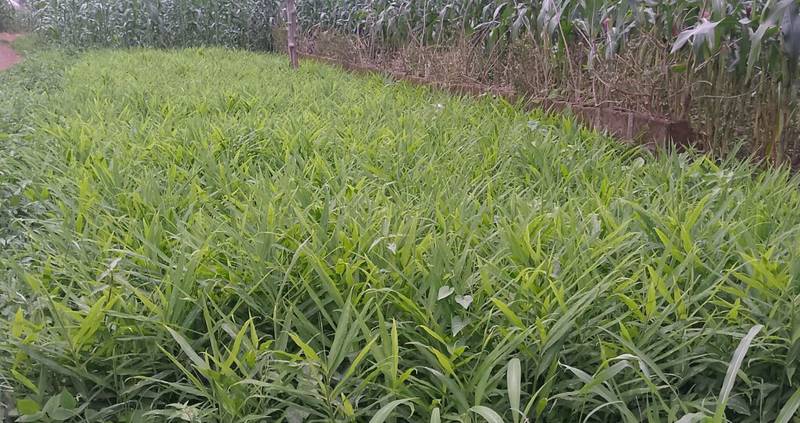
Ginger farmers in Kaduna have said that a project to eliminate child labour has improved their farming practices and revived ginger production after years of losses caused by ginger blight.
In a follow-up interview with reporters, the farmers said the Kaduna Ginger Project had transformed their practices and strengthened efforts to eliminate child labour in ginger production.
The project was organised by the Christian Rural and Urban Development Association of Nigeria (CRUDAN) and the Fair Labor Association (FLA).
According to many of them, the project marked a turning point after a fungal disease ravaged ginger farms across Southern Kaduna, forcing many farmers out of business and leaving them with huge financial losses and uncertainty.
Mr Jonathan Bako, a ginger farmer from Jaba Local Government Area, said that before joining the project, many farming families depended on children’s participation during peak farming activities.
“Most of us did not deliberately involve children because we wanted to exploit them. It was simply the traditional way of farming.
“Through this project, we now understand the dangers of child labour and why children belong in school instead of spending long hours on the farm.
“We have also learnt safer and better ways of organising farm activities by engaging adult labour where necessary, while ensuring that our children concentrate on their education.
“That knowledge alone has changed many families in our community,” he said.
Mrs Ruth Yakubu, a beneficiary from Kachia Local Government Area, said women farmers had benefited immensely from the project.
She said they were trained on good agricultural practices, disease prevention, proper handling of ginger after harvest and the use of improved planting materials.
Yakubu added that improved ginger seeds distributed under the project had renewed the confidence of many farmers after the blight outbreak.
“The difference is already becoming evident. We are seeing healthier crops and expecting better harvests. We only hope this intervention will continue so that more farmers can benefit,” she said.
Similarly, Mr Samuel Gambo, a farmer from Kagarko Local Government Area, said the project had encouraged farmers to embrace modern farming.
The farmers, he said, now view agriculture as a business that requires proper planning and responsible labour practices.
According to him, farmers now appreciate that protecting children’s rights and improving productivity are complementary goals, adding that many communities keep children in school.
He stressed that they now engage adults for labour-intensive farming operations.
On his part, Mr Michael Agon, Project Coordinator of CRUDAN, said the initiative had succeeded in raising awareness of child labour.
He explained that the project promoted decent working conditions in agricultural communities and supported the distribution of improved ginger seeds to participating farmers.
Agon said the project also strengthened farmers’ capacity through training on good agricultural practices and encouraged farming communities to adopt sustainable measures to improve productivity.
The farmers appealed to the Federal and Kaduna State Governments, as well as development partners, to expand the initiative to more ginger-producing communities.
They called for continued access to improved seedlings, extension services, mechanisation and affordable credit.
The farmers maintained that sustaining such interventions would improve household incomes, protect children’s rights and accelerate the recovery of Kaduna’s ginger industry.
